Plenty of candidates fail the practical portion of the state board exam even though they can do a perfectly good manicure: they rush the timed sanitation setup and lose points before touching the model’s hand. The written test trips people up on regulations they never bothered memorizing. The practical trips people up on procedure, not skill. Knowing which one you’re actually being tested on changes how you study.
What the exam actually covers
Every state uses some version of a two-part structure: a written (or computer-based) test on theory, sanitation, and state regulations, and a practical exam where you perform a live or model demonstration of core services under a proctor’s timer. Most states, though not all, use exams built or licensed through the National-Interstate Council of State Boards of Cosmetology (NIC), which is why practice materials from one state often transfer reasonably well to another, even though pass thresholds, question counts, and specific state law questions vary.
The written portion
Expect 100 to 150 multiple-choice questions covering infection control and sanitation (consistently the largest single category), nail anatomy and disorders, chemical safety and product knowledge, and your specific state’s cosmetology or nail technology regulations. The regulations section is the part out-of-state study guides won’t fully cover, since license renewal cycles, disciplinary rules, and required postings differ state to state.
The practical portion
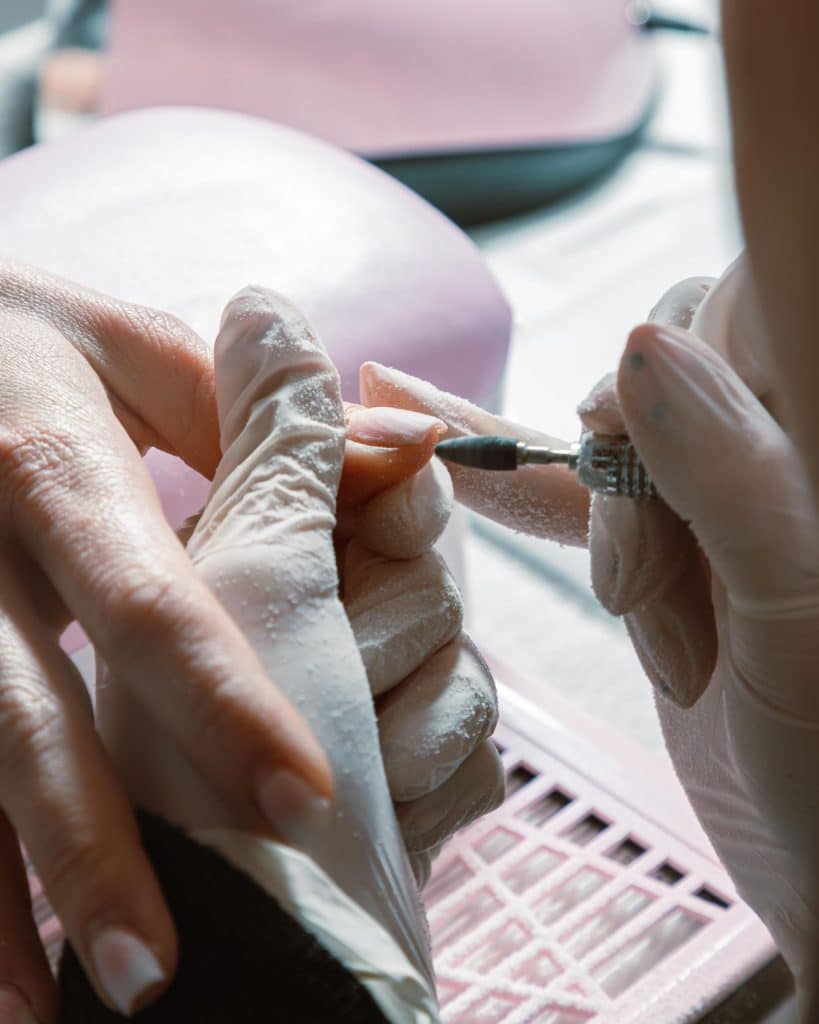
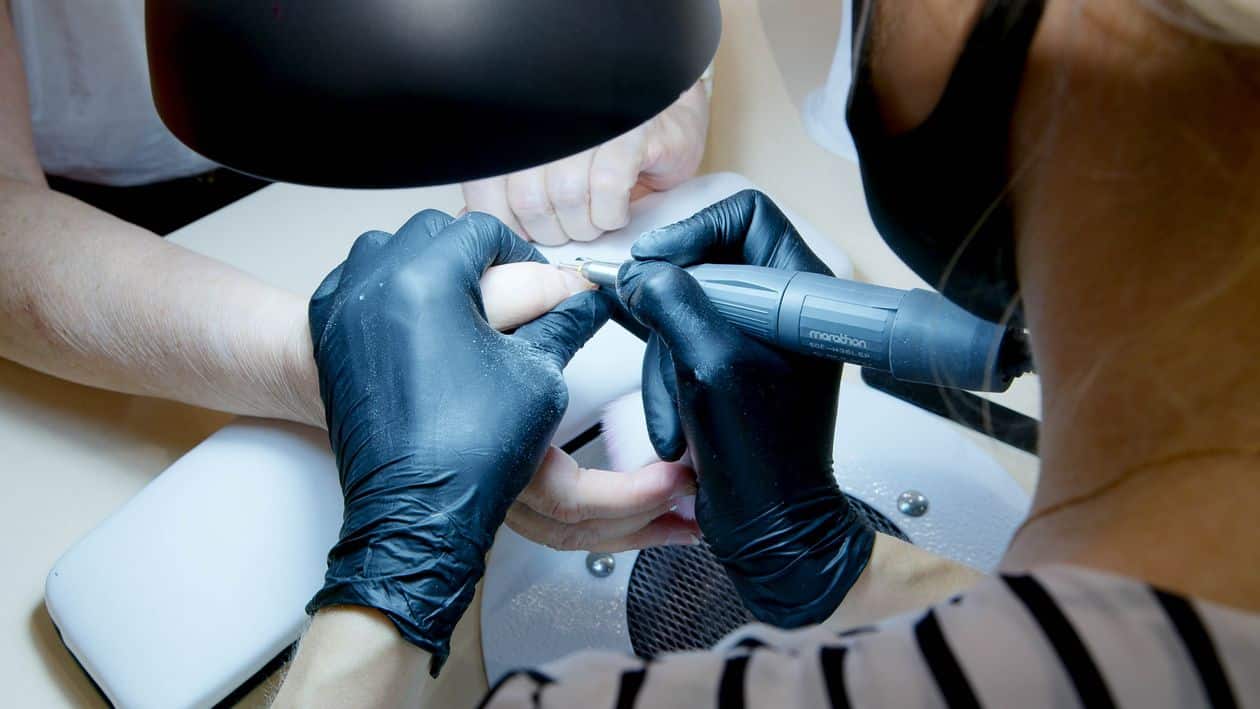
This is a live demonstration, either on a model you bring or, in some states, a mannequin hand, scored against a checklist: setup and sanitation first, then a manicure and often a nail enhancement application (acrylic, gel, or the state’s specified system), all within a fixed time window, commonly 60 to 90 minutes depending on the state and the services required. Graders are working from a checklist with point deductions for specific errors, not an overall impression, which is why technically skilled candidates still fail this part when they skip a required sanitation step or run over time.
How the exam differs by state
Passing scores typically fall between 70 and 75 percent, but the number of required training hours before you’re even eligible to sit for the exam ranges enormously, from around 350 hours in some states to over 600 in others. A handful of states also require a separate jurisprudence or law exam on top of the standard written and practical sections. Because of this spread, the honest answer to “how hard is the exam” depends heavily on which state’s board you’re sitting for, and checking your specific state board’s current candidate handbook is worth doing before you assume a national average applies to you.
How to actually prepare
Study the sanitation section harder than anything else
Infection control questions make up the largest share of the written exam in nearly every state, and sanitation procedure is the single most common reason candidates lose points on the practical. Disinfectant contact times, proper implement storage, and the order of a compliant setup are worth memorizing cold rather than “generally knowing.”
Practice the practical exactly like it’s timed
Doing a manicure well and doing one inside a hard 60-to-90-minute window with a fixed checklist are different skills. Running full mock exams under a timer, ideally with someone else grading against your state’s actual checklist, catches the pacing problems that untimed practice never reveals.
Use your state board’s own materials first
Generic national study guides are useful for anatomy, chemistry, and technique, but your state board’s candidate handbook is the only reliable source for your state’s specific regulations, exam format, and current fees. Most boards publish this as a free PDF, and it’s worth reading before buying any paid prep course.

What the exam actually costs
Exam fees typically run $50 to $150 total, sometimes split between a written and a practical fee, and that’s on top of whatever your school’s tuition already covered in exam prep. Some states also charge a separate application or licensing fee once you pass, distinct from the exam fee itself, so the total out-of-pocket cost to walk out with an active license is usually higher than the exam fee alone suggests. Retake fees run smaller, generally $30 to $75 per section, but they add up fast if pacing problems on the practical keep costing you that section specifically.
What a typical practical checklist actually includes
Beyond the timed setup and sanitation steps, most state practical exams score a candidate on a defined sequence: proper client draping or hand positioning, cuticle work, shaping and filing to a specified length and shape, and application of the required enhancement system, often finishing with cleanup and proper disposal of used implements before time runs out. Points get deducted for specific, named errors on the checklist (cutting live skin, cross-contamination between implements, exceeding the time limit) rather than for a subjective sense of how the finished nails look. A candidate whose finished set looks slightly uneven but who followed every sanitation and procedure step correctly often scores better than one with flawless-looking nails who skipped a required step along the way.
What happens if you don’t pass
Failing one section doesn’t necessarily mean retaking both. Most states let you retake only the section you failed, though there’s usually a waiting period (often two to four weeks) and a retake fee separate from the original exam fee. Multiple failed attempts on the practical are more often a pacing and sanitation-procedure problem than a skill problem, which is worth remembering if you’re tempted to spend the wait re-practicing the manicure itself rather than the setup and timing around it.
After you pass
Passing the exam gets you the license, not the job search or the business decisions that come after it. If school and the exam are still ahead of you, our guide to becoming a nail technician covers the full path end to end, and what to expect from nail tech school breaks down the training hours this exam sits at the end of. For the licensing rules themselves, state by state, our nail technician license guide covers what’s required beyond just passing this exam.
FAQ
Can you retake the state board exam if you fail?
Yes, in every state, though you’ll typically pay a retake fee and wait a set period, often two to four weeks, before scheduling again. Most states only require you to retake the specific section (written or practical) you failed.
Do you need your own model for the practical exam?
It depends on the state. Some require candidates to bring a live model, others test on a mannequin hand, and a few offer both options. Your state board’s candidate handbook will specify which applies to you.
How many times can you fail before you’re not allowed to retake it?
Most states don’t cap the number of attempts, but some do require additional training hours or a waiting period after multiple failures. This varies enough by state that it’s worth confirming directly with your board rather than assuming a national rule.
Is the exam the same in every state?
No. Many states use exams built on the same national framework, which is why the core content overlaps, but pass scores, time limits, required services, and state-specific regulation questions differ. Always study from your own state’s current handbook.