A student in a nail course I sat in on last year asked why the kit list specified a metal cuticle pusher when the drugstore version she’d been using for years was wood. Nobody had ever told her there was a difference beyond price. There is, and it changes both how effective the tool is and how easy it is to hurt yourself with it.
What a cuticle pusher actually does
Before any enhancement or gel polish goes on, the cuticle, the thin skin at the base of the nail, needs to be pushed back off the nail plate so product has clean, dry keratin to bond to instead of skin. A cuticle pusher does that job mechanically, sliding along the nail plate to lift and move the cuticle back without cutting it. This step matters as much for adhesion as the dehydration step that usually follows it. Skip it or rush it, and product ends up sealed against skin instead of nail, which is one of the more common causes of early lifting.
Metal pushers
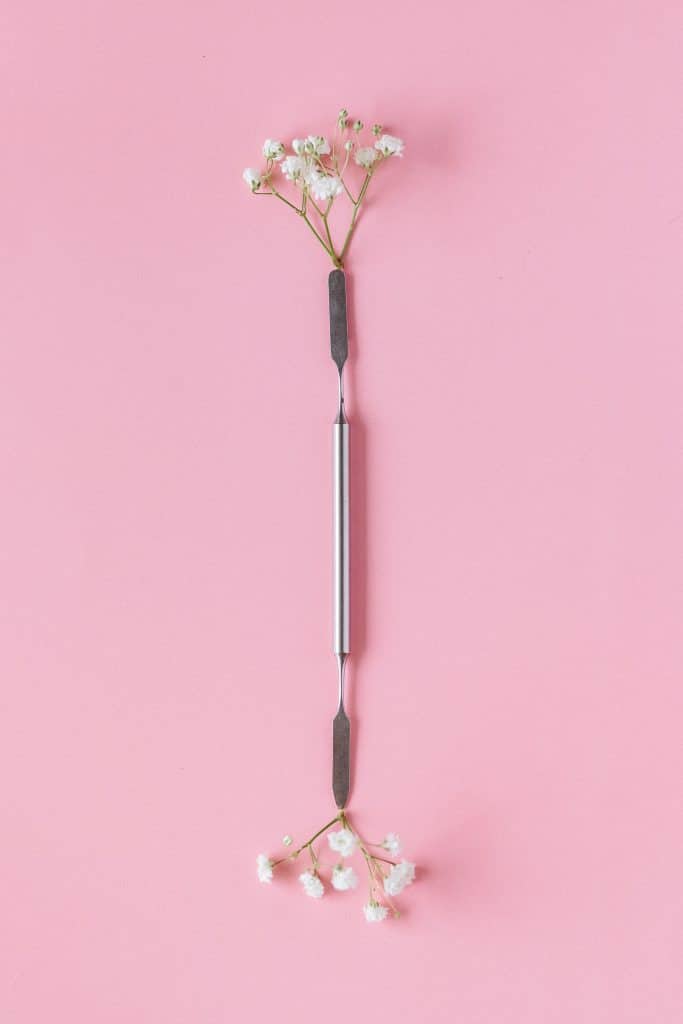
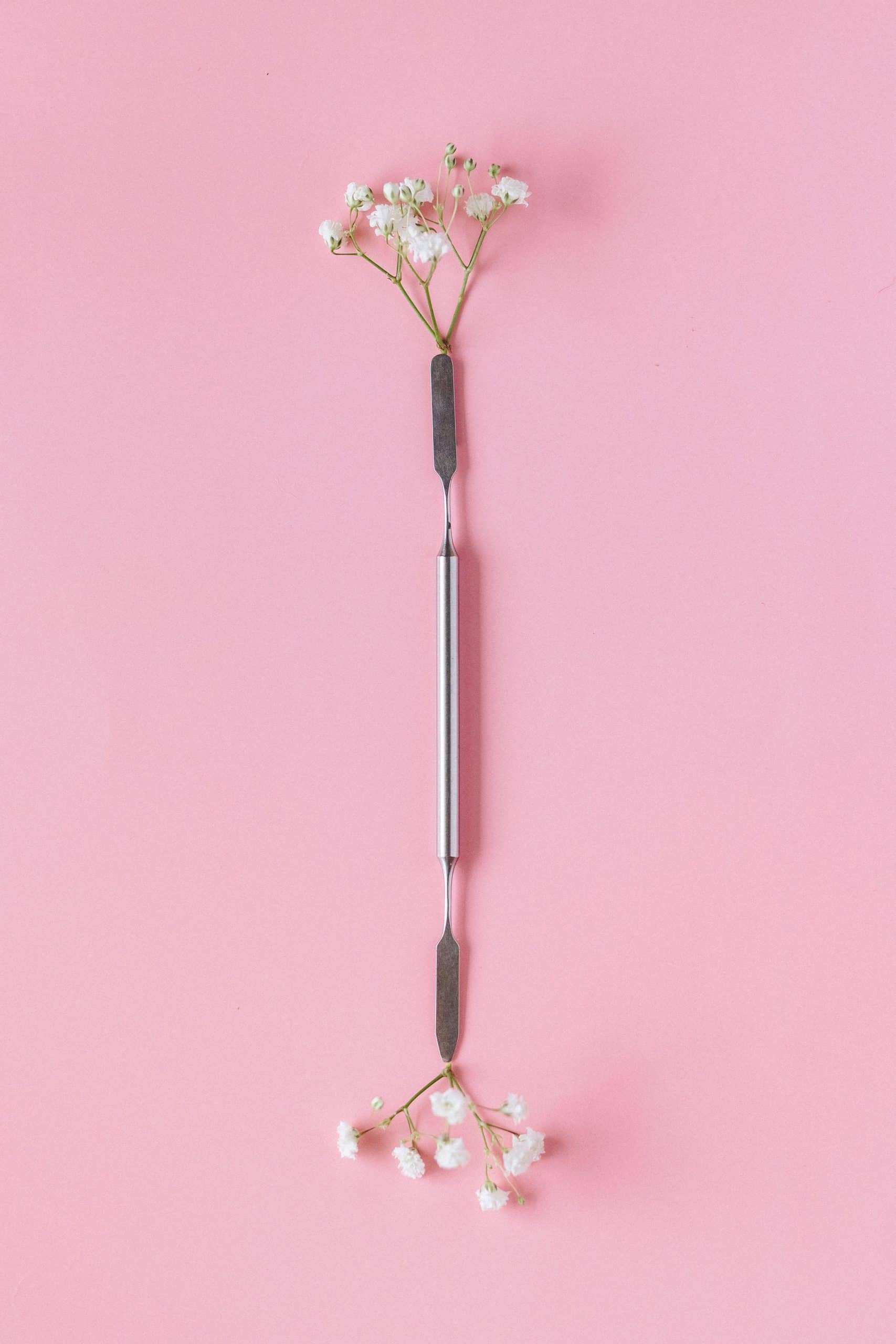
Metal, usually stainless steel, is the standard in professional salons. It’s rigid, which means it applies consistent pressure without flexing, and the edge holds a shape well enough to clean under the free edge or scrape away dead cuticle tissue in addition to pushing skin back. Most metal pushers have two ends: a flat pusher on one side and a pointed or spoon-shaped scraper on the other for cleaning out corners and the underside of the free edge.
The tradeoff is control. Metal doesn’t forgive a heavy hand. Pressed too hard or at the wrong angle, a metal pusher can nick the nail plate or irritate the surrounding skin, which is why most nail schools spend real time on angle and pressure before letting students near a client with one. It also needs to be sanitized between uses like any other metal implement, autoclave or hospital-grade disinfectant, not just a wipe-down.
Wood pushers (orange sticks)
Wood is the disposable, low-cost option, most commonly sold as orange sticks. They’re gentle by nature since the material flexes and gives before it would ever gouge skin or nail, which makes them the safer choice for anyone new to doing their own nails at home. The flip side is that they wear down fast. The tip flattens or splinters after repeated use, and once that happens the pusher stops working well and starts just dragging skin instead of lifting it cleanly.
Because they’re cheap enough to treat as single-use, cross-contamination risk is lower with wood than with a reused metal tool that wasn’t properly sanitized. That’s part of why they show up in home kits and single-service salon setups more than in high-volume professional stations, where a sanitizable metal tool gets more uses out of one purchase.
Silicone pushers
Silicone is the newest of the three in wide use, usually built into the handle of a manicure tool or sold as a soft-tipped attachment. It’s the gentlest option by a wide margin, flexible enough that it’s difficult to injure skin or nail with normal use, which makes it popular for cuticle work on kids, on very sensitive skin, or for anyone recovering from nail damage who needs to avoid any pressure that could aggravate the nail bed.
The tradeoff is effectiveness. Silicone doesn’t hold an edge, so it can’t scrape or clean the way metal does, and it struggles with cuticle tissue that’s thick, dry, or already overgrown. Most people who reach for silicone pair it with a separate exfoliating or softening step first, cuticle oil or a soak, since the pusher alone won’t move stubborn tissue.
Which one to actually buy
For a professional station doing enhancements or gel regularly, metal is worth the sanitation routine because it’s the only one of the three that reliably cleans under the free edge and handles tough cuticle tissue without multiple passes. For occasional at-home use, wood is disposable and forgiving enough that a mistake in angle or pressure won’t cause real damage, and cost isn’t a concern since a pack lasts a long time. Silicone makes sense as an add-on for gentle daily maintenance between full appointments, not as a replacement for a proper pusher during an actual enhancement or gel application.
A lot of home kits include all three now, which isn’t overkill. Metal for the actual push-back and cleanup, wood as a cheap backup or for anyone still building confidence with pressure control, silicone for daily upkeep with cuticle oil.
How to use a cuticle pusher without damaging your nails
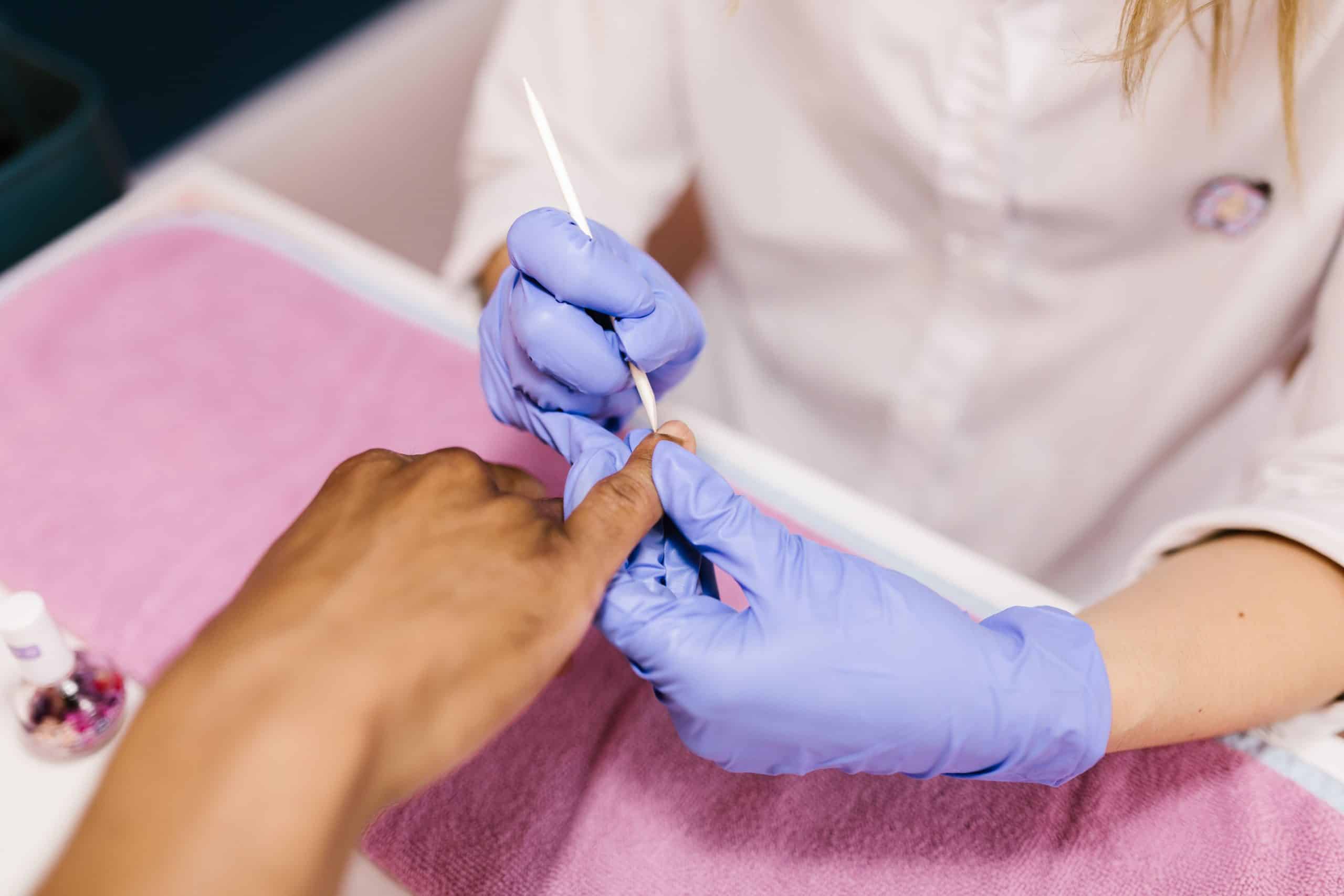
Soften the cuticle first, either with a soak or cuticle remover product, since dry cuticle tissue resists and increases the chance of tearing skin instead of lifting it cleanly. Hold the pusher at a low angle, close to flat against the nail plate, and use short, gentle strokes moving from the center of the nail toward the sides rather than one long aggressive push. Never force tissue that resists. If it’s not lifting easily, it needs more softening, not more pressure.
Frequently asked questions
Is metal or wood better for cuticle pushers?
Metal is more effective for professional use and repeated cleaning under the nail, but requires proper sanitation between uses. Wood is gentler and disposable, better suited to occasional home use.
Can a cuticle pusher damage your nails?
Yes, if used with too much pressure or the wrong angle, particularly with metal. Softening the cuticle first and using light pressure reduces the risk significantly.
Do I need a cuticle pusher if I already use cuticle oil?
Yes, they do different jobs. Cuticle oil softens and moisturizes; a pusher physically moves the skin back off the nail plate so product can bond cleanly, which oil alone doesn’t do.
How often should a metal cuticle pusher be sanitized?
Between every single use, ideally with an autoclave or hospital-grade disinfectant, the same standard as any other reusable metal nail implement.
Are silicone cuticle pushers good enough for a full manicure?
Not on their own for enhancement or gel prep. They’re gentle enough for daily maintenance but don’t hold an edge well enough to clean thick or overgrown cuticle tissue the way metal does.