A client once brought in a bottle of household super glue, genuinely surprised I wouldn’t use it on her tips. I get why people assume they’re the same thing: both are cyanoacrylate, both set in seconds, both come in a small bottle with a similarly awful smell. But nail glue is formulated specifically for keratin and skin contact in a way generic super glue isn’t, and inside "nail glue" itself there’s more variation than most people realize.
It’s all cyanoacrylate, but the formulas aren’t identical
Nearly every nail glue on the market is some form of cyanoacrylate, the same base chemistry as super glue. What changes between products is the specific ester used and the additives blended in. Ethyl cyanoacrylate is the most common base for everyday salon and at-home use: it sets fast, stays reasonably flexible once cured, and holds up well for standard tip application and repairs. Some repair-focused formulas lean on a slightly different ester blend that cures harder and more brittle, which gives more raw holding strength for a crack or a lifted section but doesn’t flex as well under normal wear, so it’s less ideal for a full set of tips that need to move naturally with the nail.
Thickeners and plasticizers get added on top of that base to change viscosity and flexibility, which is really what separates one bottle of "nail glue" from the next more than the base chemistry does.
The four formats you’ll actually run into
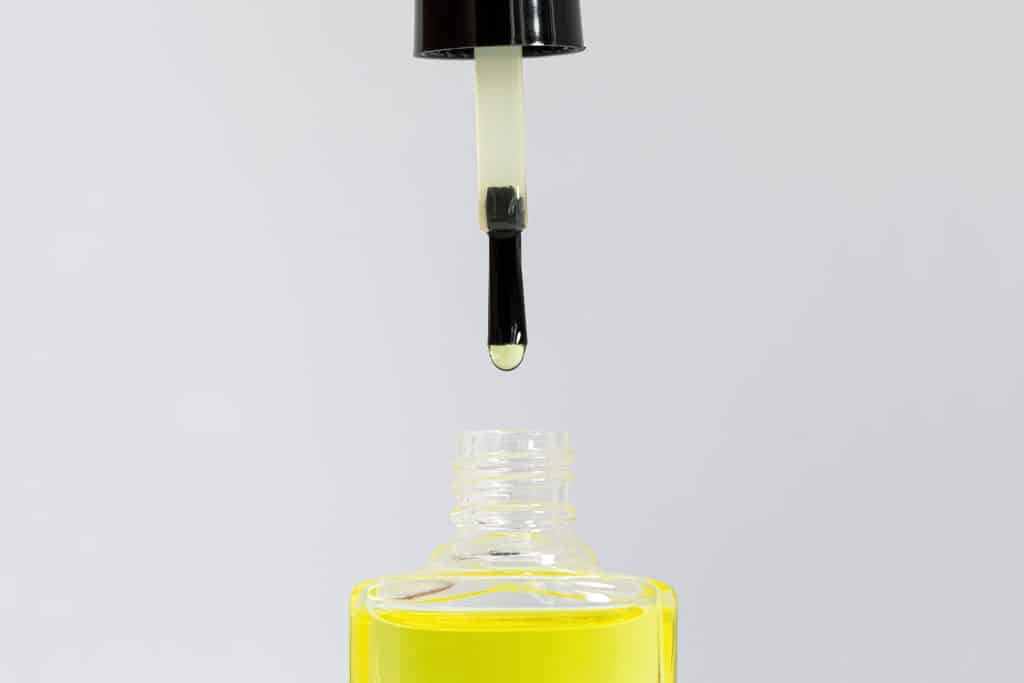
Brush-on. Comes with an applicator built into the cap, similar to nail polish. Good for precise placement on press-ons, wraps, and small repairs where you don’t want glue running everywhere. Sets fast but tends to be thinner and less gap-filling than other formats.
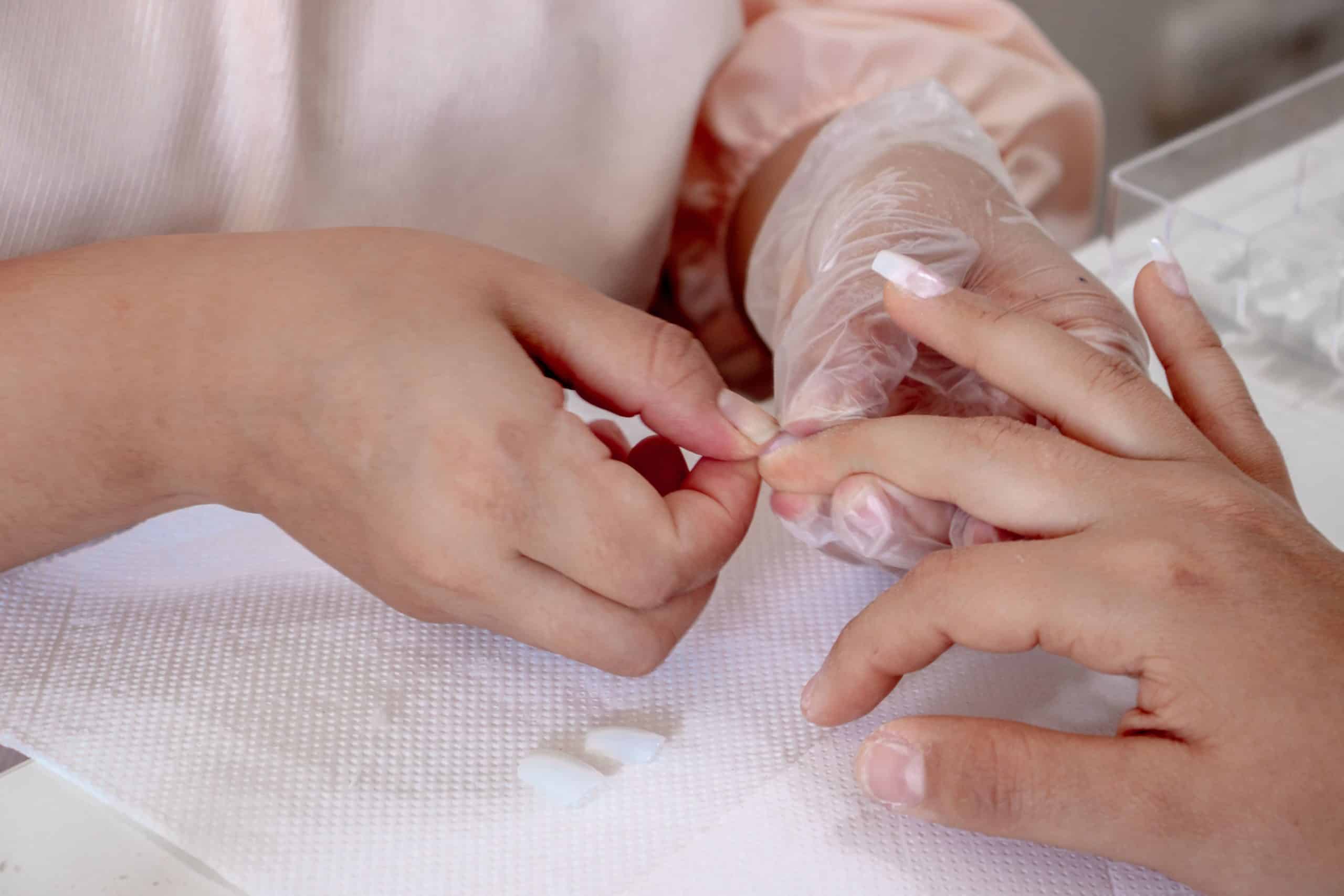
Dropper-style. The standard for tip application in most salons. A thin stream applied directly to the tip well or nail bed, sets within seconds under light pressure. This is what I reach for on almost every full set, since it gives the most control for even, thin coverage without pooling.
Gel nail glue. Thicker, sometimes cured under a UV or LED lamp rather than air-drying alone. Builds the strongest, longest-lasting bond of the four formats, which makes it the choice for extensions expected to carry real length or for clients who are consistently hard on their hands.
Thick resin glue. The heaviest-bodied option, meant for filling cracks, securing loose nail art like crystals or charms, and repairs rather than full tip application. Its viscosity is a liability for even coverage across a whole nail but an asset for holding something in place without running.
Matching the glue to the job
For a full set of tips, dropper-style glue in ethyl cyanoacrylate is the standard workhorse. It’s flexible enough to move with the natural nail underneath and sets fast enough to keep an appointment moving.
For a single repair or a crack that needs reinforcing, a thicker resin or a repair-specific formula holds better, since the added viscosity fills the gap rather than running off it.
For press-ons or anything the client might want to remove and reuse, brush-on glue in a thinner formula makes for a cleaner, more controllable bond that doesn’t overshoot the nail edge.
For long or heavy extensions, gel nail glue’s added strength is worth the extra step of curing under a lamp.
Application mistakes that actually cause lifting
Too much glue is the most common one. A thin, even layer bonds better than a thick pool, which traps air and cures unevenly. Applying to oily or unprepped nails is the second most common cause of early lifting, same root problem as with any nail product: the surface has to be clean and dehydrated for the adhesive to actually bond to keratin rather than to a layer of natural oil sitting on top of it.
Not holding pressure long enough is the third. Most formulas need 5 to 10 seconds of firm, steady pressure to set properly. Letting go early, even by a couple of seconds, is enough to weaken the bond before it’s fully cured.
Using the wrong glue for the job matters too. A thin brush-on formula asked to hold a heavy extension under real load will fail faster than a properly matched gel glue would, regardless of how carefully it was applied.
Safety: skin bonding and fumes
Cyanoacrylate bonds skin just as readily as it bonds nail, and it happens fast. If glue gets on skin, don’t pull fingers apart. Acetone or warm soapy water will loosen the bond gradually; pulling risks tearing skin. For the full step-by-step, including what to do about glue stuck to a counter or table, see nail glue remover: how to get nail glue off skin and surfaces. Keep glue away from eyes entirely, and work in a ventilated space, since the fumes from curing cyanoacrylate can irritate eyes and airways with repeated daily exposure, which matters more for techs applying it dozens of times a day than for an occasional at-home user.
Removal
Standard cyanoacrylate glue softens with warm water soaking or a small amount of cuticle oil worked under the edge, followed by gentle lifting rather than prying. Gel nail glue formulas, being thicker and sometimes UV-cured, generally need acetone to break down fully, similar to any other soak-off gel product.
If nail glue is holding on tips as part of a fuller extension system, nail forms vs tips covers how that base structure gets chosen, and gel nail kits walks through what a starter kit typically includes glue-wise, and cuticle nippers: how to choose and use them safely covers another tool where the wrong pick causes more damage than people expect.
FAQ
Is nail glue the same as super glue?
Chemically related but not identical. Nail glue is formulated for skin and keratin contact with additives for flexibility and controlled cure time that generic household super glue doesn’t include.
Which nail glue lasts the longest?
Gel nail glue formulas generally give the strongest, longest-lasting bond, particularly for extensions carrying real length, though they require lamp curing rather than air-drying alone.
How do you get nail glue off skin safely?
Warm soapy water or acetone, worked in gradually. Never pull bonded skin apart; it risks tearing rather than releasing cleanly.
Can nail glue be used instead of gel or acrylic for a full set?
It’s the bonding agent for tip-based extensions, not a replacement for the building product itself. Gel or acrylic still forms the structural overlay; glue only secures the initial tip.
Why do my tips keep popping off even with fresh glue?
Almost always prep, either oil left on the nail plate or too much glue pooling under the tip rather than a thin, even layer.