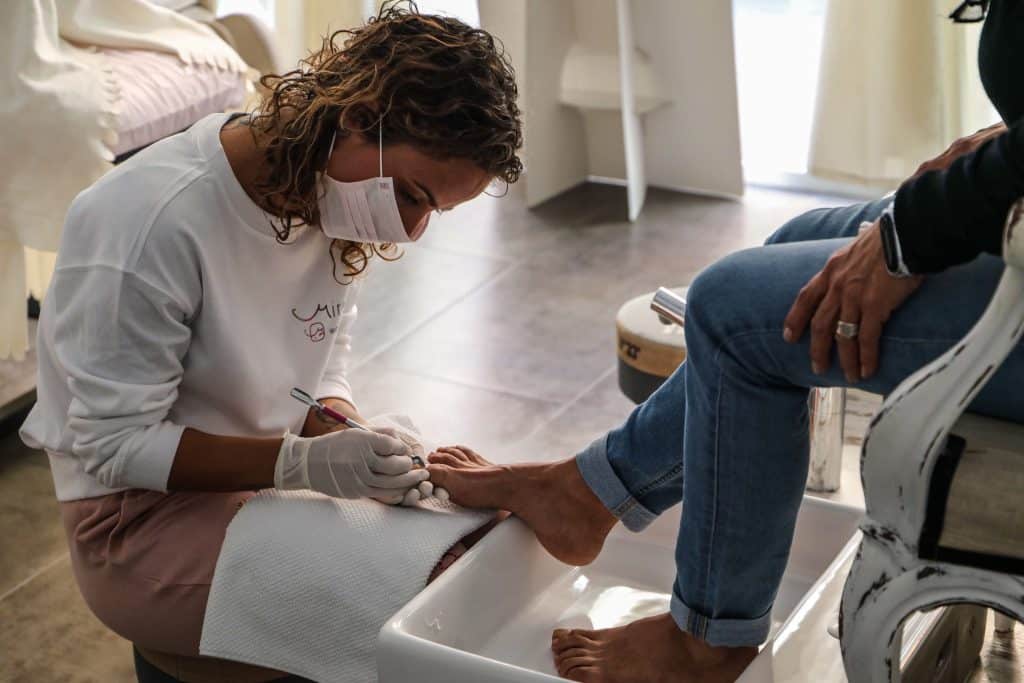
A toe that turns red, swollen and warm a few days after a pedicure is easy to blame on a bump or a tight shoe. Sometimes that’s all it is. But when the redness and heat keep building instead of settling, it’s usually an infection, and that calls for a doctor, not a nail file.
Health note: this article is general information, not medical advice. Redness that spreads, pus, fever or pain that gets worse are reasons to see a doctor promptly, especially if you have diabetes or poor circulation in your feet.
“Pedicure infection” gets thrown around online as if it’s one specific thing. It isn’t. What actually happens under and around a toenail after a bad pedicure depends on what got in, how it got in, and how long it sat there before anyone noticed.
What a pedicure infection actually looks like
Bacterial infections show up fast, usually within a day or two. The skin around the nail turns red, feels warm, and often swells. Press on it and it can be tender or even release a little fluid if it’s progressed. This is the version that sends people to urgent care, because it can spread if it’s left alone.
Fungal infections are slower and less dramatic at first. The nail itself changes rather than the skin around it: a yellow or white discoloration starting near the tip, then the nail thickening or lifting away from the bed. Because this takes weeks or months to become obvious, most people don’t connect it back to a specific appointment, even though a shared foot bath or an unsterilized file is often exactly where it started.
Then there’s the one nobody expects: plantar warts. These come from a virus that gets in through a small break in the skin, often on the sole rather than around the nail, and they show up as a dark-spotted, callus-like patch that can take months to appear. A “callus” that won’t sand down and has tiny black dots in it is worth showing to a doctor rather than buffing again (Mayo Clinic on plantar warts).
Why it happens in the first place
None of this comes from the pedicure itself. It comes from what touched the skin during it. A foot bath that isn’t cleaned between clients holds whatever was on the last person’s feet, and any nick, hangnail, or shaving cut on your foot is an open door for it. Metal tools that go from one client to the next without real sterilization carry the same risk, just more directly, the same way an e-file bit that never gets disinfected between clients can pass along more than a smooth finish.
Cutting corners on cuticle work adds to it. A cuticle isn’t just decorative skin, it’s a seal that keeps bacteria out of the nail fold. Push it back too aggressively or nip it when it doesn’t need cutting, and you’ve opened exactly the kind of entry point a foot bath is happy to fill.
Bacterial, fungal, or something else: how to tell
Timeline is the biggest clue. Redness and swelling within 24 to 48 hours points to bacteria. A nail that starts looking off weeks later, with color change and thickening rather than pain, points to fungus. A rough patch on the sole that shows up months after the fact and doesn’t respond to normal callus care is worth a second look for a wart.
Pain is the other tell. Bacterial infections usually hurt or throb. Fungal changes in the nail plate usually don’t, at least early on, which is part of why people ignore them longer than they should.
What to actually do about it
If you’re looking at redness, heat, and swelling that hasn’t started improving within a day, that’s a call to a doctor, not a wait-and-see situation. A common mistake is treating visible swelling with more foot soaks, which is the opposite of helpful since it’s more warm, damp exposure on already compromised skin. Bacterial infections sometimes need antibiotics, and if there’s fluid buildup, a doctor may need to drain it.
Fungal nail changes need an antifungal, topical for mild cases and oral for anything more established, and that’s also a conversation for a doctor rather than a home remedy (Mayo Clinic on nail fungus). A nail tech can keep a fungal nail neat and trimmed, but buffing doesn’t treat the infection. The same logic applies when people blame a healthy nail plate for a problem that’s actually coming from underneath it.
What actually lowers your risk next time
Ask what your salon does between clients before you sit down, not after. Hospital-grade sterilization (an autoclave) or a documented soak in disinfectant solution for a real amount of time, not a quick rinse, is what you’re looking for. A salon that answers this question without hesitation is usually one that takes it seriously.
Skip the foot bath entirely if you shaved your legs that morning or have any cut, scrape, or bug bite below the knee. It feels like a minor thing to mention, but it’s the single easiest way skin barriers get bypassed. And if a tech offers a metal file or credo blade instead of a disposable or clearly sanitized one, it’s fair to ask for the disposable option instead.
Frequently asked questions
How long after a pedicure would an infection show up?
Bacterial infections usually show up within one to two days. Fungal changes in the nail can take weeks or months to become visible, and plantar warts can take even longer since the virus has a slow incubation period.
Can a pedicure infection go away on its own?
A very mild case of redness that improves within a day might just be irritation. Anything with swelling, warmth, or discharge that isn’t clearly improving needs medical treatment, not time.
Is it safe to get a pedicure again after treating an infection?
Yes, once it’s fully cleared. Let your tech know what happened so they can avoid the affected area and check that the skin has actually healed before doing any cuticle work there.
Do at-home pedicures carry the same infection risk?
The risk from shared tools and foot baths goes away, but the underlying rule doesn’t: don’t soak or work on skin with an open cut, and keep your own tools clean between uses.
Does a red toe always mean infection?
Not always. Tight shoes, an ingrown edge, or simple irritation from filing can cause redness too. The difference is usually warmth, swelling, and whether it’s getting worse instead of better after a day.