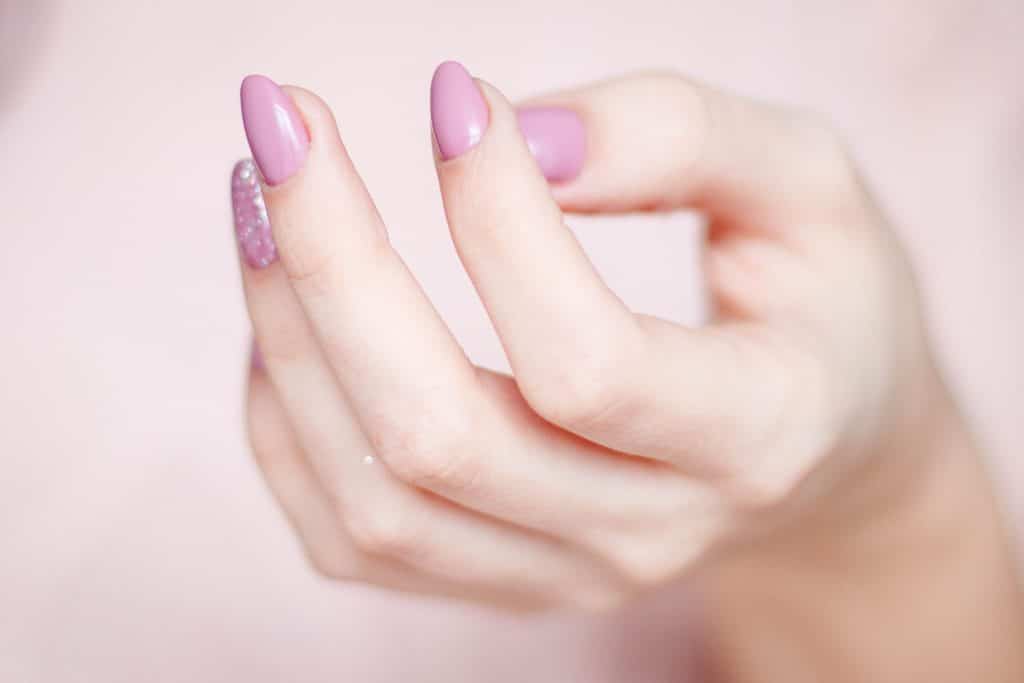
A client sits down, scrolls to a video on her phone, and says she wants “the Russian manicure, like this.” The video shows glass-skin cuticles and a glossy ombre fade. Nine times out of ten what she is pointing at is the polish look, not the technique that actually earned the name. Russian manicure isn’t a color or a finish at all. It’s how the cuticle gets prepped, done dry with an electric file instead of soaking and pushing, and you can put any polish, gel, or builder gel on top of it once that prep is done.
That mix-up matters because it changes what you’re booking and what you’re paying for. A tech who does a real Russian manicure is charging for the extra 30 to 45 minutes of precise drill work on your cuticles, not for a particular shade of pink. Here’s what the technique actually involves, how it differs from a standard manicure, and what to check before you let anyone near your cuticles with a rotary tool spinning at 30,000 RPM.
That polish layer on top is very often shellac specifically, the brand name that became shorthand for gel polish in a lot of salons, and it’s a separate thing from the dry cuticle prep this article covers.
What “Russian manicure” actually means
The core of it is dryness. A classic or European manicure usually starts with a soak, warm water softens the cuticle so it can be pushed back and trimmed with nippers. Russian manicure skips the water entirely. The cuticle is worked while dry, using a pusher first and then an electric file fitted with a small carbide or diamond bit to remove the dead skin (the eponychium and pterygium, technically, not the “cuticle” people picture) in thin, controlled passes.
The technique came out of nail schools in Russia and Eastern Europe in the early 2000s, where dry-prep and e-file work were already standard training, and it spread west mostly through Instagram and YouTube over the last several years as Western techs started importing the training. The name stuck to the method, even though plenty of techs outside Russia now do it and plenty of Russian-trained techs never use the term at all. It’s just called “manicure” where it comes from.
The tools: e-file and bits
A cordless or corded nail drill, the same category of tool used for acrylic and builder gel fills, is the instrument. What changes is the bit and the speed. Cuticle work uses a much smaller, finer bit than what you’d use to shape a nail extension, usually a diamond or carbide bit shaped like a small flame, ball, or cone, running at a low-to-moderate RPM. Diamond bits shave in fine dust and feel gentler against skin; carbide bits cut faster and are more common for techs who’ve been trained specifically on Russian technique, since carbide gives more control at the exact angle needed to lift dead skin off the plate without touching the living tissue underneath.
Sanitation is not optional here in a way it sometimes gets treated as optional elsewhere in the industry. A bit that’s touching skin, not just nail plate, carries a real bloodborne pathogen risk if it isn’t properly cleaned between clients. A salon doing this correctly either uses single-use disposable bits or runs metal bits through an autoclave, a steam sterilizer, not just a UV cabinet or an alcohol wipe. If you ask and the answer is “we spray it with something,” that’s worth treating as a red flag rather than a technicality.
How the service actually goes
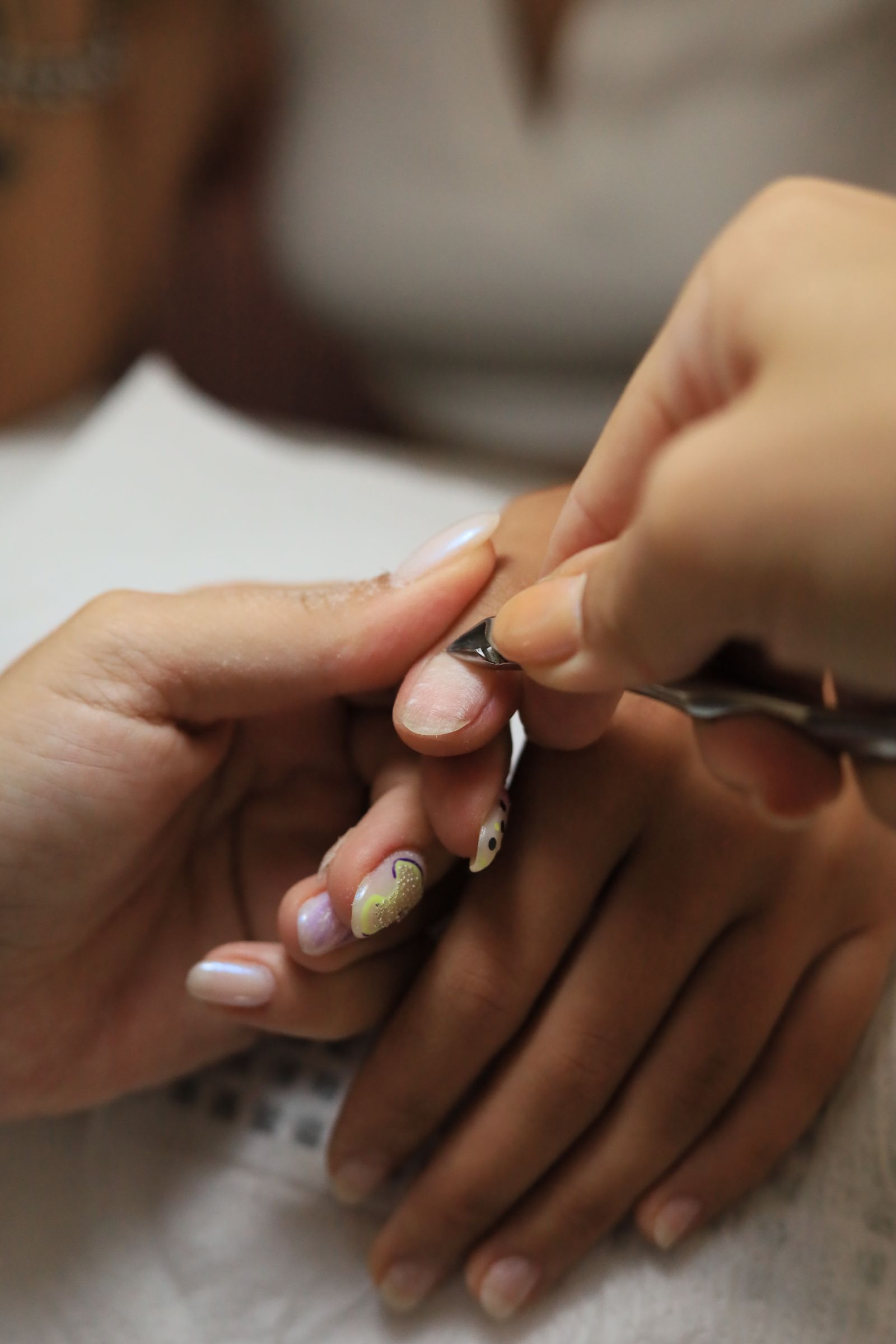
Nail shape and length get sorted first, same as any manicure. Then the pusher, usually metal, moves the visible dead cuticle back off the plate so there’s something for the bit to catch. From there the tech switches to the e-file and works in short, light passes along the base of the nail and up each side wall, removing the loosened dead tissue and any pterygium (the thin, papery skin that clings to the nail plate itself) without going near the living eponychium behind it. A second, smaller bit or a manual nipper often finishes off any hangnail or rough patch the file couldn’t reach cleanly.
The plate gets a light buff after that, mostly to knock down surface ridges and prep for polish adhesion, then color or gel goes on exactly the way it would after any other manicure. The entire cuticle portion, done properly and unrushed, takes 30 to 45 minutes on its own, which is why a full Russian manicure appointment usually runs 90 minutes to two hours instead of the 45 minutes a soak-and-push manicure takes.
Russian manicure versus a classic manicure
The end result, visually, is the difference between “acceptable” and “the skin looks painted on.” Nippers and a soak get most of the dead cuticle off, but water swells the skin, which makes it harder to judge exactly where dead tissue ends and living skin begins. Cutting on swollen, softened skin means a nipper-only manicure almost always leaves a thin margin of dead tissue behind, or occasionally nicks live skin trying to avoid that. The dry e-file approach lets a trained tech see the exact boundary and work right up to it, nail plate visible all the way to the skin fold with nothing left ragged at the edge.
The tradeoff is skill and time. A soak-and-push manicure is something almost any trained tech can do safely with minimal risk. Dry e-file cuticle work has a real learning curve, using the wrong bit, too much pressure, or too high a speed can thin the nail plate or irritate the skin fold, and it takes deliberate practice to get consistently right. That’s the whole reason it costs more and takes a specifically trained technician to do well.
Clearing up the “Russian ombre” confusion
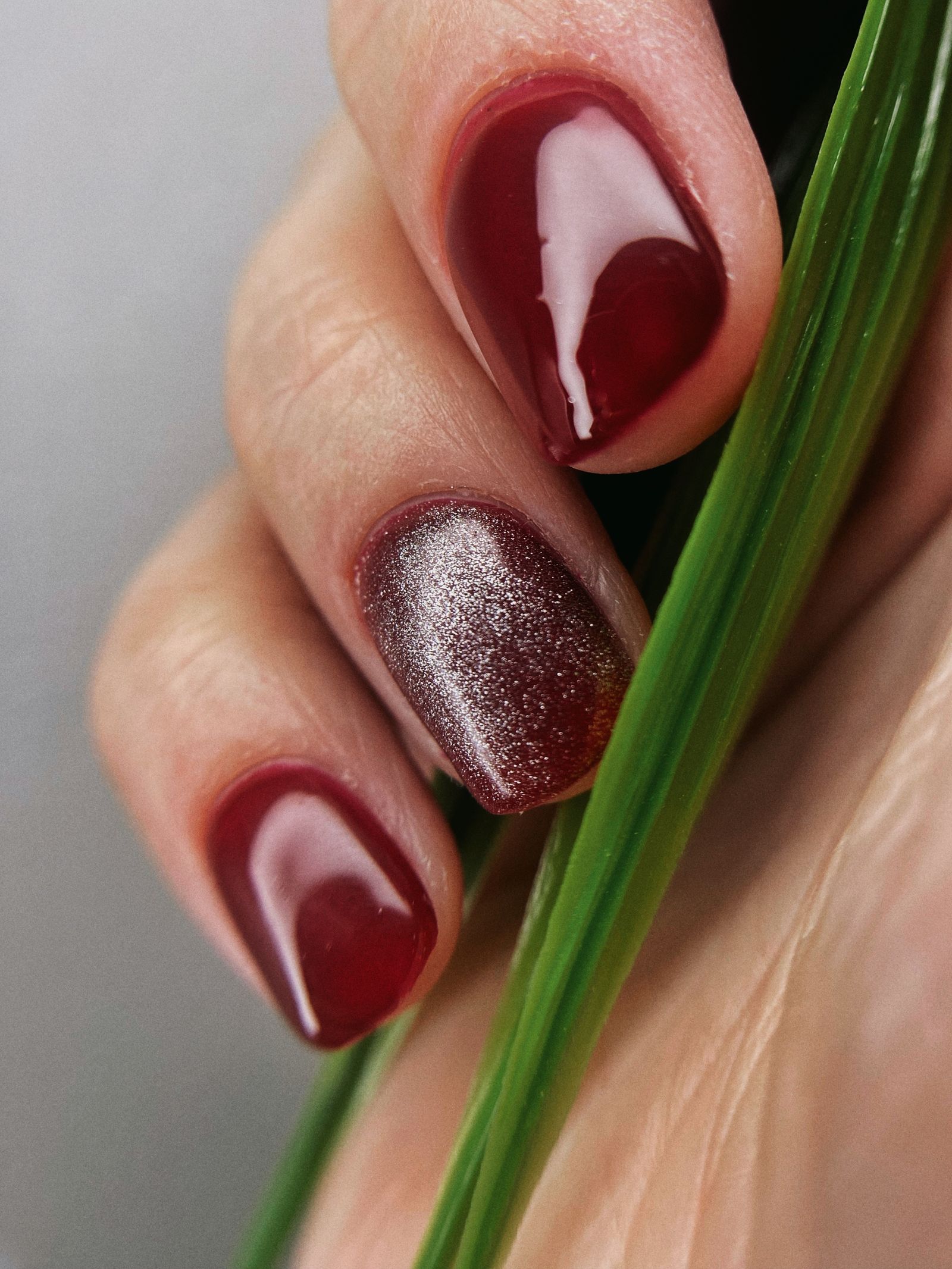
A lot of people searching for Russian manicure are actually picturing Russian ombre or “Russian dip,” a gradient nail art effect made by dabbing gel polish in a stippling motion to fade one color into another, or sometimes a milky white “babyboomer” fade. That’s a color technique, completely separate from how the cuticle was prepped underneath it. You can get a Russian ombre fade over a completely standard manicure, and you can get a plain single-color gel over a full Russian manicure prep. The two trends got tangled together on social media because Russian-trained techs were often posting both at once, but they don’t require each other.
Is it bad for your nails?
Done by someone properly trained, Russian manicure is not inherently harder on the nail than any other cuticle technique, it’s arguably gentler on the surrounding skin precisely because it’s more precise. The risk isn’t the method, it’s an untrained or rushed technician using too aggressive a bit, applying too much pressure, or running the file too hot against skin that’s this thin and this close to a nerve-rich area. Overfiling can thin the nail plate near the cuticle, leaving it more prone to peeling or sensitivity, and nicking the eponychium with a spinning bit creates a real entry point for infection.
If skin around a nail turns red, swollen, warm, or starts producing pus after a service, or if a nick doesn’t heal within the first few days, that’s not something to wait out or self-treat with more cuticle oil, it’s worth seeing a dermatologist or doctor, since it can indicate a paronychia infection that needs actual treatment rather than time.
Cost and how long it lasts
Expect to pay more than a standard manicure, often $15 to $40 more depending on the market, because you’re paying for the extra time and for a technician who’s completed dedicated training on the technique, not just general nail school. The cuticle work itself doesn’t directly change how long polish or gel lasts on top of it, that comes down to the gel system and application, but a clean, precise cuticle line does make regrowth and lifting far less noticeable early on, since there’s no ragged dead skin catching or peeling at the base as it grows out.
Finding a technician who actually does this well
Training matters more here than almost anywhere else in the trade. Ask directly whether the tech has taken a dedicated Russian manicure or dry manicure course, most licensed techs offering it will say so without hesitation, since it’s something they paid extra to learn and are proud of. Ask about bit sterilization specifically, autoclave or single-use, not a general answer about “sanitized tools.” And if it’s your first time with a particular tech, it’s reasonable to ask them to go slower and lighter on the first pass so you can gauge sensitivity before they commit to a full session.
Can you do this at home?
Not the real version, not safely, not without real practice first. A basic at-home e-file with a soft buffing bit for smoothing ridges is fine. Running a rotary tool against your own cuticle to remove dead skin is a different level of risk entirely: you can’t see the angle you’re working at the way a technician facing you can, you don’t have years of feel for how much pressure is too much, and a slip near the skin fold can do real damage in under a second. If you want the look and the clean result, this is one of the few nail services where paying a trained professional saves you from an injury you’d otherwise risk giving yourself.
What you can reasonably do at home is the aftercare: daily cuticle oil between appointments to keep the skin fold from drying out and cracking, which matters more after a dry manicure than after a soaked one, since the skin took more direct handling during the service.
Frequently asked questions
Is Russian manicure the same as a gel manicure?
No. Russian manicure describes how the cuticle is prepped, dry, with an e-file, before polish goes on. Gel manicure describes what’s applied to the nail afterward. You can combine the two, a Russian manicure prep followed by regular gel polish, but they’re not the same thing and neither one requires the other.
Does Russian manicure damage your natural nails?
Done by a trained technician using the right bit and light pressure, no. The risk comes from an inexperienced or rushed tech overfiling near the cuticle, which can thin the nail plate over repeated services. Ask about training and go to someone with dedicated Russian manicure certification, not just general nail school experience.
How long does a Russian manicure last?
The cuticle work itself typically stays clean-looking for three to four weeks before regrowth becomes noticeable, longer than most people get from a soak-and-push manicure, since there’s no leftover dead skin catching and peeling as the nail grows.
Why is Russian manicure more expensive?
The service takes 30 to 45 extra minutes for the cuticle work alone, and it requires a technician who’s paid for and completed dedicated training beyond standard nail school. You’re paying for time and a specific skill, not a different set of products.
Can I get a Russian manicure at home?
The dry e-file cuticle work isn’t something to attempt on yourself without real training, the risk of nicking the skin fold or overfiling is high when you can’t see the angle the way a technician facing you can. Daily cuticle oil between salon appointments is the safe at-home part of the routine.
What’s the difference between Russian manicure and Russian ombre?
Russian manicure is a dry cuticle preparation technique. Russian ombre (sometimes called Russian dip) is a gradient color effect achieved by stippling gel polish. They’re often shown together on social media but are completely independent, one is about the cuticle, the other is about the color on top.
Is the dry e-file cuticle work painful?
It shouldn’t hurt if it’s done correctly, some clients feel light pressure or occasional warmth from the friction, but sharp pain or stinging means the tech is pressing too hard or has strayed onto living skin. Speak up immediately if that happens rather than assuming it’s normal.