A client sat down last week for what she called “just a quick fill” and it took forty minutes, because a third of her nails had lifted at the sidewalls and she hadn’t noticed. That’s the gap between what people expect from an acrylic nail fill and what actually happens in the chair: it’s rarely just “add more product to the base.” It’s an inspection, a repair job, and a rebuild, in that order.
What actually happens during an acrylic fill
A fill isn’t a fresh set and it isn’t a top-up either. It’s three distinct steps, and skipping any one of them is how a fill turns into lifting two weeks later.
Removing product at the regrowth line
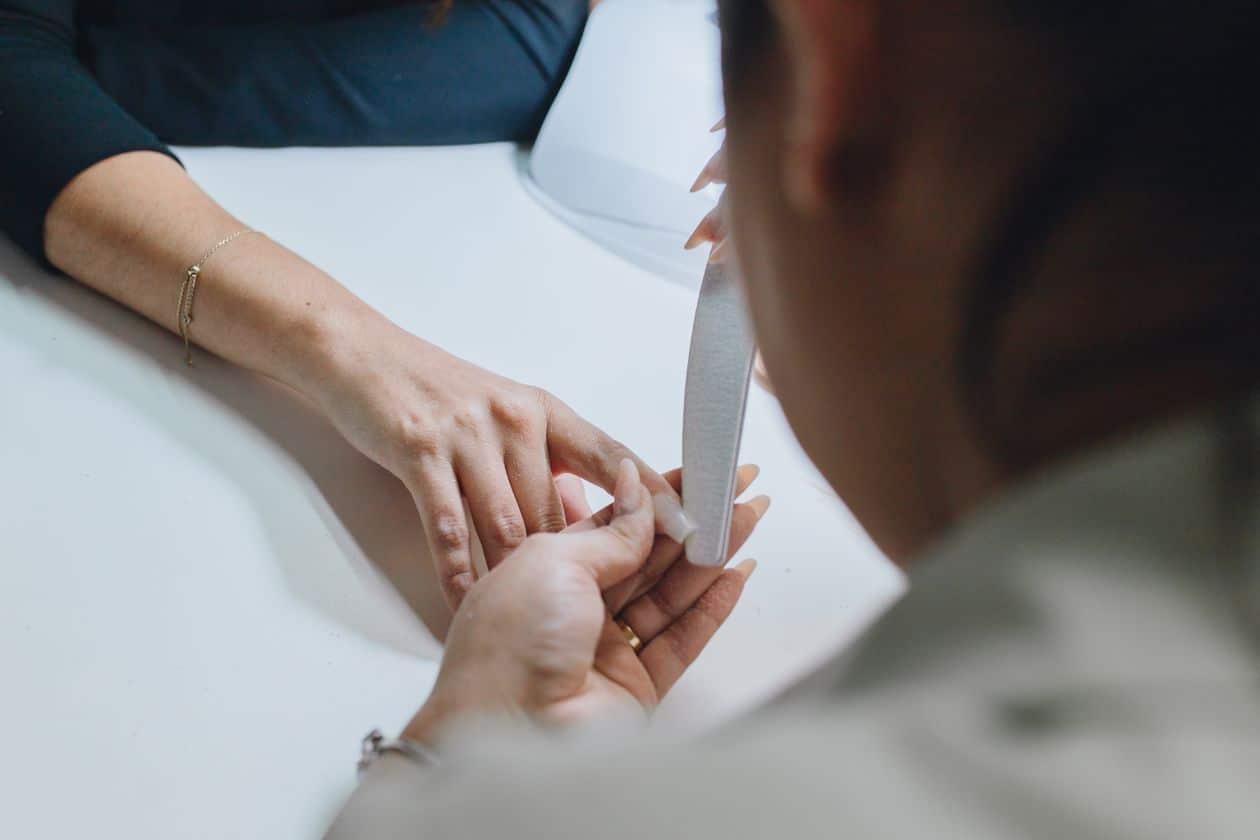
The nail has grown out somewhere between an eighth and a quarter of an inch since the last appointment, which leaves a visible gap of bare nail between the cuticle and the old acrylic. That old product gets filed down and thinned at the regrowth line with a 100–180 grit file or an e-file at low speed, low pressure. The goal isn’t to remove all the old acrylic, only to feather the edge so new product blends into it instead of sitting on top of a visible ridge.
Checking for lifting and cracks first
Before any new acrylic goes on, every nail gets checked for lifted edges, hairline cracks, and any spot where moisture may have gotten underneath. A lifted section isn’t something to fill over. It gets buffed back or, if it’s more than a couple of millimeters, removed entirely with acetone and rebuilt, because sealing product over an existing lift traps whatever’s under there and usually shows up again within a week.
Rebuilding the apex and blending new product
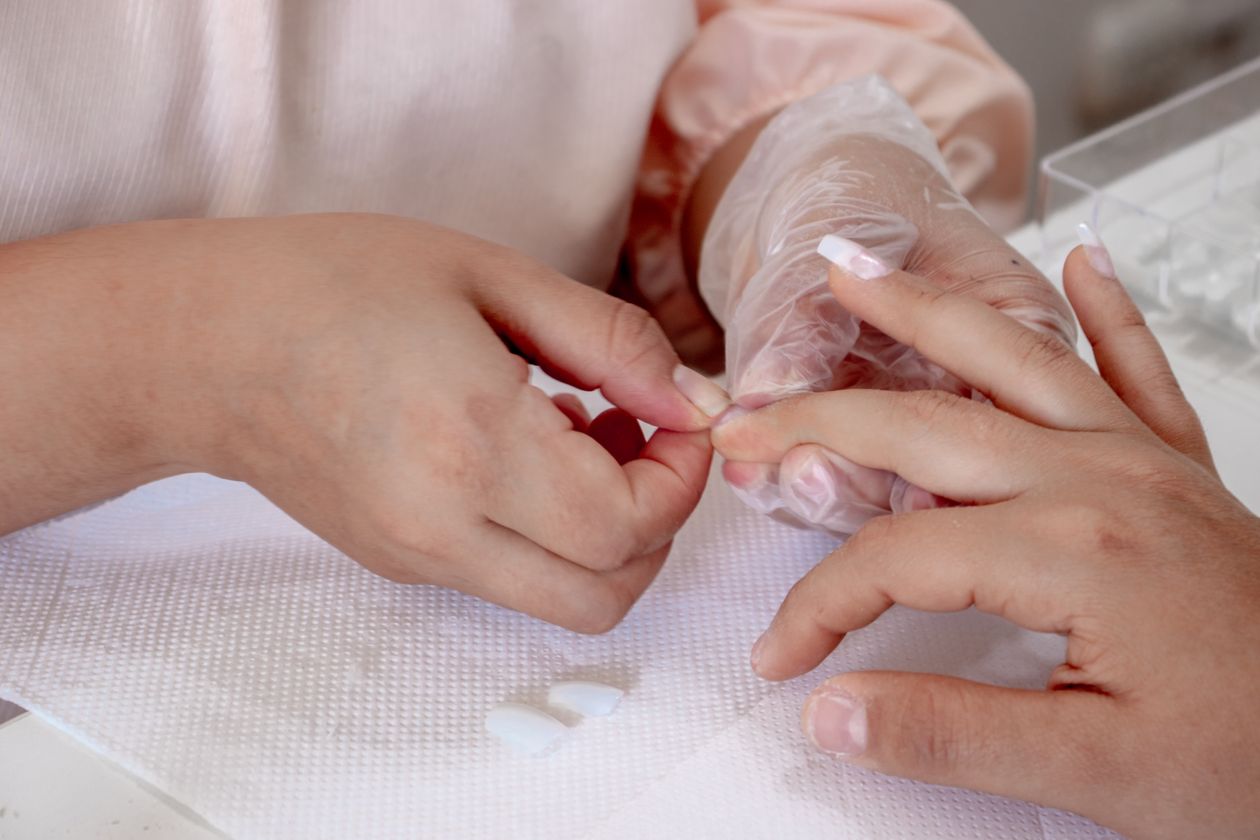
Fresh acrylic (liquid monomer and polymer powder, applied bead by bead) goes over the regrowth area and gets blended into the existing product so there’s no visible seam. The apex, the highest point of the nail’s curve, gets rebuilt here too, since it’s the structural point that keeps the whole set from flexing and cracking. A fill that skips rebuilding the apex is why some sets feel “flat” and weak by the third week.
How often you actually need one
Two to three weeks is the range that holds up for most clients, and it’s driven by nail growth speed, not by a fixed salon calendar. Faster growers (often younger clients, or anyone pregnant, since nail growth speeds up during pregnancy) may need a fill closer to two weeks. Slower growers can sometimes stretch to three and a half weeks without real structural risk, though the cosmetic gap at the cuticle starts looking obvious well before that.
Waiting past four weeks isn’t really “skipping a fill” anymore. At that point there’s usually enough regrowth, enough stress on the product from normal use, and enough opportunity for a lift to have gone unnoticed that most techs will recommend removal and a full set instead of trying to fill it.
Fill vs. full set vs. rebalance
These three get used almost interchangeably by clients, and they’re not the same appointment.
A fill keeps the existing acrylic and adds new product only at the regrowth line, assuming the rest of the set is still sound. A full set (sometimes called a rebuild) means removing all the old product and starting over on bare or lightly prepped natural nail, done when there’s too much damage, too much lifting, or the client wants a shape or length change that a fill can’t fix. A rebalance sits in between: the old product stays, but the apex and overall shape get corrected because the nail has grown in a way that shifted the structural stress point off-center, usually visible as a set that’s started curving or feels weirdly weak on one side.
Signs you’ve waited too long for a fill
A few things separate a normal, slightly-overdue fill from one that’s turned into a bigger job. Lifting you can see without pressing on the nail (not just at the tip, but along the sidewall) means product has to come off before anything new goes on. A visible gap where you can see the natural nail curving away from the acrylic, rather than a flat transition, usually means the apex has shifted and needs a rebalance, not just a fill. And any nail that feels soft, spongy, or discolored under the product is a signal to stop and have it looked at rather than sealing more acrylic over it. That last one, especially a green or yellow tint under the nail, can point to a bacterial or fungal infection, and it’s outside what filing and product can fix. On anything that looks like that, the honest answer is to see a dermatologist rather than keep filling over it.
What a fill costs vs. a full set
Fills typically run 40 to 60 percent of what a full set costs at the same salon, since the appointment is shorter and uses less product. A full set on natural nails might run $45–$70 depending on the market, with a fill landing somewhere around $25–$40. Adding length, a new shape, or extensive repair work during what was booked as a routine fill usually comes with an upcharge, since it eats into the appointment time meant for a straightforward regrowth fill.
Acrylic fill vs. gel fill
The mechanics differ enough that “fill” doesn’t mean quite the same thing across systems. Acrylic cures by air exposure as the monomer and polymer react, which is why it can be sculpted and filed while it’s still slightly workable. Builder gel cures under a UV or LED lamp in a fixed window (usually 30–60 seconds per layer depending on the lamp’s wattage), which changes the pacing of the appointment but not the underlying logic of the fill itself: old product thinned at the regrowth line, structure checked, new product blended in. The full breakdown of that process, including cure times and lamp specs, is in our builder gel refill guide. If you’re trying to decide which system to start with in the first place, our gel vs. acrylic comparison covers durability, cost, and removal side by side, and if you’re already on acrylic and considering a change, switching from acrylic to gel walks through what actually changes in the transition.
FAQ
Can you fill acrylic nails yourself at home?
It’s possible with the right tools and product, but the filing step (correctly thinning the regrowth line and checking for hidden lifting) is the part most home fills get wrong, which is what leads to trapped moisture and infection risk. A first attempt is safer done under guidance or with a light touch and short intervals rather than stretching to a full set’s worth of new product.
Does every fill need a full new coat of acrylic?
No. Only the regrowth area and any repaired sections get new product; the rest of the existing set stays as is, which is why a fill takes less time and less product than a full set.
Why does my acrylic fill feel weaker than my last full set?
Usually the apex wasn’t fully rebuilt during the fill, leaving the structural high point too low or off-center. That’s a rebalance issue, not a sign the product itself is bad, and it’s worth mentioning to your tech at the next appointment.
Is it bad to go past three weeks between fills?
Not automatically, but the risk of unnoticed lifting and hidden moisture goes up the longer product sits over a growing nail. Past four weeks, most techs will suggest a full set instead of a fill.