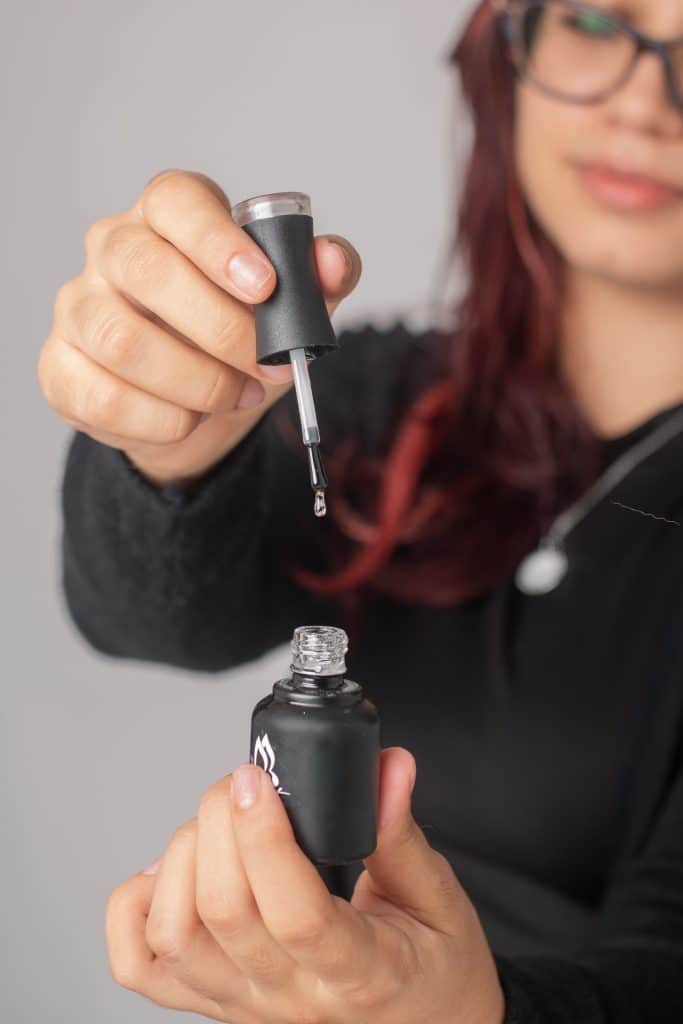
A regular of mine showed up with a screenshot from a UK nail account, asking for “BIAB” because her set in the photo looked thinner and glossier than the builder gel she usually gets from me. She was half right that something was different. What she was actually asking for was a specific way of applying a product that, underneath the branding, is doing the same job as the builder gel already on my cart.
What BIAB actually is
BIAB stands for Builder In A Bottle. The name started as a trademarked product from The GelBottle Inc., a UK brand, and it’s since done what Shellac did a decade earlier: it became the word a lot of people use for the whole category, regardless of which brand’s bottle it actually came out of. When someone asks for biab nails today, they usually mean a soak-off gel overlay applied straight from a bottle with a brush, not necessarily that specific brand.
Chemically, BIAB is a soak-off builder gel. Same resin family, same UV/LED cure, same soak-off removal. The differences that actually matter are in the packaging, the viscosity, and what the product is marketed to do.
How BIAB differs from builder gel
Bottle and brush vs. pot and tube
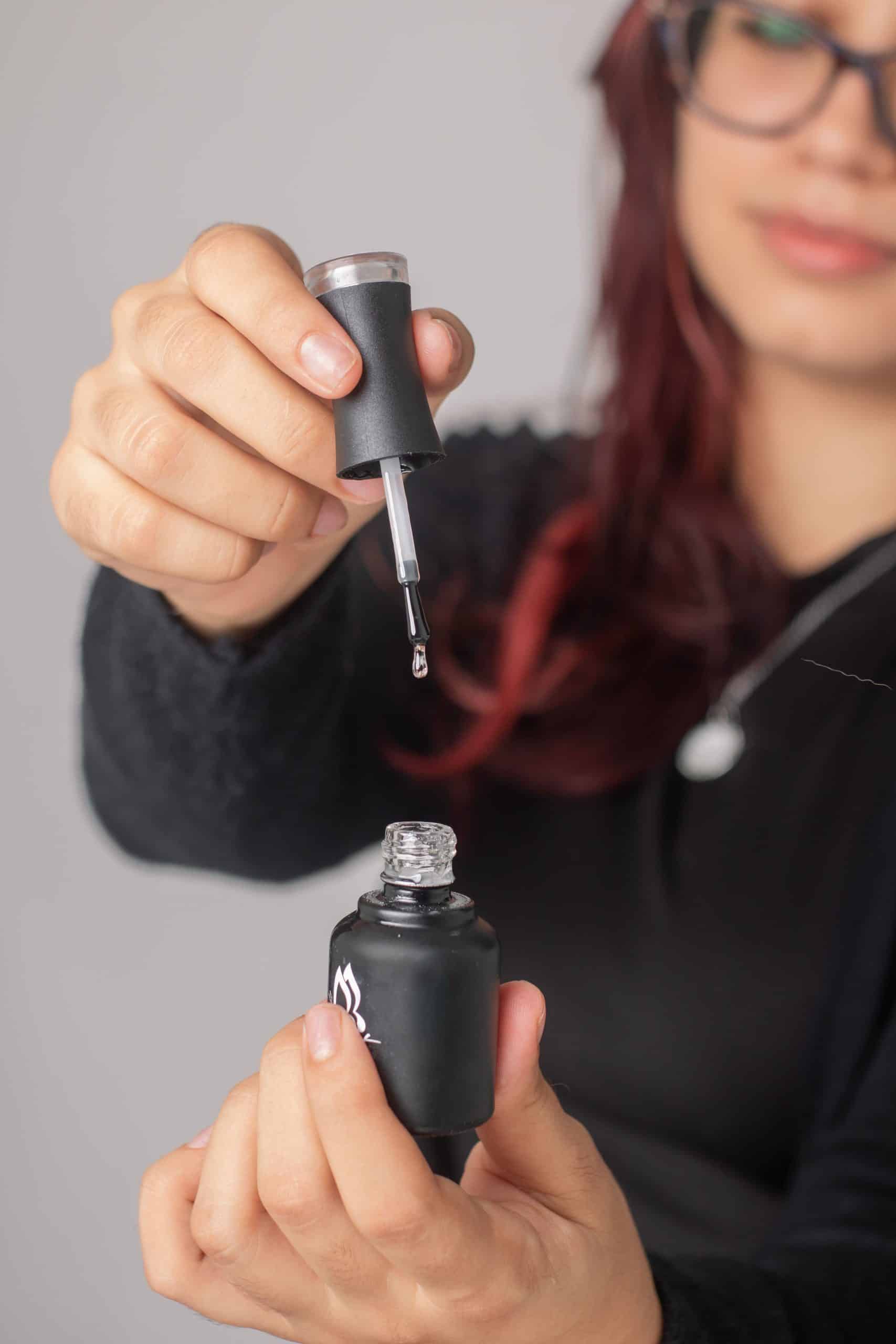
Traditional builder gel usually comes in a squeeze tube or a pot, thick enough that you pick product up on a brush and place it deliberately, the way you’d work with a stiff frosting. BIAB comes in a polish-style bottle with its own brush built into the cap, which changes the whole application rhythm. You’re painting it on more than sculpting it, closer to how you’d apply gel polish than how you’d build a form-supported extension. That format also makes BIAB easier to control for a tech still building brush confidence, since the bottle doses the product for you instead of leaving pickup amount entirely to feel.
Self-leveling vs. hold-your-shape
BIAB formulas are thinner and self-level more, which means they settle flat on their own before curing and need less manual shaping to look smooth. A firmer builder gel holds whatever shape you put it in until it’s cured, which is exactly what you want when you’re building an apex or extending past the free edge with a form. That same stiffness is a disadvantage for a quick overlay, where a self-leveling product gets you to a clean, even finish faster.
Overlay-first vs. extension-first
BIAB is marketed mainly as a strengthening overlay for the natural nail rather than an extension system, and most techs I know reach for it when a client wants their own nails reinforced and glossy without added length. Builder gel does that job too, but it’s also the product of choice when someone wants a sculpted extension over a form or tip, something a thinner, self-leveling BIAB formula struggles to hold in place while curing. Nothing stops a skilled tech from extending with BIAB or doing a bare overlay with a firmer builder gel. The marketing draws a harder line between the two than the chemistry does.
BIAB and “structured gel manicure”: same thing, different name
A third term floats around the same conversation: structured gel manicure. It describes the same basic idea as BIAB, a soak-off gel overlay applied and shaped directly on the natural nail to add strength and a smooth apex, without extending past the free edge. Some salons use “structured gel manicure” specifically to describe the service, and “BIAB” to describe the product used to perform it, which is a reasonable enough distinction but not one every tech or client makes consistently. If a menu lists both as separate services, ask what actually changes between them. Often the honest answer is nothing beyond which brand’s bottle the tech reaches for.
Is BIAB stronger or weaker than builder gel?
Neither, as a category. Strength comes from the specific formula and how thick a layer gets applied, not from whether the product shipped in a bottle or a pot. A well-applied BIAB overlay reinforces a natural nail about as well as a well-applied builder gel overlay of the same thickness, and both rely on the same fundamentals: a properly built apex for flex resistance, full coverage to the sidewalls, and a cured layer thick enough to actually do something structurally rather than just sit there as a glossy coating. Where builder gel pulls ahead is in situations that need real structural load-bearing, a long extension held out past the free edge on a form, since a firmer, non-self-leveling gel is easier to control at that thickness without it sagging before it cures.
Prep and removal work the same way
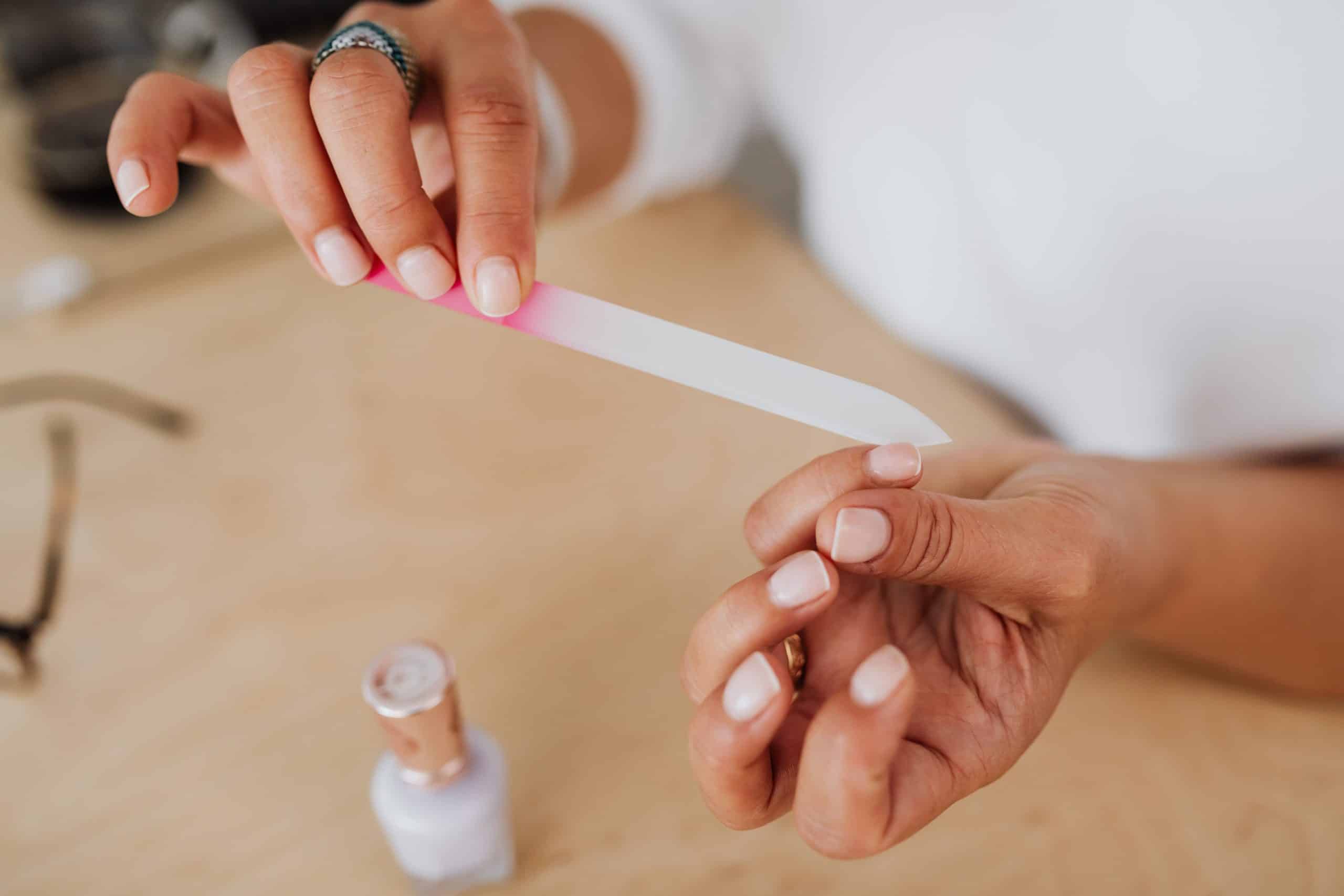
Whatever you call the product, prep doesn’t change: cuticles pushed back, the shine buffed off the nail plate, and a dehydrator and primer applied before anything goes on, since adhesion depends on a clean, dry nail regardless of the brand on the bottle. Removal is the same soak-off process too, acetone-soaked cotton, foil wrap, and enough wait time for the product to soften before it’s gently pushed off, not picked at.
Cost: is BIAB more expensive?
Sometimes, but not because the product does more. BIAB’s popularity as a specific service name lets some salons price it as a premium option, particularly in markets where the term shows up more in marketing than “builder gel” does. The underlying materials cost is comparable, so a price gap between the two on the same salon’s menu usually reflects positioning more than anything happening differently under the lamp.
Which one should you actually ask for?
If the goal is a natural-nail overlay with some added strength and shine, and no length, either term gets you to the same place, and a lot of salons will just ask which brand you’d like rather than treating BIAB and builder gel as separate services. If length is the goal, ask specifically for an extension, since some techs reserve BIAB for overlay work only and will reach for a firmer builder gel once a form or tip enters the picture. Bring a photo either way. It settles more confusion than the terminology does.
Frequently asked questions
Is BIAB the same as builder gel?
Chemically, yes, both are soak-off gel systems in the same resin family. BIAB refers more specifically to a thinner, self-leveling formula applied from a bottle, usually for overlays rather than extensions.
Can BIAB be used for nail extensions?
Yes, with a skilled tech and a form, though its thinner, self-leveling consistency makes it a less common choice for extensions than a firmer builder gel.
Does BIAB damage natural nails?
No more than any other soak-off gel, applied and removed correctly. Damage usually comes from picking it off or over-filing during removal, not from the product itself.
Why do some salons charge more for BIAB than builder gel?
Pricing usually reflects the brand and the salon’s positioning, not a real difference in product cost or skill required. The two services use comparable materials and techniques.
Is a structured gel manicure the same as BIAB?
Usually, yes. Both describe a soak-off gel overlay built directly on the natural nail without extending past the free edge. Menu naming varies more than the underlying technique does.
How long does a BIAB overlay last?
Three to four weeks is typical, the same range as a builder gel overlay of similar thickness, before regrowth makes a fill or soak-off necessary.