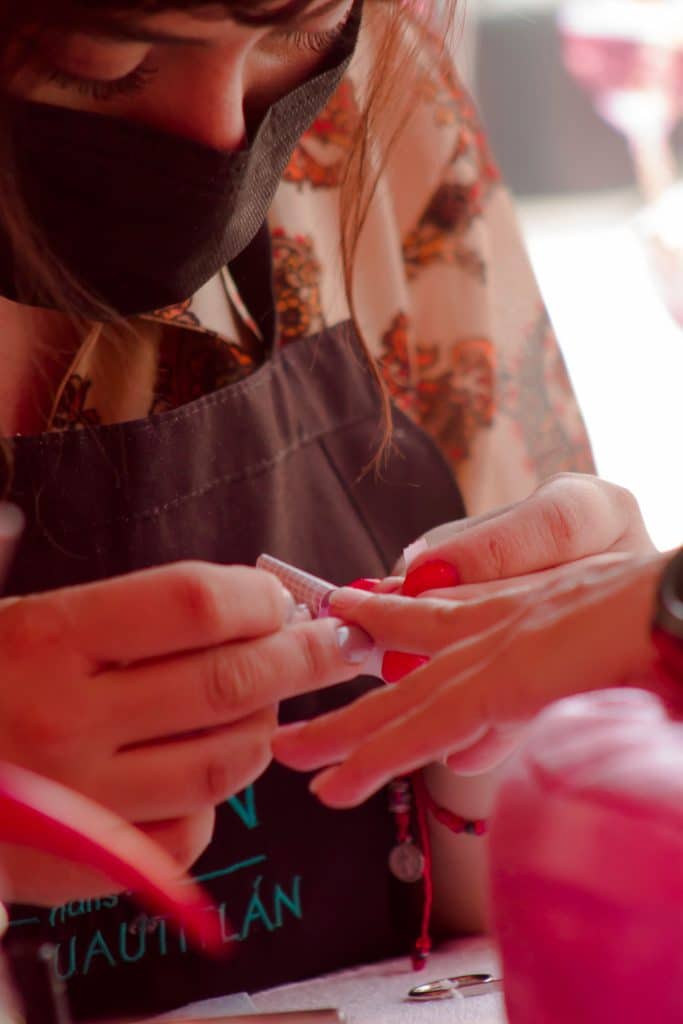
A client points at a screenshot and asks for gel-x nails, and half the time what she is actually pointing at is length and a smooth, glassy curve rather than a specific brand. That is fine. It does not change what she is about to sit through. Gel-X started as one company’s soft gel tip system, and the name has since drifted into a catch-all term for a whole category of pre-shaped tip work. What actually happens in the chair, how long the set holds up, what it costs, and whether you can pull it off at home all come down to understanding the system underneath the name. It’s one of the more popular gel nail extensions specifically because the shape comes pre-made rather than sculpted by hand — if you’re still weighing it against the other systems, our guide to choosing a nail extension system lays out the wider field.
What gel-x nails actually are
Gel-X is a soft gel tip extension system first sold under that name by Apres Nail, which launched the product in 2017. Instead of sculpting a shape by hand over a form, the technician glues a pre-curved, pre-shaped soft gel tip onto the natural nail, blends the seam, then seals the whole thing with a layer of builder gel or a comparable structural gel and cures it under an LED lamp. The tip itself is soft gel rather than hard, acrylic-style plastic, which is the detail that separates it from an older acrylic tip-and-glue set.
Because the branded name became shorthand for the method, plenty of salons now offer “gel-x nails” using tips from other manufacturers built the same way. The technique matters more than the label on the tip box at that point. For the detailed side-by-side against sculpted builder gel specifically, see builder gel vs Gel-X. This guide stays with the system on its own: what is in the kit, what the appointment looks like start to finish, and what happens after you leave the chair.
What’s actually in a gel-x kit
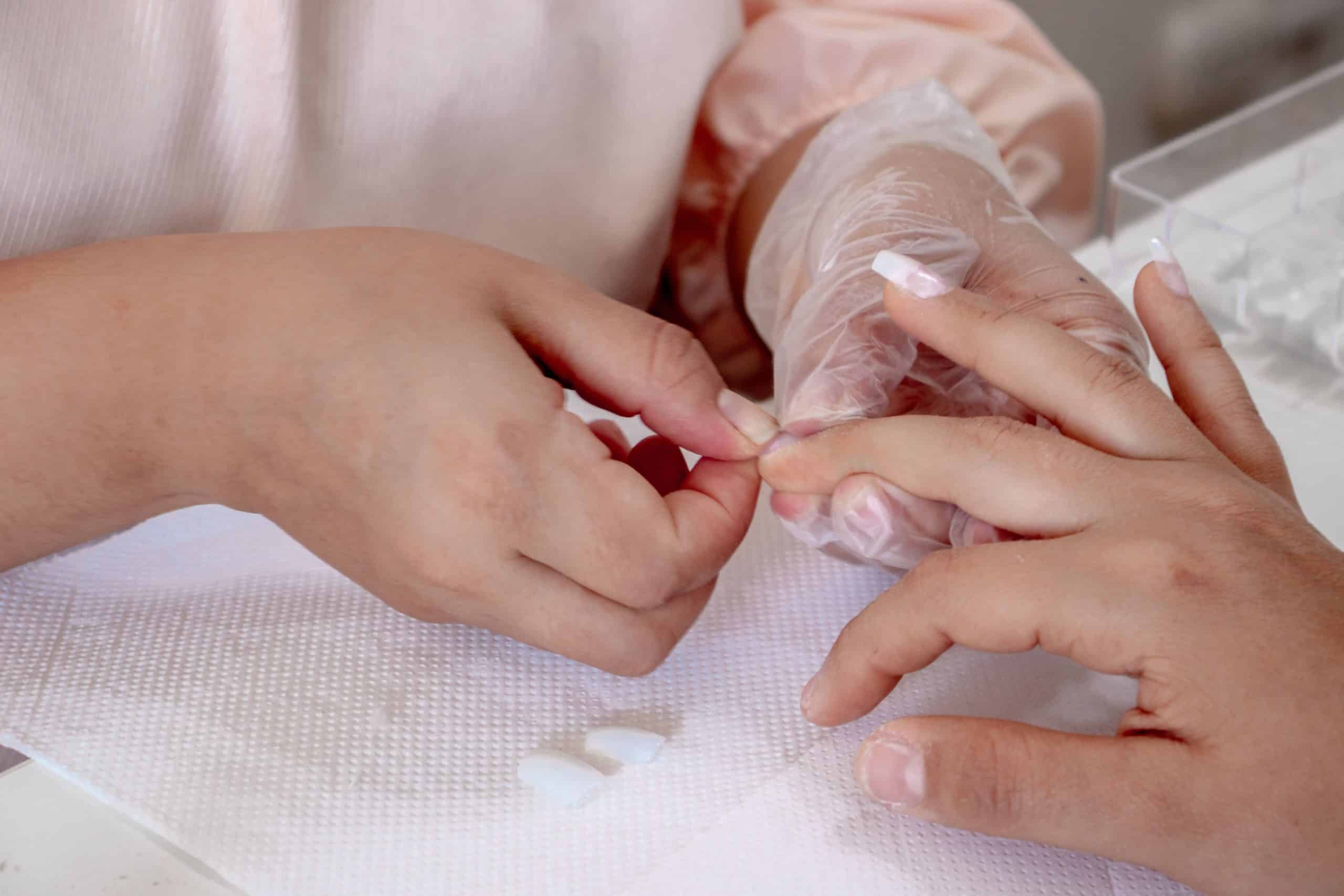
A typical setup has four parts: a pH bonder, a primer, a box of pre-shaped soft gel tips in a range of sizes, and a bonding or extension gel used to glue the tip on and seal the seam. Most techs finish with a separate builder gel or gel polish top layer for extra strength and shine. None of this is exotic. The bonder and primer do the same prep job any gel service needs, stripping surface oils and roughing the nail plate slightly so product actually grips, covered in more depth in our guide to nail prep before gel. Skipping that step is the fastest way to end up with a tip that pops off in week one, no matter how good the tip itself is.
What actually happens during the appointment
The nail gets buffed and lightly shaped, then the bonder and primer go on. The tech picks the closest tip size for each nail from the kit, checks the fit against the natural nail width instead of eyeballing it, and lightly roughs the underside of the tip so the bonding gel has something to grab. A small bead of bonding gel goes on the tip and the nail bed, the tip is pressed into place at the right angle, and it gets a short flash cure, often around 30 seconds, just enough to hold it while the tech moves down the hand.
Once every tip is set, the tech trims each one to length, files the seam where the tip meets the natural nail until it is smooth to the touch, and seals the whole nail with a thin coat of builder gel or a similar structural gel, cured fully under the lamp. A final buff, color or clear top coat, and one more cure finishes the set. Start to finish, a full set usually runs somewhere between one and two hours depending on how many nails need reshaping and how fast the tech sizes tips. A rushed 45-minute version exists, but seam blending is the step that suffers first when time gets cut short.
How long gel-x nails actually last
Three to four weeks is the realistic range for a well-applied set, matching the wear window seen across other gel and builder gel services on this site. What actually shortens that window has less to do with the tip system itself and more to do with three things: how thoroughly the nail was prepped before the tip went on, how well the seam was blended, and what the hands are doing day to day. Someone doing dishes bare-handed every night, or picking at a lifted edge instead of leaving it alone, is going to see week-two problems no product line prevents.
The seam is worth watching specifically, since it is the one failure point Gel-X has that a fully sculpted builder gel set does not. A seam that was not filed flush or bonded with even pressure tends to catch on fabric and lift first, usually at the sidewall rather than the cuticle.
Fill or full removal
Around the two-to-three-week mark, regrowth shows as a visible gap near the cuticle. If the tip and seal are still solid, a fill works the same way it does on any gel set: the lifted or grown-out area gets buffed and filled with fresh product instead of removing the whole thing. If the seam has lifted in more than one spot, or the tip itself has cracked, a full removal and fresh set is the better call rather than trying to fill over a compromised base.
Taking a gel-x set off
Removal follows the same acetone soak-off process as any gel nail, just with an extra minute or two since there is a tip and a seam to soften along with the top layers. Trim the length down first so there is less surface area to soak through, then file off the shine on the top coat so the acetone can actually get in. A cotton pad soaked in acetone, wrapped in foil against each nail, needs roughly 15 to 25 minutes before the product softens enough to gently push off with a cuticle stick, not scraped or pried. The full guide to removing gel nails safely at home walks through the soak, the timing, and what to do if a section is not budging yet. Pulling a still-hard tip off is what actually damages the nail plate underneath, not the wear itself.
What actually extends the wear
Cuticle oil worked in daily keeps the seam and the surrounding skin from drying out and cracking, which is where a lot of early lifting starts. Gloves for dishes and cleaning products matter more than most people expect, since repeated water exposure softens the seal over weeks the same way it softens a fingernail on its own. And the moment a corner lifts, even a small one, it is worth getting it looked at rather than leaving it to catch on something and tear further. A pinhead lift caught early is a two-minute fix. Ignored for a week, it usually turns into a full redo.
What gel-x nails actually cost
Pricing swings widely by salon and region, so treat any specific number as a rough guide rather than a quote. A full set generally runs somewhere in the sixty to a hundred and fifty dollar range in most US markets, with simple color on top at the lower end and hand-painted art or elaborate shapes pushing it higher. Fills tend to cost less than a full set, closer to what a standard gel fill runs, since less time goes into resizing and reblending tips. The tip kit itself, plus the extra bonding step, is usually why a Gel-X set costs a bit more than a plain builder gel overlay on the same nails.
Doing it yourself at home
At-home kits exist and include the same basic pieces: tips, bonder, bonding gel, and a small LED lamp. The learning curve sits in sizing and seam blending, the same two things a new salon tech struggles with early on. A first attempt at home is more likely to have visible seams and uneven length than a salon set, simply from lack of practice, but the product itself is not the limiting factor. Anyone comfortable filing carefully and working nail by nail rather than rushing a full set in one sitting can get a workable result within a few tries. If seams and sizing sound like more precision than you want to deal with, a press-on set gets similar length with no gel or lamp involved.
Who gel-x nails actually suit
The system works well for anyone who wants a consistent, salon-uniform length and shape without the time a fully sculpted set takes, and who does not have unusually narrow or curved nail beds that a stock tip size will not sit well on. It is not the only extension option, and it is worth weighing against the broader field before committing to a full set. Our gel vs acrylic comparison covers how this whole gel family stacks up against acrylic if that is still an open question, and the builder gel vs Gel-X piece linked above goes deeper on the sculpted-versus-tip decision specifically. For a focused look at Gel-X against acrylic specifically, on durability, cost, and removal, see our Gel-X vs acrylic nails: which one actually lasts longer.
FAQ
What are gel-x nails made of?
A pre-shaped soft gel tip, plus a bonding gel and a builder or structural gel used to seal it, all cured under an LED lamp. None of it is the powder-and-liquid mix used for acrylic.
How long do gel-x nails last before a fill is needed?
Three to four weeks with correct application and normal wear, close to any other gel-based extension. Prep quality and seam blending affect that window more than the product itself.
Can you get gel-x nails wet?
Yes, once the set is fully cured, which happens in the chair under the lamp rather than over the following hours. Frequent water and cleaning-product exposure over the following weeks is what wears down the seal faster, not a single shower.
Do gel-x nails damage your natural nails?
Not inherently. Damage almost always traces back to overfiling during application, skipped prep, or picking a tip off instead of soaking it. Applied and removed correctly, the tip adds little bulk and the natural nail underneath stays intact.
How much do gel-x nails cost compared to acrylic?
Usually close to or slightly above a plain builder gel overlay, mostly from the tip and the extra bonding step, and generally in the same range as or a little above acrylic for a comparable full set. Local pricing varies enough that it is worth asking your salon directly.
Can gel-x nails be removed at home?
Yes, with a standard acetone soak: foil-wrapped acetone pads for roughly 15 to 25 minutes, then a gentle push with a cuticle stick rather than scraping or prying. A tip that will not budge yet needs more soak time, not more force.
Is gel-x the same as regular gel polish?
No. Gel polish is a color layer cured onto the natural nail with no added length. Gel-X is an extension system built on a pre-shaped tip, with gel polish or a clear top coat often applied over it as the final step.