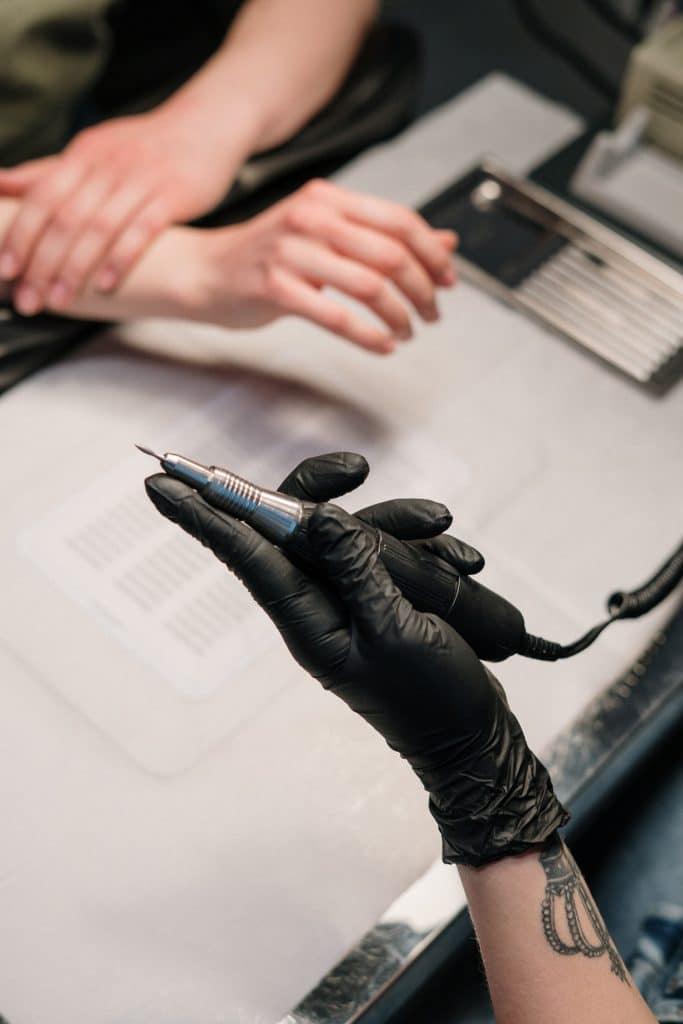
I worked three years at a busy salon before I bought my first nail dust collector, and I remember the exact appointment that changed my mind: six full sets in one day, e-file running most of the afternoon, and by closing I’d developed a scratchy cough that took until the next morning to clear. That wasn’t allergies. That was a full day of fine acrylic and gel dust with nothing pulling it out of the air in front of my face.
What a nail dust collector actually does
A nail dust collector is a small vacuum unit, usually sitting on or built into the nail table, that pulls airborne particles created during filing, most often from an e-file or hand file, down through an intake grille and into a replaceable filter before they spread into the room. It doesn’t stop dust from being generated. Filing acrylic, hard gel, or dip powder always throws off particulate. What it does is capture a large share of that particulate close to the source, before it settles on surfaces or gets breathed in by whoever’s sitting at the table.
Why nail dust matters
Acrylic, hard gel, and dip powder dust are fine enough to stay suspended in the air for a while after filing stops, and repeated inhalation over months or years is a documented occupational concern for nail technicians specifically, not for a client getting one set done every few weeks. The particles themselves aren’t especially toxic in a single exposure. The issue is volume and repetition: a tech filing multiple sets a day, five or six days a week, is breathing in meaningfully more dust over a year than someone who does their own nails at home a handful of times a month.
Respiratory irritation, the scratchy cough and throat irritation I got that day, is the most common short-term symptom techs report. Long-term, occupational health research on nail salon workers has flagged fine particulate exposure as a real workplace hazard worth actively managing, alongside proper ventilation and masks, not a replacement for either.
Types of dust collectors
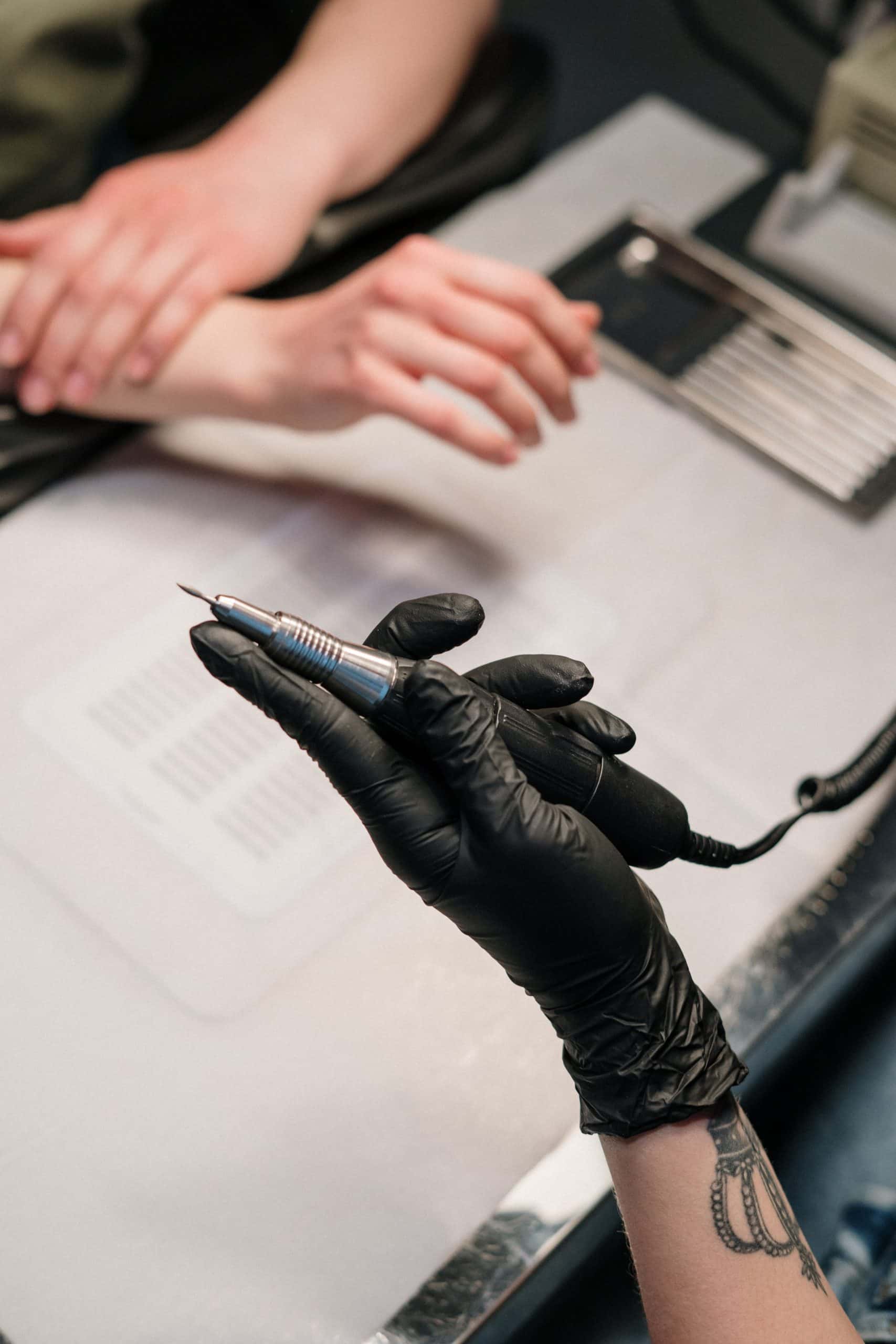
Desktop or tabletop units
The most common setup for salon stations: a standalone box that sits on the table with an intake grille facing the client’s hand, pulling dust in as it’s created. Filters range from basic foam to HEPA-rated, and the better units are noticeably quieter, which matters over an eight-hour shift.
Built-in table downdraft systems
Some professional nail tables integrate the collector directly into the tabletop, with the intake grille flush in the surface itself. These tend to be more expensive and semi-permanent, but pull dust from directly below the filing area rather than from the side, which some techs find catches more of it.
Handheld or mini collectors
Smaller, more portable units aimed at home users or mobile techs who need something that packs away between appointments. Suction is usually weaker than a full desktop unit, which is a fair tradeoff for occasional use but not ideal for someone filing all day.
Do you actually need one?
If you’re a working tech doing enhancements or fills for multiple clients most days, yes, a dust collector plus a proper N95 or higher-rated mask is the combination most occupational health guidance for the industry recommends, and it’s worth treating as standard equipment rather than an optional upgrade. If you’re doing your own nails at home once every few weeks, the exposure is low enough that a mask alone during filing is usually sufficient, and a dust collector becomes more of a comfort purchase, less dust on your desk and less floating around the room, than a health necessity.
Where to position it on your table
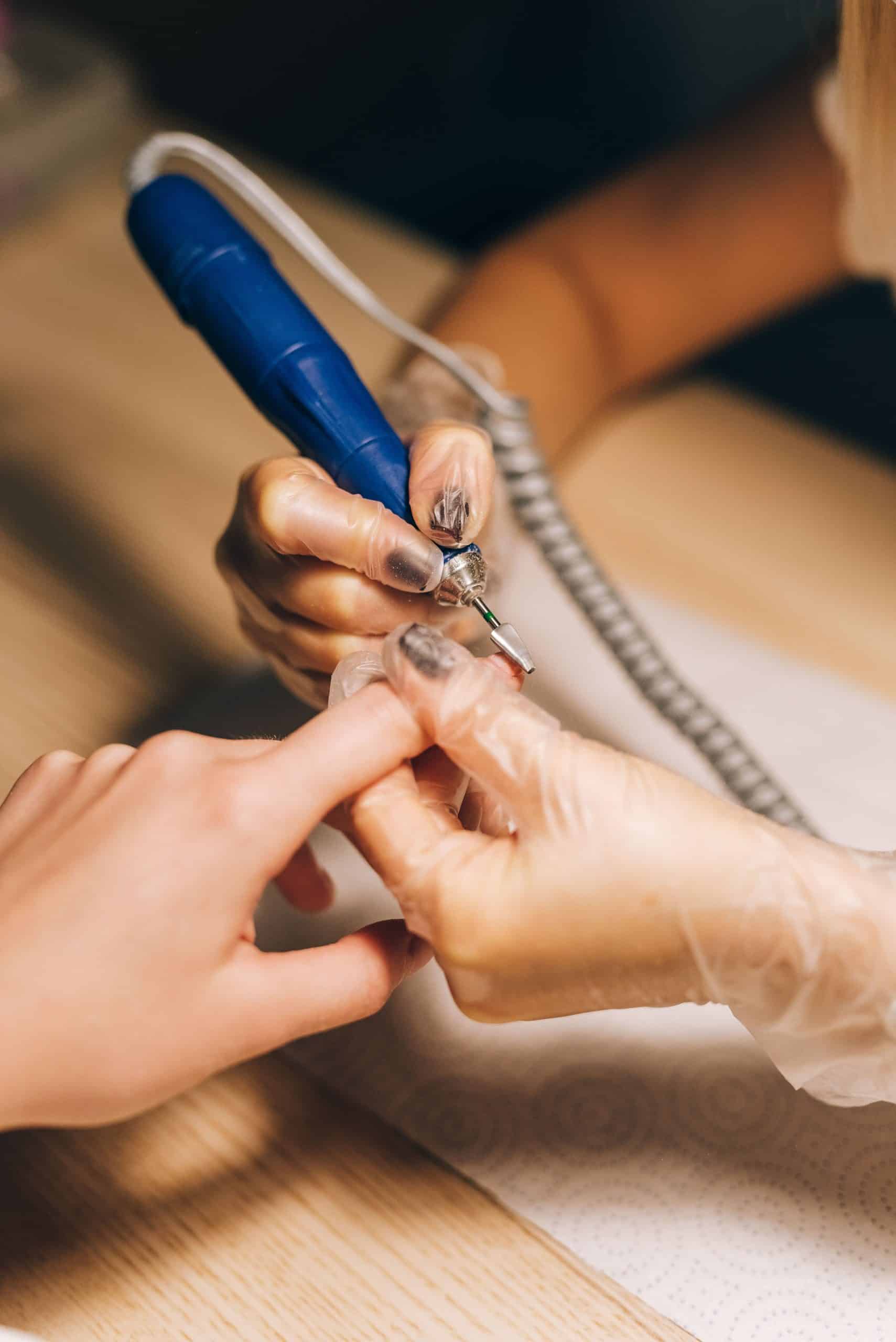
Placement matters almost as much as the unit itself. An intake grille sitting off to the side, angled away from where hands actually rest during filing, ends up pulling more room air than nail dust, which defeats a lot of the purpose. The most effective spot is close to and slightly below where the client’s hand sits during an e-file pass, close enough that dust travels a short distance before it’s captured rather than drifting past the intake first. A few inches makes a real difference here, more than most people expect before they try repositioning a unit that wasn’t pulling its weight.
Cleaning and maintenance beyond the filter
The filter gets most of the attention, but the collection chamber and housing accumulate fine dust too, and a buildup inside the unit itself can reduce airflow even with a clean filter installed. Wiping down the intake grille and emptying any internal collection tray on a regular schedule, weekly for a busy station, keeps suction consistent instead of gradually weakening in a way that’s easy to miss day to day since the drop-off happens slowly.
What to look for if you buy one
Filter quality matters more than most other specs. A HEPA or HEPA-equivalent filter captures a meaningfully higher share of fine particulate than a basic foam insert, and it’s worth checking how often the filter needs replacing and what replacements cost before buying, since a cheap unit with expensive, hard-to-find filters ends up costing more over a year. Suction strength and noise level are the other two variables that separate a unit you’ll actually keep running from one that ends up switched off because it’s too loud or too weak to bother with. A dust collector that’s off isn’t protecting anyone.
Frequently asked questions
Do I need a nail dust collector if I already wear a mask?
A mask protects your lungs; a dust collector reduces how much dust ends up in the air and on surfaces in the first place. Working techs typically use both rather than choosing one over the other.
Is nail dust actually dangerous?
Occasional exposure isn’t a major concern, but repeated daily inhalation, the kind working nail techs experience, is recognized as a real occupational health issue worth actively managing with ventilation, masks, and dust collection.
Do dust collectors work with all filing tools?
Most work with both e-files and hand filing, since the collector is capturing airborne particulate rather than interacting with the tool itself. Positioning near the filing area matters more than which tool created the dust.
How often should the filter be replaced?
It depends on usage and filter type, but a salon running a unit daily typically replaces or cleans filters every few weeks. Check the manufacturer’s guidance, since running a clogged filter reduces suction significantly.
Are cheap nail dust collectors worth buying?
Budget units can work fine for occasional home use, but weaker suction and lower-grade filters make them a poor fit for anyone filing multiple sets a day, where a proper HEPA-rated unit earns back its cost in actual dust reduction.
Can a dust collector replace good ventilation in a salon?
No. It’s one layer of a larger system that should also include room ventilation and masks. Relying on a single dust collector as the only air quality measure leaves gaps a tabletop unit alone can’t cover.