
A new tech in a forum I follow posted a photo last month asking if it was normal for a client’s nail to feel warm right after e-file work. It wasn’t normal. It was friction heat from running the bit too fast, at too steady a contact point, without lifting off the nail enough to let it cool between passes. Nobody had burned the client badly enough to blister, but the nail plate underneath was thinner than it should have been by the end of the appointment, and thin, over-worked nails are exactly the kind of injury that only shows up as a complaint two weeks later.
An e-file, short for electric file, is a genuinely useful tool once you know how to run one. It’s also the fastest way in a manicure kit to do real damage in under a minute if the speed, angle, or bit are wrong. Here’s how to actually use one safely, whether you’re a tech running dozens of clients a week or someone using one on your own nails at home.
What an e-file does differently from a hand file
A hand file only removes as much material as the pressure and speed of your own arm allow, which is naturally self-limiting. An e-file spins a bit at anywhere from a few thousand to over thirty thousand RPM, removing material far faster with far less physical effort, which is exactly why it’s efficient and exactly why it’s easy to overdo. If you’re deciding whether to buy one in the first place, our nail drill buyer’s guide covers what the specs on the box actually mean before you spend money. This guide picks up after that, once you already have one in your hand.
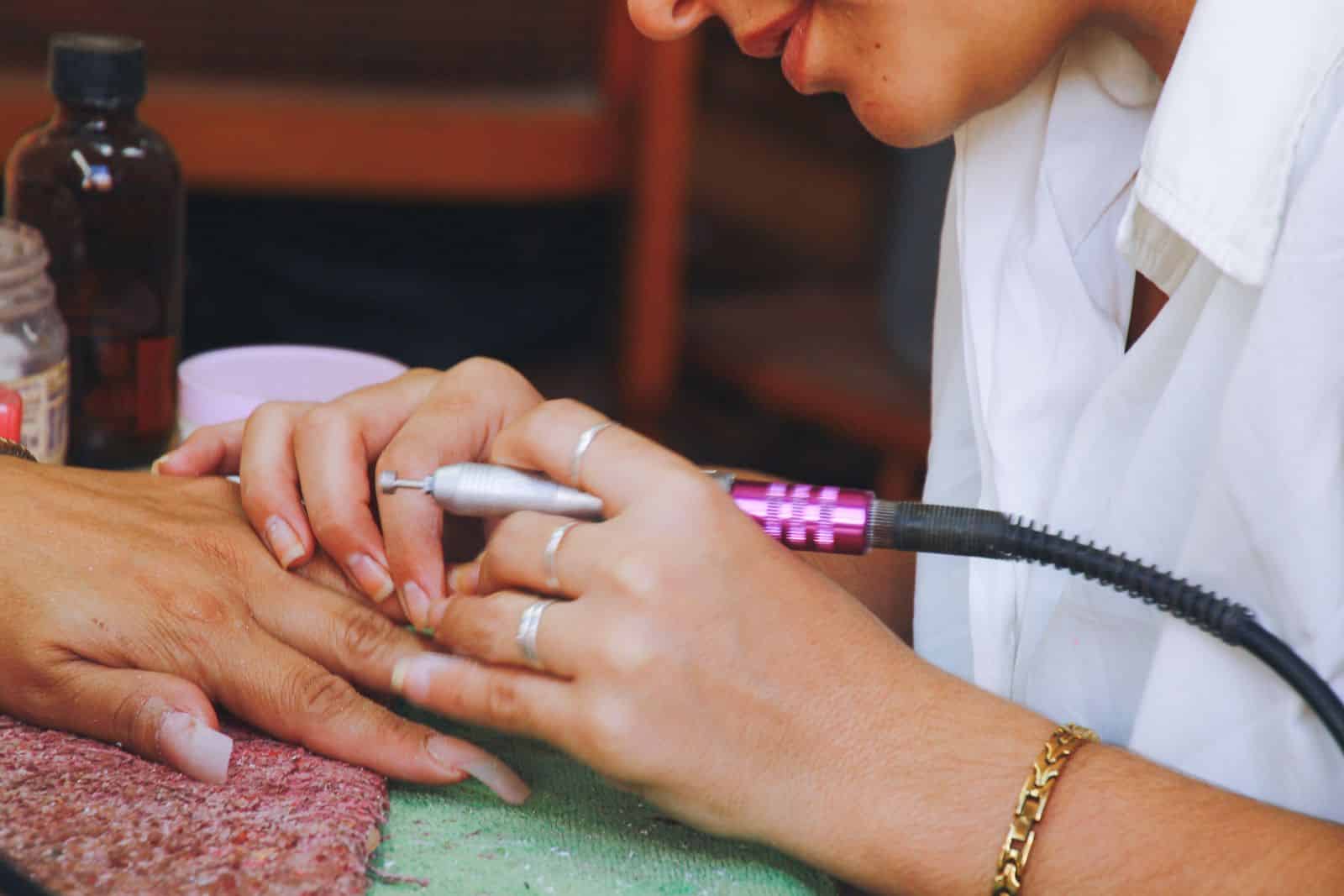
Speed settings and why they matter
Most e-files run somewhere between 5,000 and 35,000 RPM, and the right speed depends entirely on what you’re doing, not a single default setting. Cuticle work and any pass near skin should run low, generally under 10,000 RPM, because a fast bit near skin doesn’t forgive a slip the way a slow one does. Removing cured product, like soaking-resistant hard gel or acrylic, calls for a higher speed with a coarser bit, since a slow speed on a coarse bit tends to grab and dig rather than shave evenly. Natural nail work and finishing passes sit in the middle, fast enough to be efficient without being fast enough to generate real heat in a couple of seconds of contact. Forward and reverse rotation exist mainly for left-handed use and for working around the sidewalls without pushing debris the wrong direction, not for changing how aggressive the bit is.
Contact angle and pressure matter more than speed
The single biggest factor in whether an e-file damages a nail isn’t the RPM number, it’s the angle the bit meets the nail at and how long it stays in one spot. A bit held flat against the plate and kept moving removes material evenly. A bit held at a steep angle, or left stationary even for a second, concentrates all the removal in one tiny spot, which is how a visible thin patch or a groove shows up. The rule that keeps most techs safe is simple: the bit should always be moving across the nail, never resting, and contact time in any single spot should be a fraction of a second before moving on. We cover bit shapes and what each one is actually built for in our nail drill bits guide, which pairs with this one once you’ve got the movement technique down.
The mistakes that actually cause damage
Three mistakes account for most of the damage e-files cause. Running too fast for the task, especially near skin or on natural nail rather than product. Holding the bit still or at too steep an angle, concentrating removal in one spot instead of spreading it across a pass. And using too coarse a bit for natural nail work, since a bit built to shave down cured acrylic is far too aggressive for bare keratin. Any one of these can leave a nail thinner than it looks, and thin nails don’t show the damage right away. They show it a week or two later as bending, peeling, or unusual sensitivity, which is exactly the pattern covered in our piece on whether gel nails actually damage natural nails, where over-aggressive drill work turns out to be the real cause behind a lot of complaints blamed on the product itself.
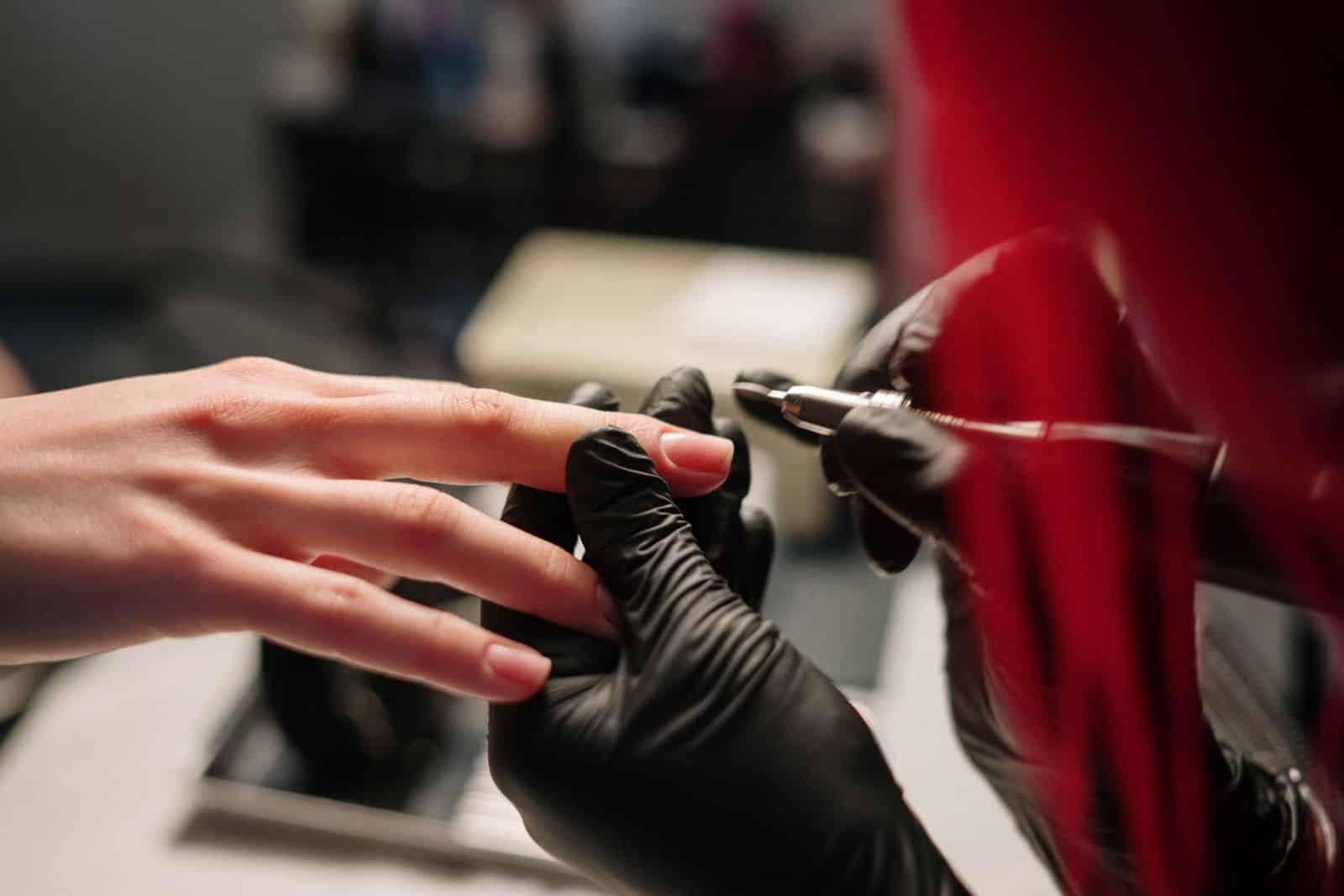
Using an e-file at home vs in a salon
A DIY user doing their own nails occasionally should generally run slower speeds than a professional would default to, simply because judging contact time and angle on your own hand, at an awkward wrist angle, is harder than judging it on someone else’s hand held steady in front of you. Starting at the lowest speed setting that still gets the job done, and only increasing it once the movement feels controlled, is a safer learning curve than starting in the middle of the range and adjusting down after a mistake.
Keeping the tool itself in good shape
Bits should be cleaned after every use and replaced once they visibly dull, since a dull bit tempts more pressure and more time in one spot to get the same result a fresh bit would do faster and more evenly. Fine dust kicked up during filing is worth managing too; our nail dust collector guide is worth a look if you’re filing daily. The handpiece itself should be wiped down and, for salon use, disinfected between clients per state sanitation requirements. A motor that’s overheating, stalling under light pressure, or making a grinding sound beyond normal bit noise is a sign it needs servicing before its next use, not a problem to work around by pressing harder.
Frequently asked questions
What RPM should a nail e-file be set to for natural nails?
Generally under 10,000 RPM for cuticle work and anything near skin, and a moderate mid-range speed for finishing passes on the nail plate itself. Higher speeds should be reserved for removing cured product, not natural nail.
Why does my e-file make my nails feel hot?
Heat usually comes from running too fast, holding the bit in one spot too long, or using too much pressure. Keeping the bit moving and lifting off periodically lets friction heat dissipate instead of building up in one area.
Is it safe to use an e-file on natural, unenhanced nails?
Yes, with a fine-grit bit, a moderate speed, and light, moving contact. The mistake isn’t using an e-file on natural nails, it’s using a bit and speed meant for cured product instead.
How do I know if my e-file technique is thinning my nails too much?
Watch for nails that feel more flexible than usual right after a service, visible shine loss in patches rather than evenly, or any warmth during the process. Any of those signal too much material is coming off too fast.
What’s the difference between an e-file and a Dremel-style rotary tool?
Nail e-files are built specifically for the RPM range, torque, and precision nail work needs, with interchangeable nail-specific bits. General rotary tools run at different speed profiles and aren’t designed for the control needed this close to skin and a thin nail plate, so they’re not a safe substitute.