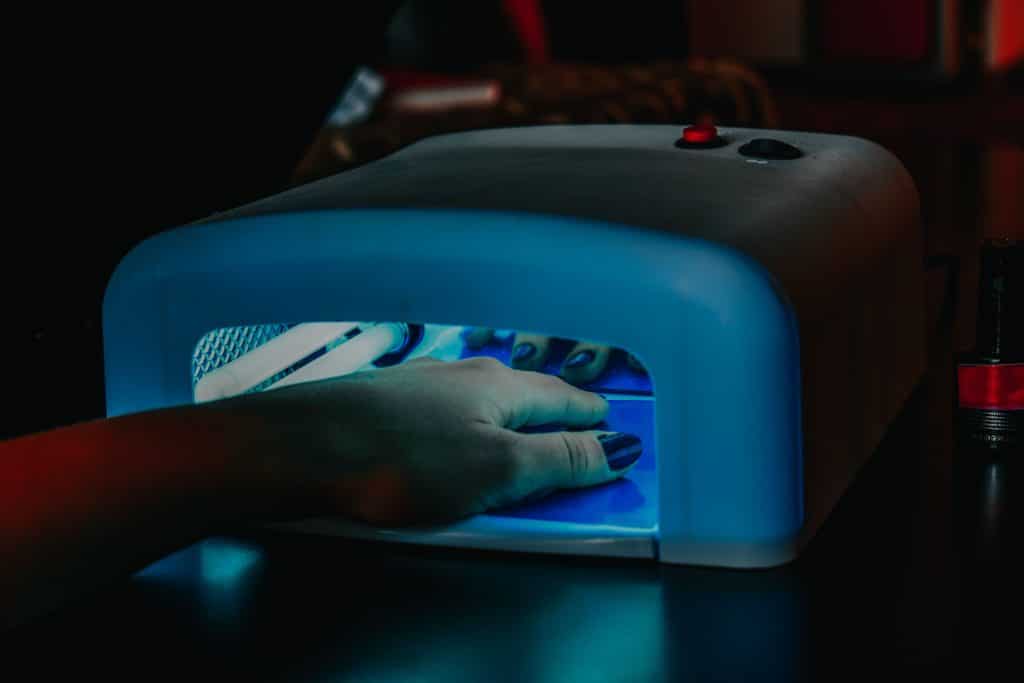
A supply rep at a trade show a few years back tried to sell me on an LED lamp by telling me it “doesn’t use any UV at all.” I didn’t buy the lamp that day, mostly because that claim isn’t true and it made me trust the rest of the pitch less. Both lamp types cure gel using UV wavelengths. The real led vs uv nail lamp question is what happens differently once you turn one on.
What’s actually different
LED lamps emit a narrower band of wavelengths, targeted more precisely at the range gel photoinitiators respond to. UV lamps, usually built around fluorescent bulbs, put out a broader spectrum that includes the wavelengths gel needs along with a lot that it doesn’t. That narrower, more targeted output is why LED cures faster: a full cure runs around 30 seconds under LED versus roughly 2 minutes under UV for a comparable layer.
Bulb life is the other practical difference, and it’s the one that costs you money over time. UV bulbs lose curing strength gradually, not obviously, and most manufacturers recommend replacing them every six months whether or not they still look fine. Skip that and you end up with gel that seems cured on the surface but stays soft underneath, without any clear signal that the bulb is the problem. LED units don’t have that replacement cycle in the same way, which is part of why they cost more upfront but less to maintain.
The myth that won’t die
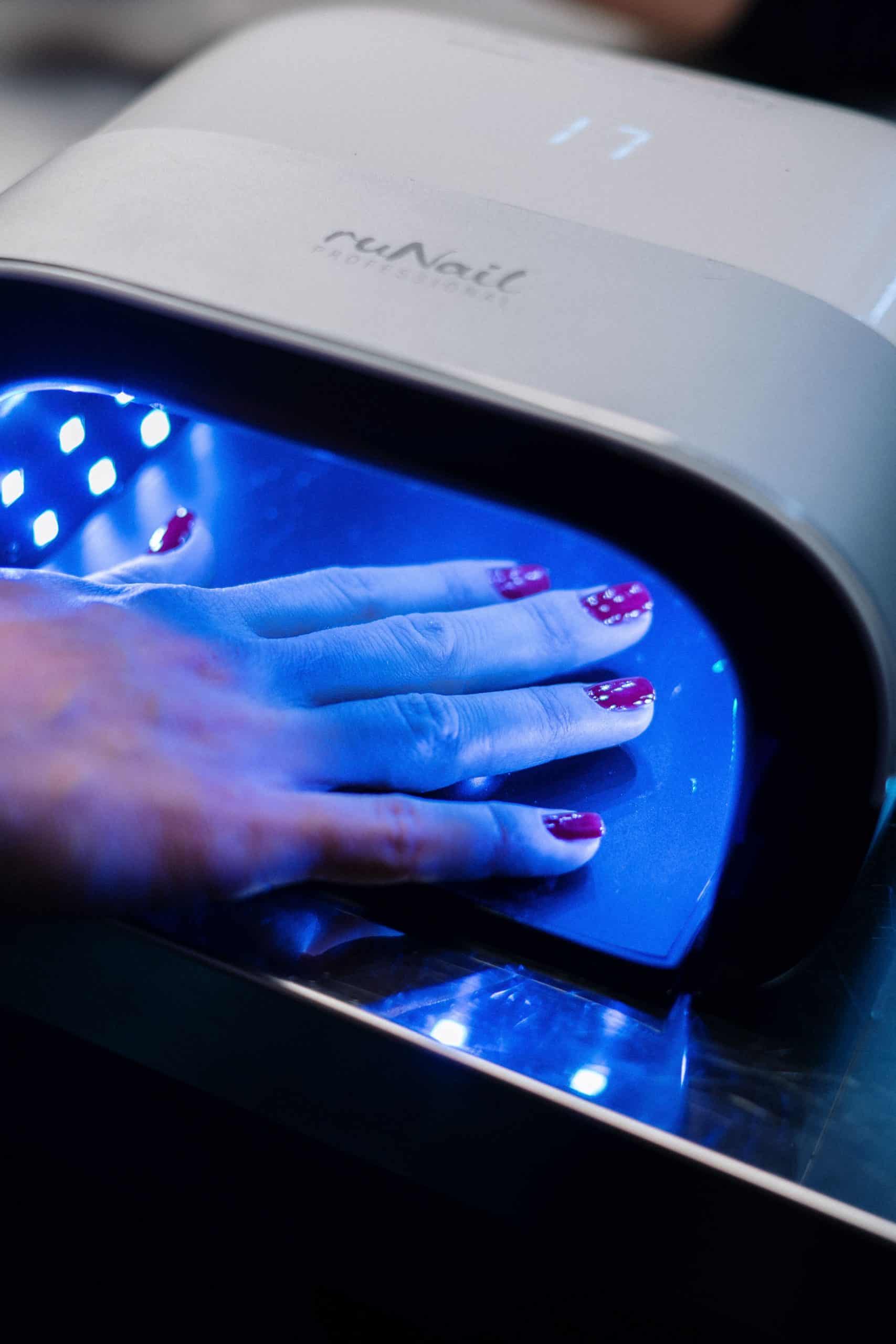
“LED doesn’t use UV” gets repeated constantly, and it’s not accurate. Both lamp types work by exciting photoinitiators, chemical compounds mixed into gel and acrylic that harden through a reaction triggered by UV wavelengths. LED just does it with a narrower, more efficient slice of that spectrum instead of a broad one. If a client asks whether LED is safer for their skin because it “isn’t UV,” the honest answer is that it’s still UV exposure, just more concentrated over a shorter session. The standard salon precaution, a broad-spectrum sunscreen on the hands or UV-blocking gloves with the fingertips cut out for frequent clients, applies to both lamp types, not just UV ones.
Compatibility matters more than either spec
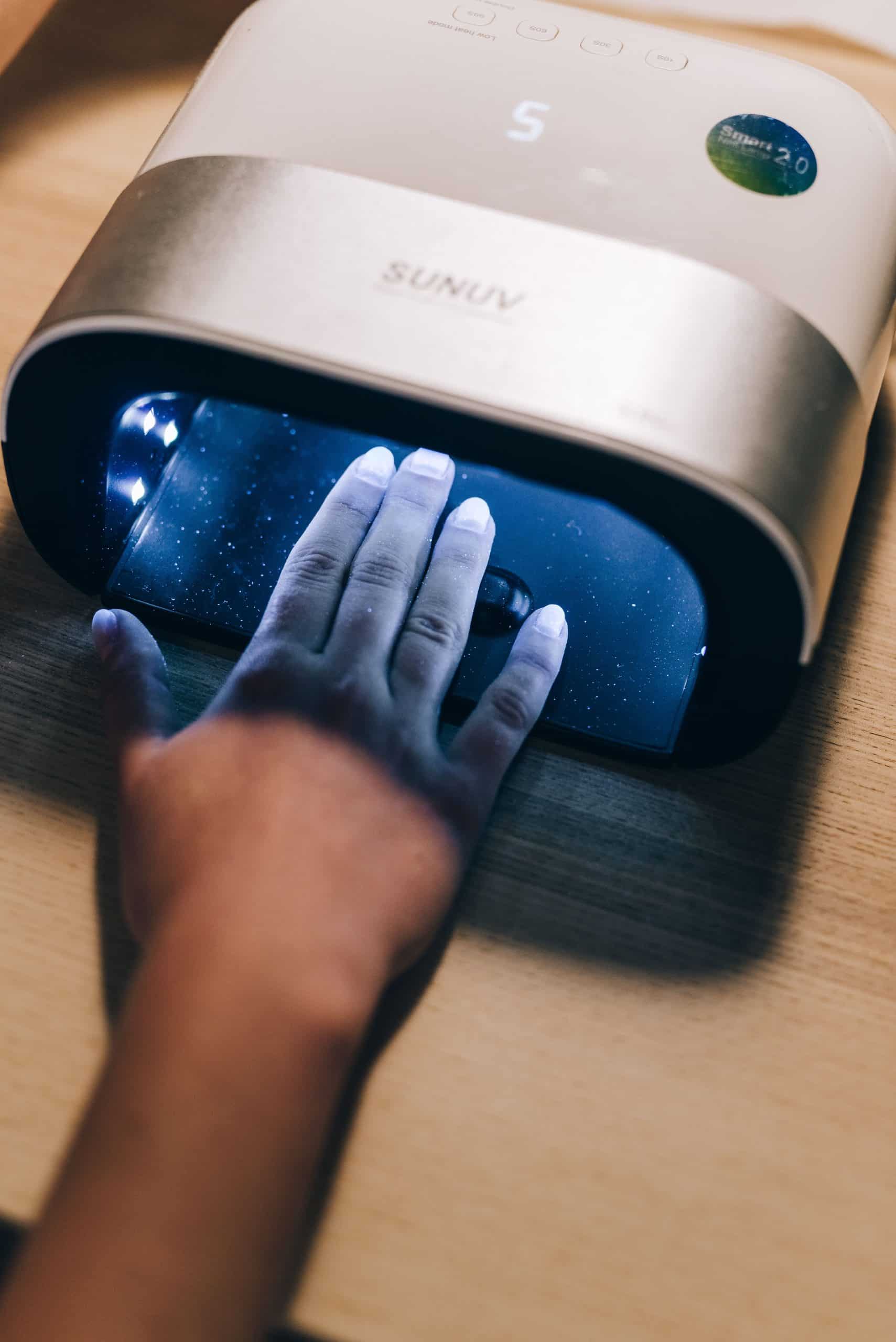
Not every gel formula cures properly in every lamp. Some products are labeled LED-only, some UV-only, and a growing number are dual-cure and work in either. Using the wrong lamp for a gel that isn’t rated for it is one of the most common reasons a set comes out tacky or soft on top even after the full cure time. Always check the product label before assuming your lamp will handle it, and if you’re getting a soft or dented cure with a lamp you know is working, the problem is more likely a mismatch than the lamp itself. Gel not curing properly walks through how to tell lamp issues apart from product or technique issues.
Which one to actually buy
If you’re comparing lamps side by side for what to purchase, this article is the short answer to the naming confusion. For the fuller buying decision, our UV nail lamps buying guide covers wattage, timer settings, and hand-fit across brands, and if you’re specifically working with builder gel, best UV lamp for builder gel covers the specs that matter for that thicker product.
FAQ
Can I use an LED lamp for gel labeled “UV cure”?
Sometimes, but not reliably. Some UV-labeled gels contain photoinitiators that respond poorly to LED’s narrower spectrum and won’t fully harden. Dual-cure gels are made to work in either; a UV-only label means the safer move is a UV lamp.
Is LED worse for skin than UV?
Neither is UV-free, so the standard precautions apply to both: sunscreen on exposed skin or fingerless UV gloves for anyone getting gel done regularly.
How often do UV bulbs actually need replacing?
Every six months is the standard manufacturer guidance for a lamp in regular use, even if the bulb still lights up and looks fine. Weakened bulbs are one of the most common, least obvious causes of an under-cured set.