A client switched from acrylic to dip powder last spring because a friend told her dip “lasts forever.” Six weeks later she was back on acrylic, annoyed that her dip had chipped at day twelve. She wasn’t wrong that dip can outlast acrylic. She just wasn’t the client dip is built for.
What each system actually is
Acrylic is a liquid monomer and polymer powder mixed at the brush and sculpted into shape before it cures by air exposure, hardening over several minutes. Dip powder is colored powder built up in layers, each one bonded with a base/activator resin rather than a lamp or air cure, then sealed with a top coat. Both can extend the nail with a form or tip, and both get filed and shaped once built up, but the chemistry and the appointment don’t look anything alike.
Durability: which one actually holds up longer
On natural nails with no added length, dip powder tends to win. The resin-bonded layers resist chipping better than acrylic in the first two to three weeks, which is where dip’s reputation for “lasting forever” comes from. Past the three-week mark, the comparison flips: acrylic’s rigid structure holds a French tip edge and a sculpted apex better over time, while dip powder, especially on longer extensions, is more prone to cracking under impact because the layers don’t have the same flexible-yet-rigid balance acrylic gets from its liquid-to-solid cure.
Lifestyle matters more here than either product’s marketing suggests. Someone who works with their hands constantly (nurses, cooks, anyone doing repetitive fine-motor tasks) tends to chip dip powder at the free edge before the three-week mark, while the same person often gets a full month out of acrylic because the product is harder and more impact-resistant at the tip.
Length and extensions: acrylic’s real advantage
Dip powder can extend length using a form, but it’s not the go-to system for it. The powder-and-resin build doesn’t sculpt into a sharp apex or a precise C-curve the way liquid acrylic does under a brush, so techs who do a lot of extension work default to acrylic, or increasingly polygel, for anything past a natural-length tip extension. Dip is strongest as a natural-nail overlay or a short extension, not as a system for building significant length.
Removal and nail health
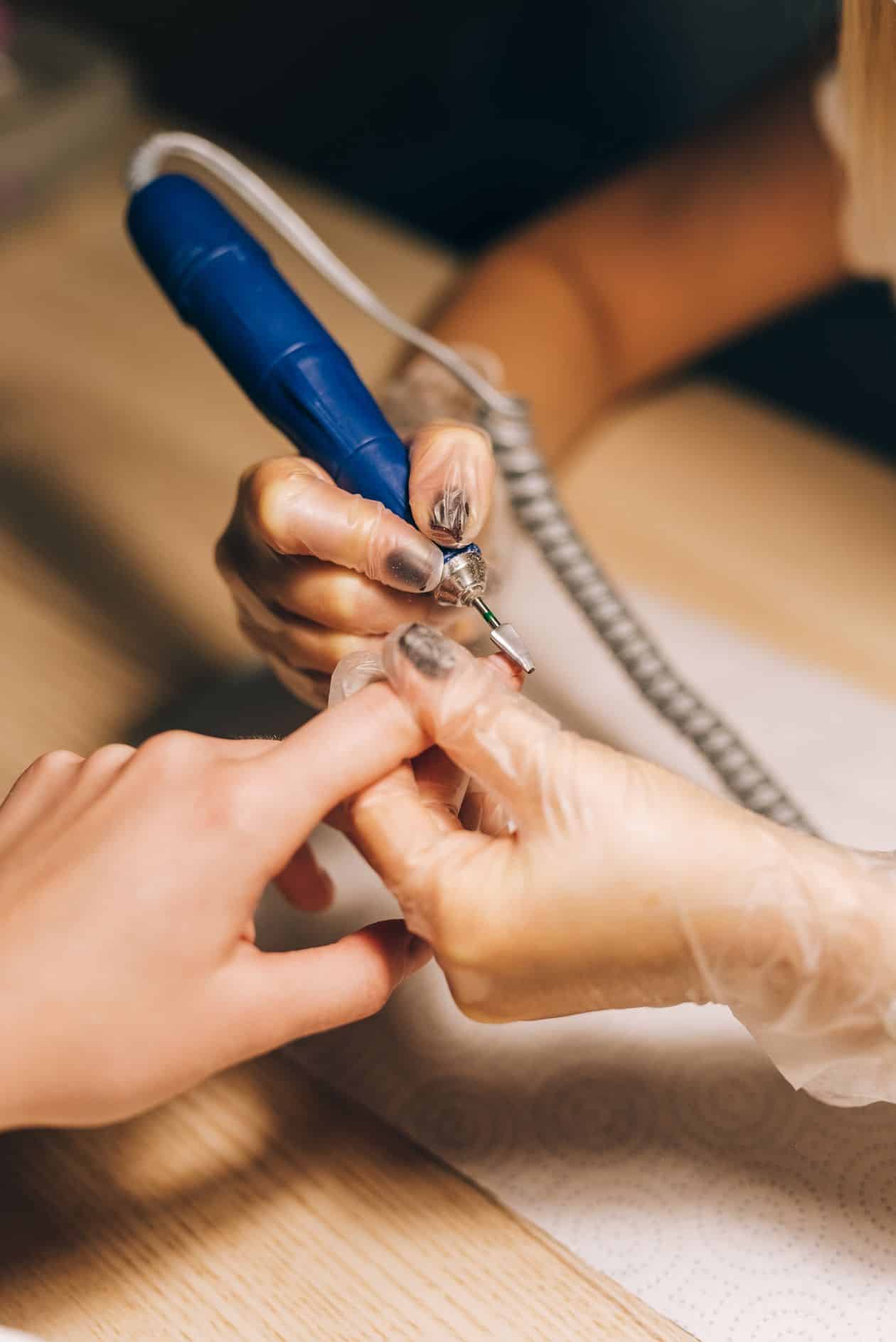
Both systems soak off in acetone, but the process and the risk differ. Dip powder typically takes 10–15 minutes wrapped in acetone-soaked cotton and foil before it softens enough to gently push off. Acrylic takes longer, often 20–30 minutes, because the cured product is denser. The real risk in both cases isn’t the acetone, it’s impatience: picking or prying either product off before it’s fully softened is what strips layers off the natural nail plate, not the soak itself. Filing acrylic off dry with an e-file is common in salons and faster, but it carries a higher risk of over-thinning the nail if the tech isn’t careful, compared to a full acetone soak-off.
Cost and appointment time
Dip powder appointments usually run 45 minutes to an hour and cost somewhat less than a full acrylic set in most markets, since there’s no monomer odor control or brush-and-liquid setup involved. Acrylic full sets often run longer, 60–90 minutes for a first-time set, because sculpting an apex and blending product takes more hands-on time than dipping and buffing. Fills for both land cheaper than the original set, but acrylic fills are the more established, faster routine of the two for most techs.
Filling each system as it grows out
Dip powder fills are less standardized than acrylic fills across salons. Some techs remove the whole set and redo it from scratch every time, since the layered powder doesn’t blend into old product the way liquid acrylic does at the regrowth line. Others will buff the regrowth area, add fresh powder there, and reseal, closer to how an acrylic fill works, but the result is less seamless and more prone to a visible line where old and new powder meet. Acrylic, by contrast, is built for exactly this kind of blend: the liquid-and-powder system feathers into old product at the regrowth line with almost no visible seam when it’s done correctly, which is a big part of why acrylic fills stay a faster, cheaper, more predictable appointment than dip fills in most salons.
Color, finish, and how each one looks over time
Dip powder comes premixed with pigment in the powder itself, which gives it a denser, more opaque finish straight out of the jar and a wider range of glitter and shimmer finishes without a separate polish step. Acrylic is typically finished with regular polish or gel polish on top, which means the color can be changed without redoing the whole set, something dip powder can’t do without soaking off the sealed color layer. That difference matters more than people expect: a client who likes to change polish color every couple of weeks between fills is a much better fit for acrylic (or gel) than for dip, where a color change means starting the whole set over.
Which one actually fits you
Dip powder makes sense for someone who wants a natural-nail overlay, minimal extension, and doesn’t mind resetting every three weeks. Acrylic makes more sense for anyone who wants real length, a sculpted apex, or a set that can stretch a little closer to the four-week mark before it needs attention. Neither is objectively “healthier” for the nail; damage in both systems comes overwhelmingly from rushed removal, not from the product itself sitting on the nail correctly applied.
For the natural-nail side of dip powder specifically, our complete guide to dip powder nails covers the application process start to finish. If gel is also on your shortlist, dip powder vs. gel breaks down that comparison the same way. And if you’re weighing acrylic on its own against gel rather than dip, gel vs. acrylic nails covers that head-to-head, while our acrylic nail fill guide walks through what an acrylic maintenance appointment actually involves.
FAQ
Is dip powder actually stronger than acrylic?
Not universally. Dip resists early chipping better, but acrylic’s rigid structure generally holds up better past three weeks and under repeated impact, especially on longer extensions.
Can you switch directly from acrylic to dip powder?
Yes, once the acrylic is fully soaked off and the natural nail is prepped, dip can go on the same appointment. The nail may need a short recovery period first if the acrylic removal left it thin or dehydrated.
Does dip powder smell as strong as acrylic?
No. Acrylic’s liquid monomer has a noticeable odor during application; dip powder’s resin has a much milder smell, which is part of why some clients prefer it in smaller or less ventilated spaces.
Which one is better for a first-time client trying enhancements?
Dip powder is generally the gentler entry point since there’s no sculpting learning curve for the client to navigate, but acrylic is the better choice if length and a defined apex shape are the goal from the start.
Does dip powder yellow the way some acrylics do?
Both can yellow over time from UV exposure or certain top coats, though it shows up differently: acrylic tends to yellow at the free edge first, while dip powder discoloration is more often the sealed top coat dulling rather than the powder itself changing color. A clear top coat rated for UV resistance slows this down in either system.