A client asked me last week why her dip powder set felt "thicker" than the gel she’d worn for years, then followed up by asking if dip powder was even a real system or just a trendy name for acrylic. Fair question. The two look similar in photos: same glossy, slightly domed finish, same durability, same price range at most salons. But the process has almost nothing in common, and the confusion causes people to ask for the wrong thing or panic during removal because they’re expecting acrylic’s smell and getting none of it.
Dip powder nails are built by dipping the nail into a jar of colored acrylic polymer powder, layer by layer, with a resin or "base" brushed on between dips to bond each layer. No UV or LED lamp involved anywhere in the process. That’s the detail that trips people up the most, because gel systems (including builder gel) all depend on a lamp to cure, and dip depends on air-cure resin and an activator instead.
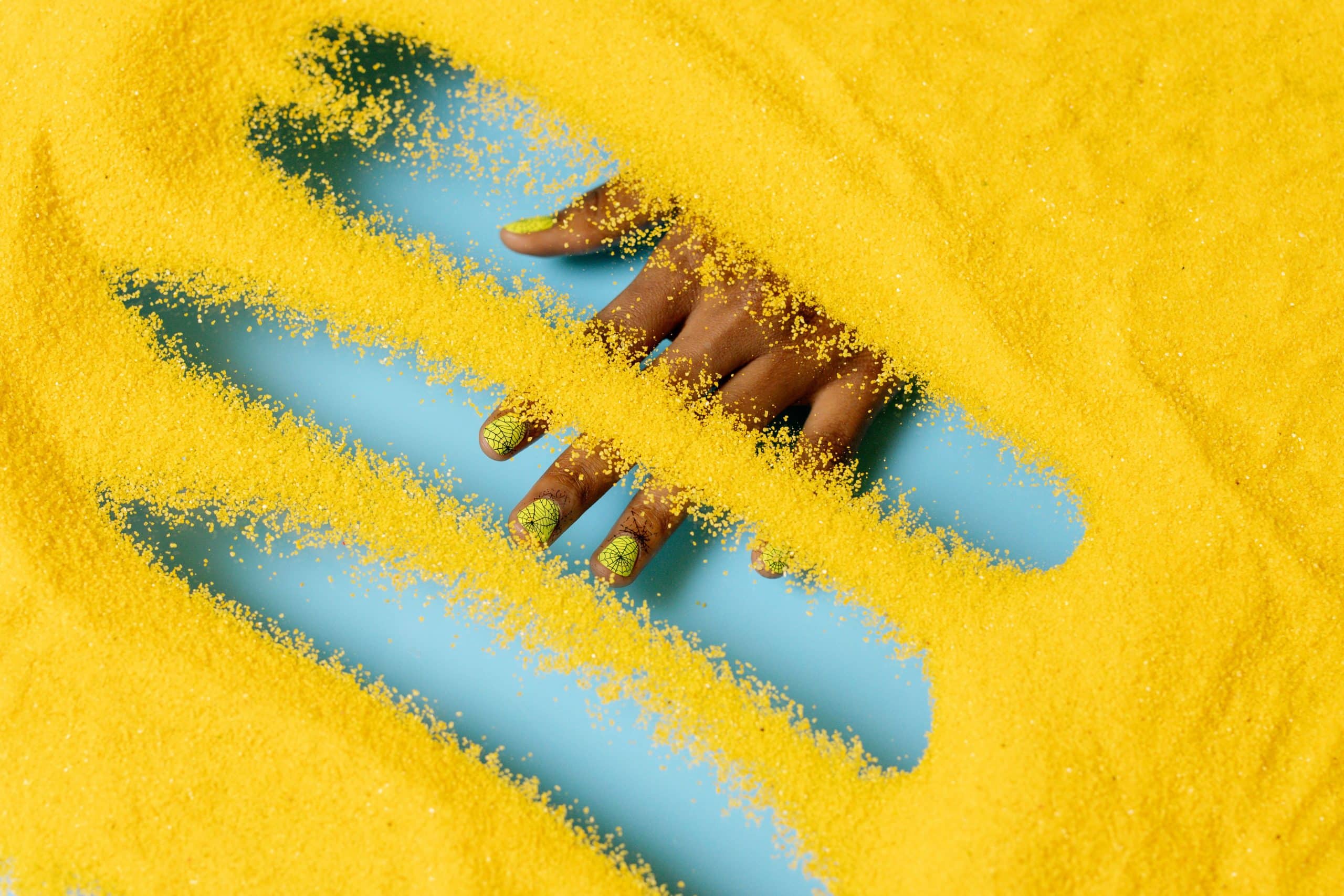
How dip powder actually works
The sequence at a licensed salon runs like this: nails are prepped and dehydrated the same way they’d be for any enhancement, then a bonding agent goes on to help the resin grip. The tech brushes on a thin coat of base resin, dips the nail into the powder jar (or brushes powder over the nail if it’s a communal-jar-avoidance setup, which more salons are moving toward for sanitation reasons), taps off the excess, and repeats for two to three coats depending on the color’s opacity.
After the last dip, an activator goes on to kick off the cure. This part surprises people who’ve only had gel before, because there’s no lamp, no thirty-second wait under UV light, nothing to place a hand under. The nail is shaped and buffed once the resin has set, which usually takes a few minutes, then a top coat seals it. Some salons cure that top coat under a lamp for extra shine and durability even though the core dip process doesn’t require one, so don’t be surprised if a lamp shows up at the very end.
Dip powder vs gel: the real differences
The two systems get compared constantly because the finished look is close enough to fool most people at arm’s length. Underneath, they diverge in three places that matter.
Cure mechanism. Gel needs UV or LED light to harden. Dip cures through a chemical reaction between the resin and the activator, no light required. This is why dip has a reputation as the "lamp-free" option, and why nail techs who don’t own a lamp yet sometimes start there.
Application method. Gel gets brushed on in controlled layers straight from the bottle. Dip involves physically submerging the nail in powder, which builds thickness faster and gives less fine control over shaping the apex compared to a gel system.
Removal. Both soak off in acetone, but dip powder tends to take longer, often 15 to 20 minutes wrapped versus 10 to 15 for a typical gel polish. The powder layer is denser, and if a tech rushed the base coats when applying it, removal gets even slower because there’s more product bonded to more product.
If you’re trying to decide between the two for your first set, cure time matters more than most people expect. Someone getting dip powder for the first time without a lamp at home isn’t locked out the way they would be with gel, which is part of why dip has stayed popular with people who do their own nails outside a salon. For the fuller side-by-side against both gel polish and builder gel specifically, see our dip powder vs gel comparison.
Dip powder vs acrylic
This comparison confuses people even more, because dip and acrylic share the "no lamp" trait and a similar strength profile. The powder itself is chemically related. Acrylic powder gets mixed with a liquid monomer at the brush before it goes on the nail; dip powder gets applied dry, then bonded with resin and activator instead of monomer. Acrylic gives a tech more room to sculpt length and shape freehand with a form, which is why nail extensions and elaborate sculpted shapes still lean acrylic. Dip is close to unbeatable for a natural-length overlay with strong color payoff and minimal odor, since it skips the strong monomer smell that acrylic salons are known for.
Neither system is "better." A tech building long, sculpted almond or coffin shapes reaches for acrylic. Someone wanting a durable color overlay on their natural nail length reaches for dip. Both outlast standard gel polish by roughly the same margin. For the full head-to-head on durability, removal, and cost, see our dip powder vs acrylic comparison.
How long dip powder lasts
Two to three weeks is the honest range for most people, tracking close to a gel manicure. Nail growth is the limiting factor more than the product wearing out. New growth at the cuticle line becomes visible around week two, and by week three most people are either getting a fill or removing the set entirely. People with faster nail growth see the gap sooner; people who work with their hands in water constantly (dishwashing, frequent hand-washing, swimming) sometimes see edge lifting show up before the color grows out, which usually points to a prep issue rather than the product itself.
What can go wrong with dip powder
Three problems come up more than any others.
Lifting at the cuticle or sidewall almost always traces back to prep. If the nail wasn’t dehydrated properly, or the bonding agent got skipped to save time, the resin has nothing to grip and the edges separate early. This isn’t unique to dip. It’s the same root cause behind most gel lifting too, covered in more detail in why gel nails lift.
Thickness and bulk. Dip’s biggest complaint is that a heavy-handed application feels clunky compared to gel, especially over the free edge. A tech who dips too many times or doesn’t buff the ridge between coats leaves a set that feels bulky against the fingertip. This is a technique issue, not a flaw in the system.
Powder jar sanitation. Communal dip jars where multiple clients’ nails go into the same jar are a real cross-contamination risk if the salon isn’t following single-use pour-out or brush-only protocols. This isn’t a knock on dip as a system, it’s a reason to ask your salon how they handle the powder before you sit down, the same way you’d ask about tool sterilization for any service.
Dip powder and your natural nails
Removed correctly, dip powder doesn’t damage a healthy nail plate any more than gel does. Damage shows up almost entirely at removal, when someone pries or peels the set off instead of soaking it. Because dip layers are denser than a typical gel polish, the temptation to speed things up by picking at a loosened edge is stronger, and that’s exactly the shortcut that takes layers of the natural nail with it. Full acetone soak, gentle pushing with a cuticle stick once the product has softened, never forcing anything that resists.
Frequently asked questions
Is dip powder the same as acrylic?
No. Both are polymer-based systems that don’t need a UV lamp, but acrylic is mixed at the brush from liquid monomer and powder, while dip powder is applied dry and cured with a separate resin and activator.
Does dip powder ruin your nails?
Not when it’s applied and removed correctly. Nail damage from dip almost always comes from picking the product off instead of soaking it in acetone.
How long does a dip powder manicure last?
Two to three weeks on average before new growth or edge lifting makes a fill or full removal worth doing.
Can you do dip powder without a UV lamp?
Yes. That’s the defining feature of the system. Some salons still use a lamp to cure the final top coat for extra gloss, but the base dip process cures through the resin and activator alone.
Is dip powder safe for weak or damaged nails?
It’s a reasonable option since it doesn’t require filing down the nail plate as aggressively as some acrylic applications, but any enhancement needs correct prep and removal to avoid making existing damage worse. If nails are already thin or peeling, ask a tech about a lighter application or hold off until the nail bed recovers.