You did everything right, or thought you did. Ten days in, one nail pops up at the sidewall and you can slide a fingernail under it. Another client swears her gel lifted at the base after two weeks of nothing but dish soap and gardening. Both are the same problem with different timelines, and the timeline is usually the fastest way to figure out what actually went wrong.
Gel nails lifting is the single most common complaint nail techs hear, more than chipping, more than breakage. It’s also one of the most fixable once you know where to look. This guide walks through what lifting actually is, the causes that show up again and again on the nail bench, how to read the timing of a lift, and what to do about it without making things worse.
What lifting actually means
Lifting is a separation between the gel and the natural nail plate, usually starting at the sidewall or cuticle area and working outward. You’ll see a small air pocket or gap, sometimes with a whitish or cloudy edge where moisture has gotten underneath. It’s different from peeling, where thin layers of gel flake off the surface, and different from cracking, where the product itself splits. Peeling is a product and cure problem; lifting is almost always an adhesion problem, meaning the bond between gel and nail failed somewhere.
The two get confused constantly, including in forum threads where someone describes lifting but calls it peeling or vice versa. The distinction matters because the fix is different. Peeling usually means under-cured layers or a base coat that isn’t compatible with the top coat. Lifting means the surface prep, the seal at the edges, or the cure at the nail plate itself broke down.
Why gel nails lift: the causes that show up most
Rushed or skipped nail prep
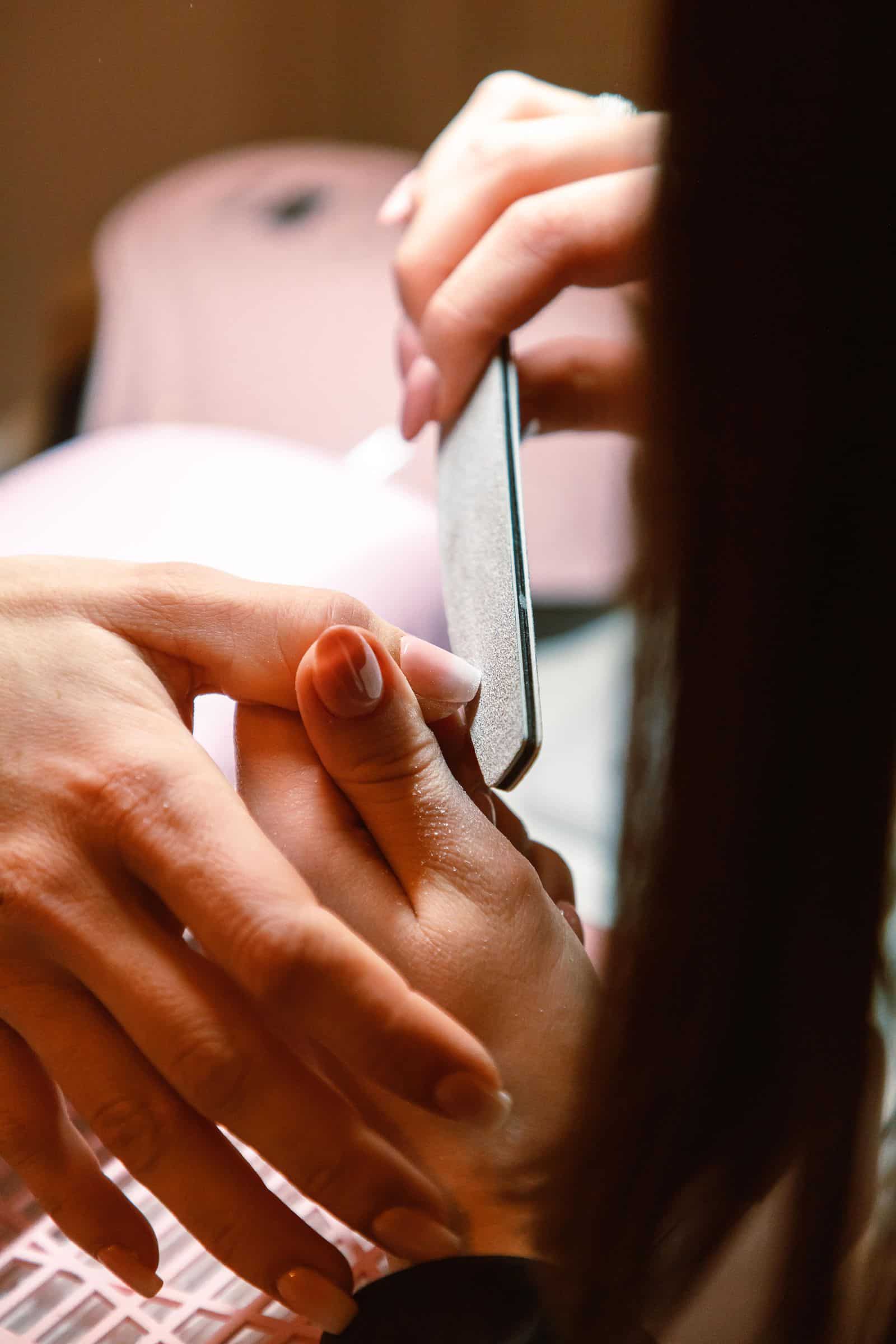
This is the number one cause, by a wide margin. Gel bonds to a nail plate that’s been lightly buffed to remove shine and dehydrated to strip natural oils. Skip the buffer, or buff too lightly because you’re trying not to over-thin the nail, and the gel has nothing to grip. The natural nail has a slight sheen that acts almost like a coat of oil at the microscopic level, and gel slides right off it over time.
Oil or moisture left on the plate
Even with a full buff, touching the nail plate with bare fingers after prep transfers skin oil right back onto the surface you just cleaned. So does forgetting the dehydrator or nail prep solution, or applying it and then waiting too long before the base coat goes on, giving oils time to resurface. Cuticle oil applied minutes before the appointment is a classic culprit, since a lot of clients moisturize before they arrive without thinking about it.
Product touching the skin or cuticle
Gel needs a small margin, roughly half a millimeter, between the product and the cuticle and sidewalls. Flood the cuticle and the gel cures onto skin instead of nail. As that skin naturally sheds and moves, it takes the edge of the gel with it, and lifting starts exactly where the product was too close.
Missing the free edge seal (capping)
Every layer, base coat included, needs to be capped: swept over the very tip of the free edge so there’s no exposed seam where the product meets bare nail. Skip this step and the free edge becomes the weak point. Water gets in first at the tip, and that’s usually where a lift starts to show even if the rest of the nail looks solid.
Under-curing
Gel that isn’t fully cured stays slightly soft underneath a hardened top layer. It looks finished but never actually bonded the way it should. This happens with an old lamp whose bulbs have lost output, a lamp that doesn’t match the gel’s cure spec (LED gel under a UV-only lamp, or the wrong wattage), nails positioned too far from the light, or coats applied too thick to cure all the way through. If a set is coming out soft or tacky at the time of application rather than after days of wear, this walkthrough of lamp, product, and technique causes covers how to tell which one is actually responsible. Thick application is a common one: a single heavy coat can look cured on the surface while the base layer, closest to the nail, stays uncured and never actually adheres.
Water or oil exposure too soon
Fully cured gel is water-resistant, but the first hours after application are when the seal at the edges is most vulnerable to being worked loose. Dishes, a hot shower, or heavy hand cream within the first few hours won’t ruin a well-applied set, but on a set with a marginal seal at the sidewalls, it’s often the push that starts a lift.
What the timing tells you
Clients search for their exact timeframe because it usually points to a specific cause, and the pattern holds up on the nail bench too.
Gel nails lifting after 3 days almost always traces back to prep or cure, not wear. The nail hasn’t had time to grow or flex much yet, so if a lift shows up this early, the bond never fully formed in the first place: skipped dehydration, oil left on the plate, or an under-cured base coat.
Gel nails lifting after a week sits in a gray zone between an early prep failure and simple regrowth, and the two can look identical at a glance. This guide walks through how to tell which one you’re looking at and what to do about it.
Gel nails lifting after 2 weeks or more, especially if it’s confined to the base of the nail near the cuticle, is often just regrowth rather than a fresh failure. As the natural nail grows out, new nail plate emerges that was never coated, and the visual gap can look like lifting even though the original bond is intact everywhere else. That’s a maintenance and fill issue, not a prep failure.
Lifting at the sidewalls specifically tends to mean the free edge or sidewall wasn’t capped, or the client’s hands are in water often (frequent dishwashing, swimming, a job with a lot of handwashing) and the edge seal is wearing under repeated moisture exposure.
How to fix gel nails that have lifted, or when to remove them
A very small, early lift on one nail, caught within the first day or two and no bigger than a pinhead, can sometimes be filled and resealed at home: gently buff the lifted area to rough the surface, avoid touching the exposed nail plate, apply a thin layer of base coat under and over the lifted section, and cure. This is a stopgap for gel nails lifting at home between salon visits, not a permanent fix, and it only works when the lift is small and hasn’t trapped any moisture or debris underneath.
Anything larger, anything where you can see a gap or feel the product move when you press it, or any lift that’s been sitting for more than a day or two, should come off rather than get patched. Soaking off and starting over from clean, properly prepped nail is faster in the long run than fighting a lift that keeps spreading, and it’s the safer option for nail health. A full walkthrough of removing gel at home safely without damaging the nail is worth reading before attempting a soak-off on your own.
Why gluing it back down isn’t a good idea
Once air, water, or debris gets under a lifted section, sealing gel back over the top traps whatever’s underneath. That gap becomes a small, dark, occasionally damp pocket between the gel and the nail, which is exactly the kind of environment fungus can take hold in. A trapped lift that’s re-sealed rather than removed is one of the more common ways nail fungus gets started under gel.
Watch for green, yellow, or dark discoloration under or around a lift, a smell, or any pain or swelling at the nail fold. Those are signs to remove the product and see a dermatologist rather than try to fix it at home; this is a case where a quick DIY patch can cause a real problem, not just a cosmetic one.
How to prevent lifting before it starts
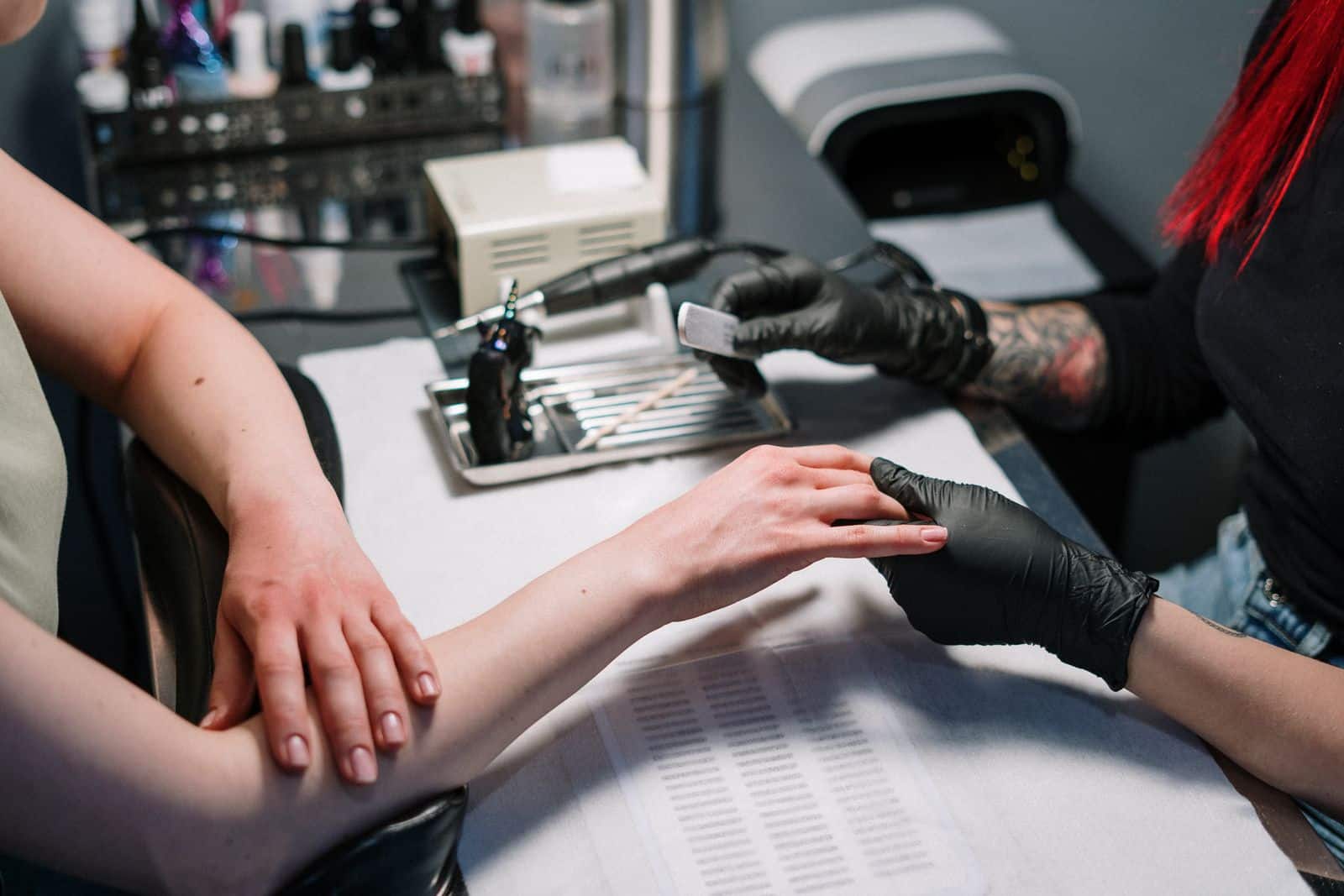
Most of prevention, including how to stop gel nails lifting at the base specifically, is just doing prep properly and not rushing it: cuticle work, a light buff to remove shine without thinning the nail, full dust removal, a dehydrator applied last and immediately followed by base coat, a thin capped layer at the free edge, and a full cure in a matching lamp. The full prep routine, including exactly what a nail dehydrator does and the order that actually works, is worth reading step by step rather than guessing at which part got rushed.
None of this is complicated, but it’s easy to shortcut one step when a schedule is tight, and lifting is usually the result of exactly one shortcut rather than several.
Is it the product, the technique, or the aftercare?
This question comes up constantly on gel nails lifting Reddit threads, where people compare notes on brands and swap theories. In practice, product quality matters less than technique for most lifting cases. A budget gel applied with careful prep and a proper cure will usually outlast a premium gel applied over oily nails with a rushed cure. That said, base coat and top coat from different brands aren’t always chemically compatible, and mixing systems is a real, if less common, cause of both lifting and peeling.
Aftercare matters more at the edges than in the middle of the set. Heavy glove-free dishwashing, frequent hot showers, and picking at the nail (a habit a lot of people don’t realize they have) will wear down even a well-applied set faster than normal. But if lifting shows up across multiple nails within the first few days, the answer is prep or cure almost every time, not aftercare.
When lifting points to something beyond the manicure
Occasionally, nails that lift repeatedly even with solid prep and technique point to something about the nail itself: psoriasis, chronic hand eczema, or a nail plate that’s naturally very smooth and oily. If lifting keeps happening set after set despite good prep, and especially if the nail also looks ridged, pitted, or discolored independent of the gel, that’s worth mentioning to a dermatologist rather than continuing to chase it with technique adjustments.
Frequently asked questions
Why are my gel nails lifting after only a few days?
Lifting within the first two to three days almost always comes from prep or cure, not wear. The most common causes are skipped buffing, oil or moisture left on the nail plate, or a base coat that didn’t fully cure before the color went on top.
Can I put more gel on top of a spot that’s lifted?
Only if it’s very small and very recent. Sealing gel over a lift that’s been open for more than a day or two, or one with any visible gap, traps moisture and debris underneath and raises the risk of fungal growth. Larger or older lifts should be soaked off rather than covered.
Is lifting the same thing as gel nails peeling?
No. Lifting is a gap between the gel and the nail plate, usually starting at the cuticle or sidewall. Peeling is thin layers of gel flaking off the surface. They have different causes: lifting is usually a prep or seal problem, peeling is usually a cure or product-compatibility problem.
Why do my gel nails keep lifting from the nail bed even after redoing them?
Repeated lifting on the same nail, despite fresh application, usually means the same prep step is being skipped every time, most often dehydration or capping the free edge. If prep and cure are genuinely solid and lifting still keeps happening, it’s worth considering whether the nail plate itself has an oily surface texture or an underlying skin condition making adhesion harder.
How long should gel nails last before some lifting is normal?
A well-applied set typically holds two to three weeks without lifting at the sidewalls. Some lifting-like gapping at the base after two weeks is usually just nail regrowth rather than product failure, and it’s addressed with a fill rather than a full redo.
Can better cuticle work stop lifting at the base?
Yes, in most cases. Lifting right at the base is frequently caused by gel applied too close to or directly over cuticle tissue. Gently pushing back and clearing cuticle from the nail plate before application, and keeping the product a slight margin away from it, is one of the most effective single fixes for base lifting.
If one nail is lifting, do I need to remove the whole set?
No. If it’s isolated to one nail, soak off just that nail, re-prep it, and reapply, matching the color if needed. The rest of the set can stay as long as it’s holding well. Removing an entire set for one lifted nail is unnecessary unless several nails are showing the same problem, which usually points to a prep issue that affected the whole hand.