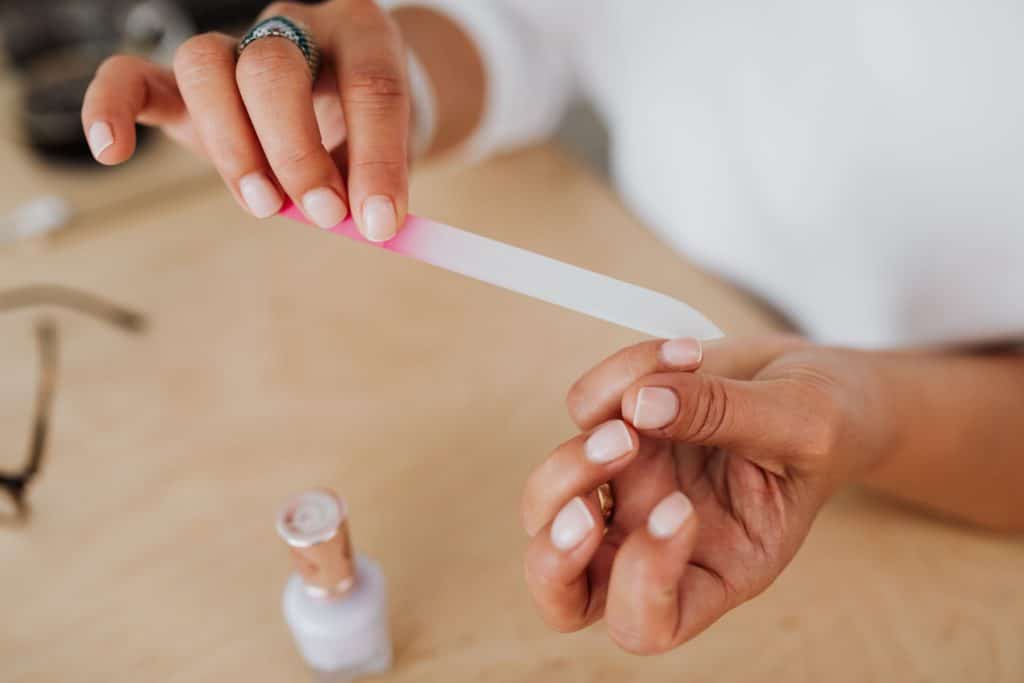
A client sat down last month with three nails that looked fine and two where the color had come away in little sheets, like a sunburn peeling off skin. Same set, same appointment, same hands. She assumed it was the brand of gel. It wasn’t. Two of her nails had been over-buffed during a rushed fill the week before, and the gel never got a clean surface to bond to on those two.
Gel nails peeling off is a different problem from lifting, even though people use the words interchangeably. Lifting is a gap that opens up between the gel and the nail plate, usually starting at the cuticle or sidewall. Peeling is the gel itself coming apart in thin layers, sometimes right off the surface, sometimes as full sheets that separate from each other rather than from the nail. If you’re dealing with a gap or an air pocket at the edge, the lifting guide is the better place to start. If color is coming off in flakes or sheets while the base still looks stuck down, keep reading.
Here are the seven reasons behind gel nails peeling off that show up most often on the nail bench, roughly in order of how common they are.
1. The nail wasn’t prepped properly before application
Oil, lotion, or plain dust from filing left on the nail plate creates a barrier between the plate and the first coat. Gel that goes on over that barrier looks fine when it cures, but it’s really just sitting on a thin film rather than bonded to keratin. That top layer eventually works loose and comes away in a sheet, often within the first few days.
This is the single most common cause I see on the bench, and it’s almost always about timing rather than skill. Someone dehydrates the nail, gets distracted, and by the time the base coat finally goes on, oil has already resurfaced from the skin around the cuticle.
2. Under-curing, especially with thick coats
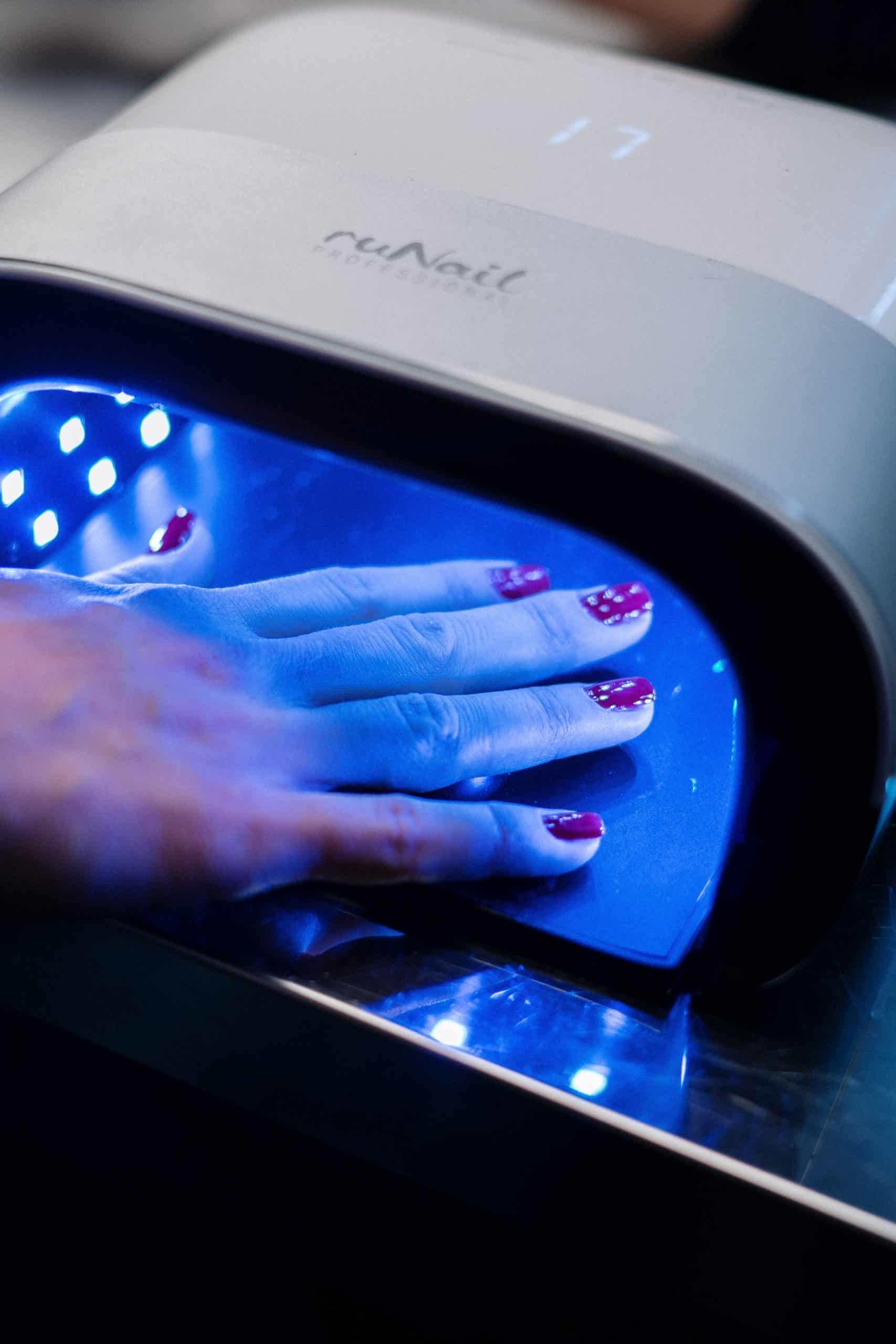
A coat that goes on too thick can look fully cured on top while the layer closest to the nail stays soft. That uncured layer never really hardens, and because it’s weaker than everything cured on top of it, it becomes the point where the whole stack splits apart. A mismatched or aging lamp makes this worse: LED gel under a UV-only lamp, or bulbs that have lost half their output after a year of daily use, both leave gel that looks set but isn’t.
Thin coats cure all the way through in the time the product specifies. Thick ones don’t, no matter how long you leave them under the light.
3. Skipping the tacky layer wipe between coats
Most gels cure with a slightly sticky top layer, sometimes called the inhibition layer, that’s meant to help the next coat bond to it. Some techs wipe it off with alcohol between every coat out of habit. Others skip it, especially when they’re moving fast. Skip it too often, or use a lint-covered pad that leaves fibers behind, and the coats above and below that layer don’t actually fuse into one solid piece. They sit stacked on top of each other instead, and a stack like that separates at the seam long before a properly bonded set would.
4. Mixing base coat and top coat from different brands
Gel systems are formulated to work as a set. A base coat from one brand and a top coat from another sometimes cure at slightly different rates or have a different flex once hardened, and the two layers pull against each other instead of moving together. It doesn’t always cause a problem, plenty of people mix brands with no issue, but when peeling shows up right at the seam between two specific products, incompatible chemistry between brands is worth ruling out before blaming technique.
5. Old or poorly stored gel
Gel that’s been left in direct sunlight, stored somewhere hot, or kept past its shelf life starts to thicken and cure unevenly. A bottle that’s gone cloudy, separated, or noticeably thicker than usual is past the point of curing reliably, even under a good lamp. If peeling started right after switching to a bottle that’s been sitting in a drawer for a year, check the product before checking the technique.
6. Picking, peeling, or scratching at it
This one is almost never the salon’s fault. A tag catches on a sweater, and instead of trimming it, the temptation is to pick at the loose corner until a bigger piece comes away. Once one layer has been pulled up by hand, the rest of that nail tends to keep flaking at the same spot, because the seal that used to hold the sheets together is already broken there. If you catch yourself picking at your nails when you’re bored or anxious, that habit will outlast whatever gel you’re wearing.
7. Applying gel in a cold room
Gel cures more predictably at normal room temperature. Apply it somewhere cold, a garage, a drafty bathroom, a car with the heat off, and the product can thicken slightly before it goes on and cure unevenly once it’s under the lamp. It’s a minor factor compared to prep or curing time, but on a set where everything else was borderline, a cold room is sometimes the last push that turns a marginal bond into a peeling one.
What to do about a nail that’s already peeling
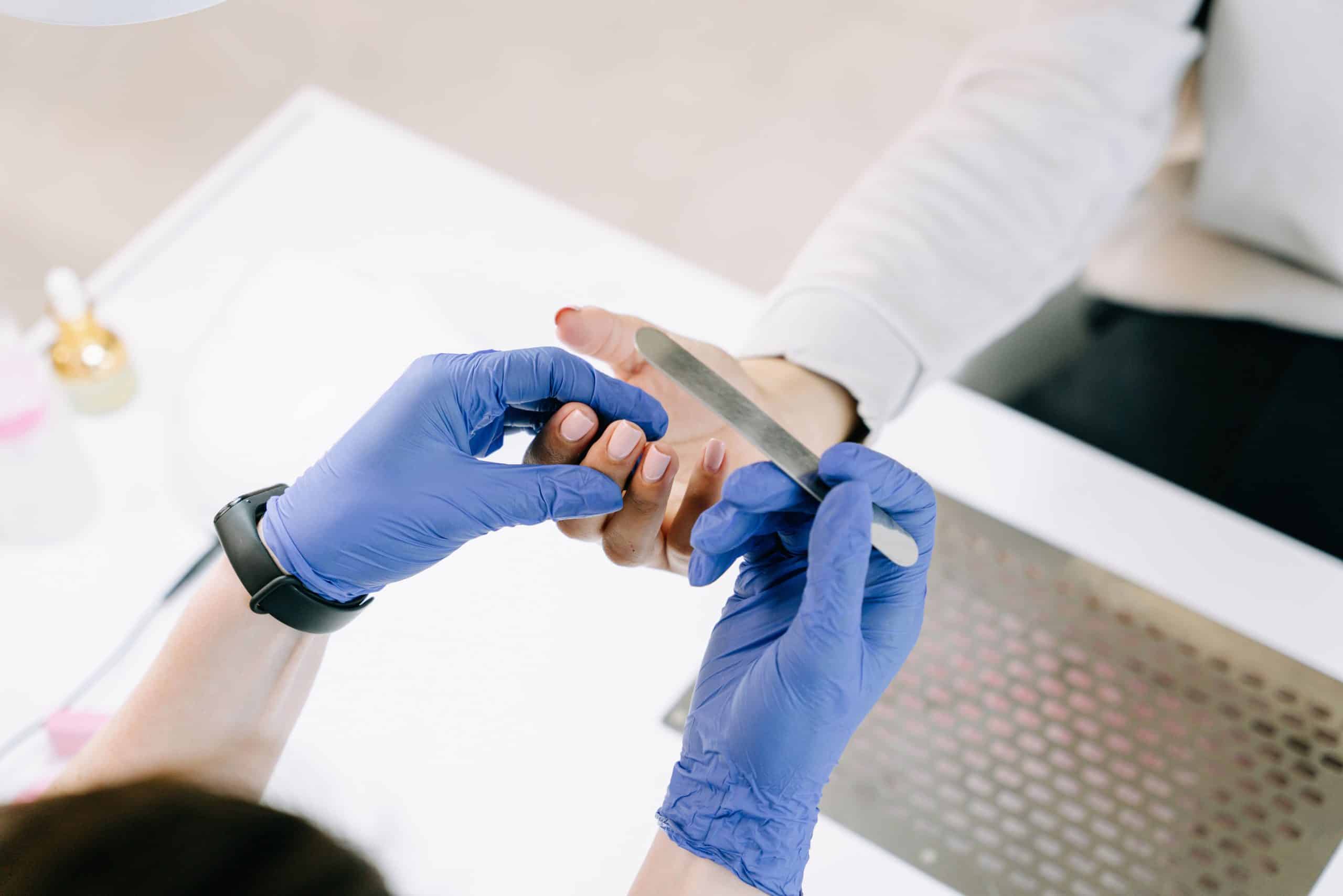
Don’t peel the rest of it off by hand, even though that’s the obvious move. Pulling at a loose section usually takes a thin layer of the natural nail with it, which is how a five-minute annoyance turns into two weeks of a rough, thin nail. File the loose edge smooth instead so it doesn’t catch on anything, and either soak off that one nail properly or leave it until your next fill. A full soak-off removal guide covers the safe way to take a nail down to bare plate if you want to redo it right away rather than wait.
Preventing it on the next set
Most of this comes down to slowing down at two specific moments: prep, and the wipe between coats. Buff the shine off the whole nail, dehydrate it, and don’t touch the plate with bare fingers afterward. Wipe every cured layer with alcohol before the next one goes on, using a fresh, lint-free pad each time. Keep coats thin, even if that means an extra layer to reach full opacity. Check that your lamp actually matches your gel’s cure spec, and swap the bulbs if the lamp is more than a year or two old. If you’re prone to picking, a quick coat of cuticle oil around the edges keeps skin from catching on the gel in the first place, which removes a lot of the temptation.
A cure that’s genuinely borderline, not just a little soft but consistently under-hardened set after set, is usually a lamp problem rather than a technique problem. Our guide to choosing a UV nail lamp covers the wattage and wavelength specs that actually matter, and if you’re working with builder gel specifically, the cure demands are higher still, covered in our lamp guide for builder gel.
Frequently asked questions
Why do my gel nails peel off in one big sheet instead of just chipping?
That usually points to a bonding failure between layers rather than normal wear. Chipping is small surface damage from an impact. A full sheet coming away means the coats never fused into one piece, most often from a skipped alcohol wipe between coats or a thick layer that never fully cured underneath.
Is gel nails peeling off the same as lifting?
No. Lifting is a gap between the gel and the nail plate, usually starting at the cuticle or sidewall. Peeling is the gel layers themselves separating, either from the surface or from each other. The causes are different too: lifting is mostly a prep and seal problem, peeling is mostly a cure and bonding problem.
Can gel polish peeling off damage my natural nails?
Not on its own, but peeling it off by hand can. If a section is already loose and you pick at it, you risk pulling up a thin layer of your actual nail along with the gel. Filing the loose edge smooth and soaking off properly avoids that.
Why does gel only peel on one or two nails and not the whole set?
Uneven prep is the usual reason. If one nail got a lighter buff, a bit of oil, or a thicker coat than the rest, it’s the one that fails while the others hold. It’s rarely the whole bottle of product going bad, since that would show up across every nail, not just one or two.
Does switching gel brands stop the peeling?
Sometimes, but only if the real cause was incompatible base and top coat chemistry, which is one of several possible reasons. Switching brands without fixing prep or cure habits usually just delays the same problem to the next set.
How can I tell if peeling is a curing problem or a product problem?
If it shows up across most of a set applied the same session, suspect the lamp or the cure time. If it’s tied to one specific bottle that’s older or has changed texture, suspect the product. If it’s isolated to one or two nails, suspect prep on those specific nails.
Should I stop using gel if it keeps peeling?
Not necessarily. Peeling almost always traces back to one of the causes above rather than gel being a bad fit for your nails. Before giving it up, try tightening prep, wiping between coats, and confirming your lamp matches the product. Most peeling stops once one of those gets fixed.