
A gel nail fill isn’t the same appointment as a full set, and treating it like one, either by overpaying for a redo you didn’t need or waiting so long that a fill isn’t even possible anymore, is the most common mistake people make with builder gel maintenance. Here’s what actually happens during a gel nail fill, how to know when you’re due for one, and where the line sits between a fill and a full removal. If you’re comparing across systems, acrylic fills follow the same logic on a different timeline — see our breakdown of how often an acrylic nail fill actually happens.
What a gel nail fill actually is
As your natural nail grows, a gap opens up between your cuticle and the base of the builder gel. The gel itself hasn’t gone anywhere, it’s still bonded and structurally sound over most of the nail, but that regrowth strip near the cuticle is bare nail with no product on it. A fill addresses just that strip. The tech buffs the surface to remove shine and any lifted edges, blends new gel into the regrowth area so there’s no visible step between old and new product, then cures and finishes the whole nail as one smooth surface.
Compare that to a full set, where every bit of the old gel comes off first, usually through the soak-off process covered in our guide on how to remove builder gel without damage, and the nail starts over from bare. A fill keeps most of the original structure in place. That’s what makes it faster and cheaper than starting fresh, and it’s also why a fill only works within a certain window. Past a certain point, there’s too much unsupported gel hanging off the tip and a fill stops being the right call.
Signs you’re due for a gel nail fill
The clearest sign is a visible line of bare nail at the cuticle, usually somewhere between an eighth and a quarter of an inch once it’s time. A second sign is the gel starting to feel loose or springy near that regrowth strip when you press on it, even if it hasn’t fully lifted yet. If you can see light or a gap under the gel near the cuticle, or if a section flexes independently from the nail underneath, that’s past due, not just due.
Most people land somewhere in the same window our guide on how long builder gel lasts describes for a full set, generally two to three weeks before the regrowth gap becomes noticeable enough to book a fill, though nail growth speed varies enough person to person that this is a guideline rather than a fixed number.
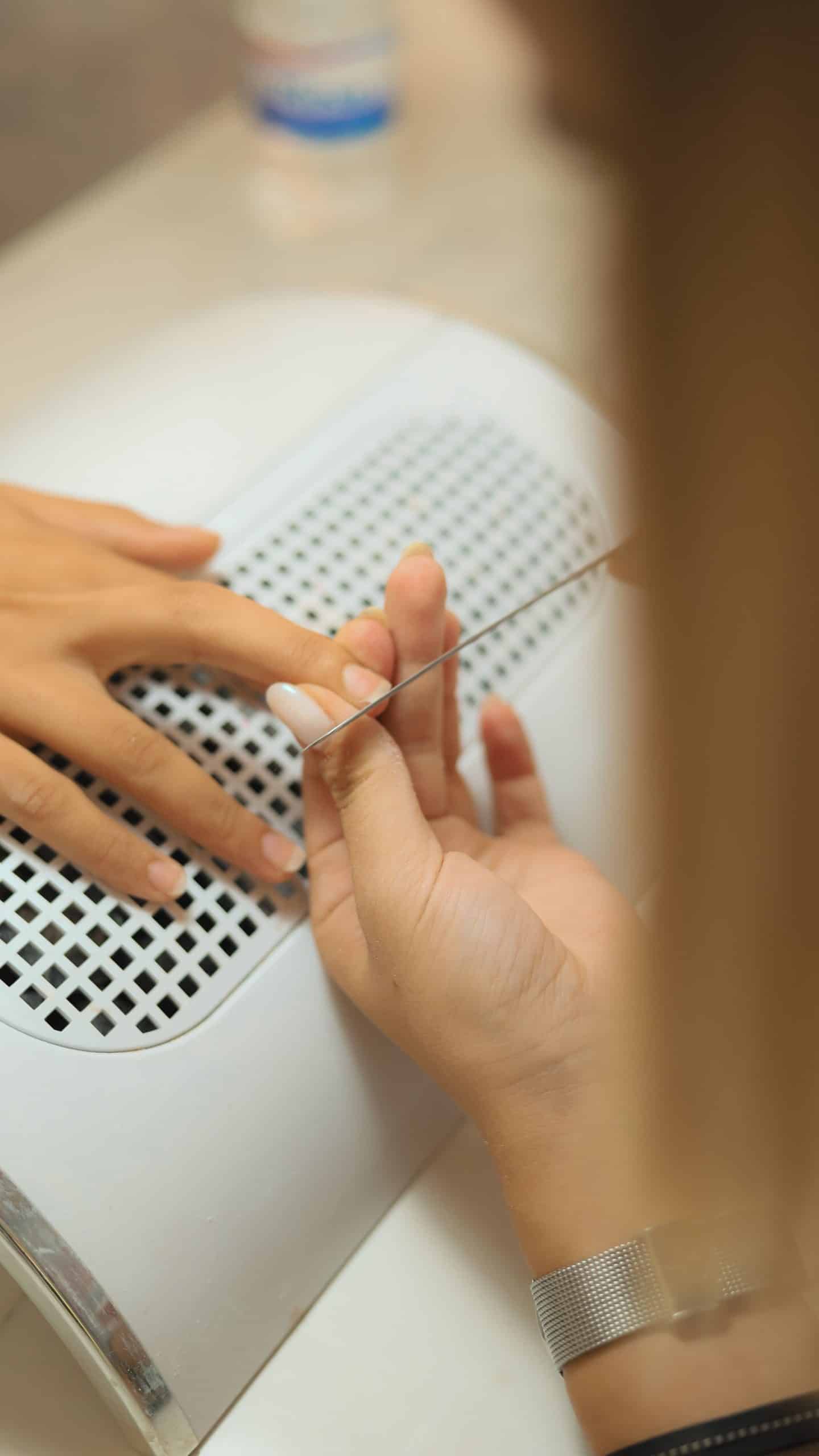
Gel nail fill, step by step
1. The tech checks each nail for lifting, cracks, or areas where the gel has separated from the plate, and any of those get filed down to bare nail rather than filled over.
2. The surface of the remaining gel gets buffed with a fine grit to remove shine, so the new gel has something to grip instead of sitting on a slick, cured surface.
3. The regrowth strip near the cuticle gets lightly filed and dehydrated the same way it would for a first application, since bare nail needs the same prep whether it’s a fill or a full set.
4. Primer goes on the regrowth area only, not the whole nail.
5. Fresh builder gel is applied to blend the regrowth strip into the existing apex, feathering the edge so there’s no visible ridge between old and new product, then cured under a UV or LED lamp.
6. The whole nail gets shaped and buffed as one surface, and a fresh top coat goes over everything, not just the new section, so the shine matches from cuticle to tip.
This is largely the same sequence as a first application, which we cover in more detail in how to apply builder gel step by step, just condensed to the regrowth area instead of the whole nail.
What happens if you wait too long
Skip enough fills and the gel doesn’t just look outgrown, it starts working against the nail underneath it. The unsupported section near the cuticle flexes every time you use your hands, and that flex is what causes lifting, and eventually cracking or snagging on things. A snagged nail with a large air gap underneath is far more likely to catch on fabric or rip partway off, taking a layer of natural nail with it, than one that’s been filled on schedule. Waiting too long doesn’t save you a fill in the end, it usually costs you a full soak-off and a fresh set instead, which is more expensive and harder on the nail than the fill you skipped would have been.
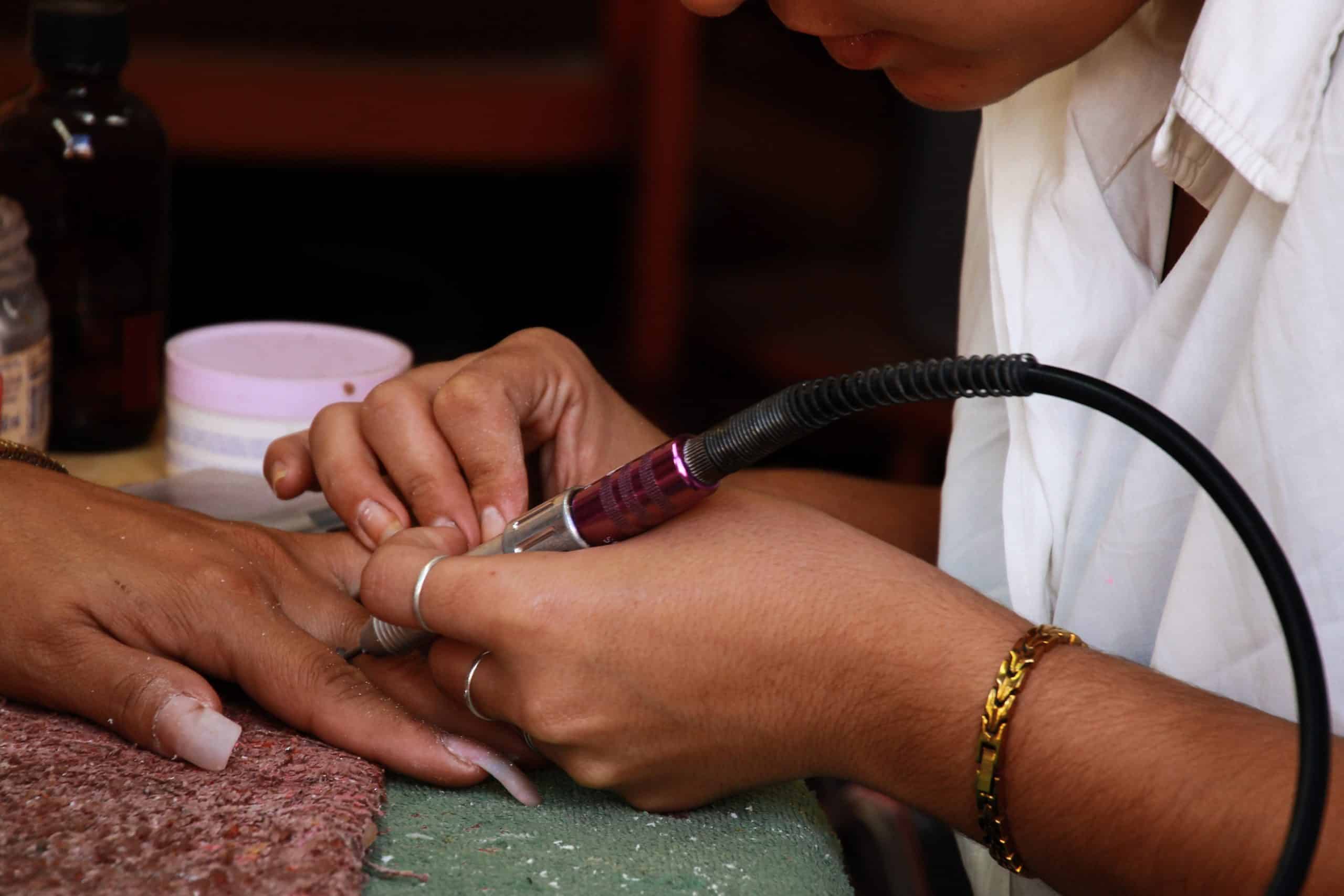
DIY fills: what’s realistic
A fill is a harder DIY job than a first application, since it requires judging how much of the old gel is still sound versus what needs filing down to bare nail, and getting that wrong in either direction causes problems. Filing too little leaves weak spots the new gel won’t bond to properly. Filing too much removes structure you didn’t need to touch. If you’re set up with the same tools covered in our guide for first-timers doing their own set, a fill is doable at home with practice, but expect the first few attempts to take noticeably longer than a salon visit while you learn to judge how much filing is enough.
What a gel nail fill costs
Fills typically run less than a full set, often somewhere in the 30 to 45 dollar range depending on your area, compared to 50 to 70 for a complete new application. That price difference is the main reason fills exist as their own service instead of everyone just getting fresh sets each time. The gap narrows if a tech finds enough lifting or damage during a fill that they end up doing a partial or full soak-off anyway, so ask upfront what the price covers if your nails have been through more wear than usual.
When a fill isn’t the right call anymore
Past two or three fill cycles, most techs recommend a full soak-off and fresh set rather than another fill. Each fill adds a thin layer of new product on top of what’s already there, and after enough rounds the total thickness and weight builds up more than is comfortable or good for the nail underneath. If your nails feel noticeably thicker or heavier than when the set was first applied, that’s the signal to reset with a full removal rather than filling again.
A note on nail health
Persistent redness, swelling, or pain around the cuticle isn’t something a fill schedule fixes, and pushing through discomfort to keep a set going isn’t worth it. If that shows up, it’s worth a dermatologist’s opinion rather than working around it with more gel. This guide covers routine maintenance, not diagnosing what’s going on if something looks genuinely wrong.
FAQ
How often do you need a gel nail fill?
Most people need one every two to three weeks, though it depends on how fast your nails grow. Check for a visible gap at the cuticle rather than going strictly by the calendar.
Can you do a gel nail fill yourself at home?
Yes, if you already have the tools and experience from applying your own builder gel set. It’s a harder skill than a first application since you have to judge how much of the old gel to file down, so expect it to take longer than a salon visit at first.
Is a gel nail fill the same as a soak-off?
No. A fill keeps most of the existing gel in place and only rebuilds the regrowth strip near the cuticle. A soak-off removes everything down to bare nail, which is what happens before a full new set.
Does a gel nail fill hurt or damage your natural nails?
Not when it’s done correctly. The filing stays on the gel and the regrowth area, not the nail plate itself. Damage usually comes from skipping too many fills and letting the unsupported section flex and snag.
What happens if you skip a fill for too long?
The unsupported gel near the cuticle flexes more with everyday use, which leads to lifting and a higher chance of the nail cracking or catching on something. At that point you’re usually looking at a full soak-off instead of a fill.
How long does a gel nail fill appointment take?
Usually 30 to 45 minutes, shorter than a full set since only the regrowth area needs new product, though it takes longer if the tech finds lifting elsewhere that needs addressing first.
How many times can you fill builder gel before you need a new set?
Most techs recommend a full soak-off after two or three fill cycles. Each fill adds a layer, and beyond that point the set gets thicker and heavier than is comfortable.