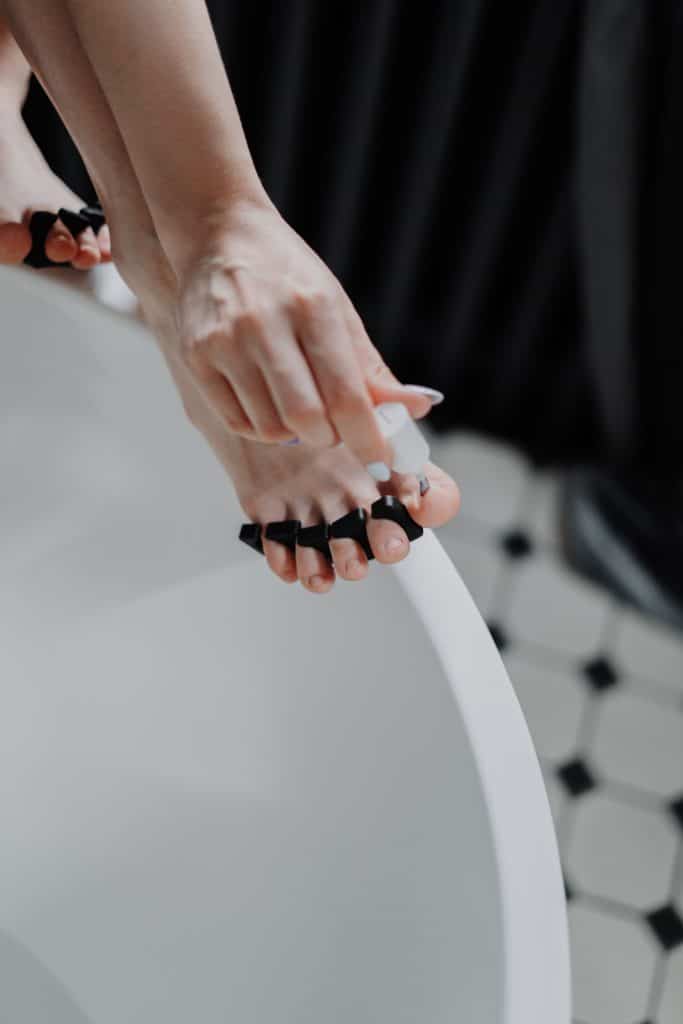
The foam wedges slipped between your toes during a pedicure look nothing like the gel spacers people credit with fixing a bunion, and for good reason: “toe separators” gets used for two products that barely have anything in common besides sitting between your toes. One is disposable and does its job in about twenty minutes. The other is meant to be worn for months, and even then it’s not doing what most people think.
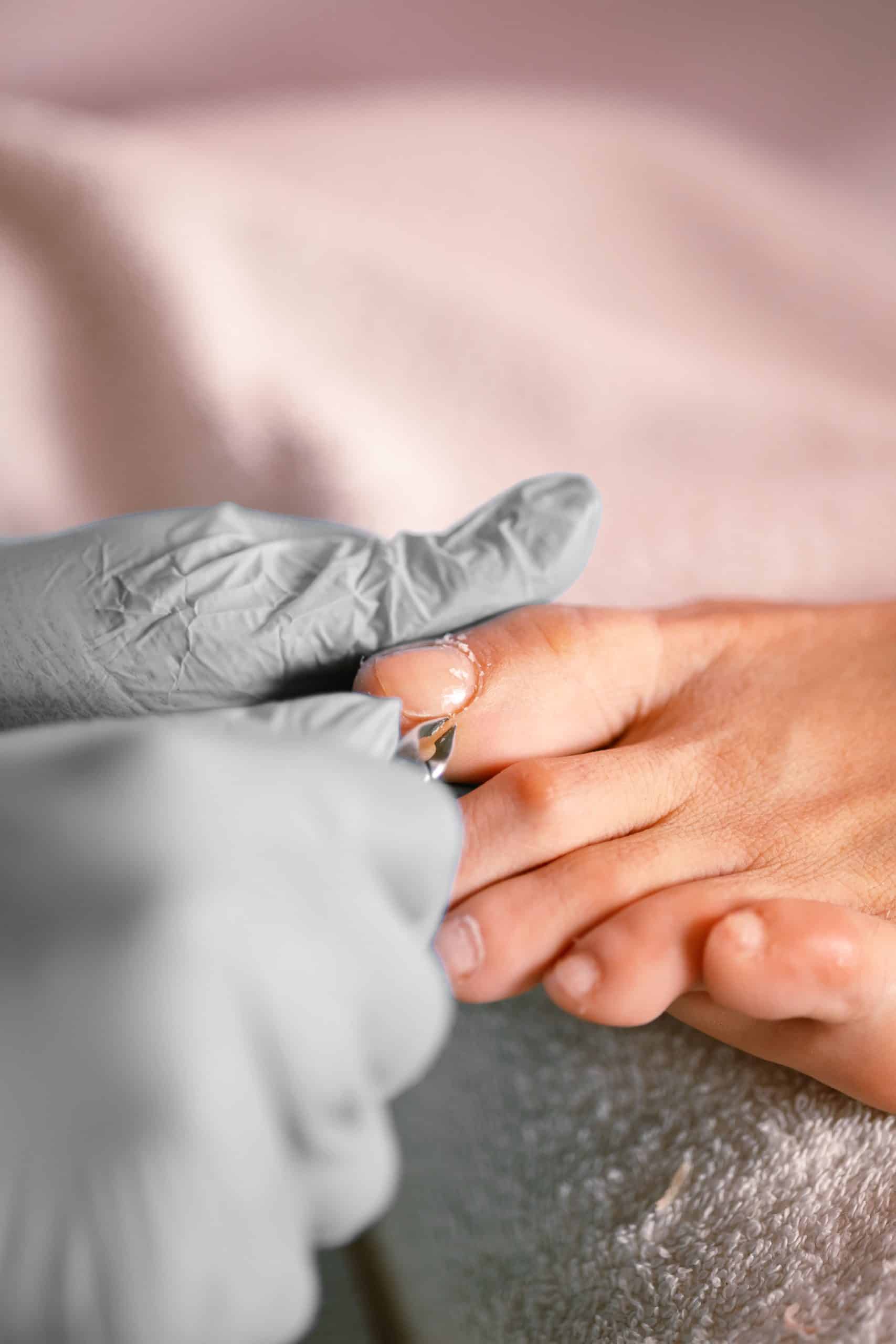
The foam kind: what salons use during a pedicure
The separators in a salon pedicure kit are cheap, single-use foam wedges, sometimes zigzag-shaped, sometimes a simple row of loops. Their only job is mechanical: hold each toe apart from its neighbors long enough for polish to go on and start setting without smudging against the toe next to it. They come off the second the color is dry to the touch. There’s no therapeutic claim attached to them, and there shouldn’t be, since a client is only wearing them for the length of the appointment.
They should be thrown away after every client. They’re foam, they absorb product and moisture, and reusing one between clients is a sanitation problem, not a cost-saving move.
The silicone or gel kind: what it’s actually supposed to do
The reusable silicone toe spacers sold for home use are a different product marketed toward a different problem: crowded toes, mild bunions, hammertoes, or toes that overlap enough to cause friction, blisters, or corns. According to Dr. Georgeanne Botek, a podiatrist quoted by Cleveland Clinic, “these devices work while you’re wearing them, but they don’t correct the root of whatever problem you’re having.” That’s the part the marketing tends to leave off the box.
What they do reliably: create space between toes that are rubbing or overlapping, cushion pressure points during standing or walking, and reduce friction that leads to blisters and calluses. What they don’t do: permanently reshape a foot, reverse a bunion, or fix alignment once they come off. Any comfort is temporary and tied to the toe actually being separated at that moment.
Who should be careful with them
Toe separators, silicone or otherwise, aren’t something to leave on indefinitely without checking in on how the foot responds. Cleveland Clinic’s guidance is specific here: skip them if you have diabetes, neuropathy, or a history of recurring foot sores, since reduced sensation makes it harder to notice irritation before it becomes a real problem. Anyone using them should start with short wear periods, make sure their shoes actually have room for the extra width, and stop if the toes go numb, hurt, or show skin irritation. If foot pain is the reason someone reached for spacers in the first place, and it doesn’t improve, that’s a conversation for a podiatrist, not a longer wear schedule.
Why this matters for a nail appointment specifically
The distinction matters because the two products get confused in a way that changes expectations. Someone who wears silicone spacers at home expecting a bunion to shrink is going to be disappointed no matter how consistent they are, because that’s not what the product is built to do. And someone who thinks the foam wedges from their last pedicure have any lasting effect on toe alignment is giving a twenty-minute polish aid credit it hasn’t earned. Both products are useful for exactly what they’re built for and nothing past that.
How to actually use them well
For the foam salon kind: no real decision to make, your tech handles it, and it comes off before you leave the chair.
For the reusable silicone kind at home: wash and dry them between uses the same as you would any tool that touches skin, check that your footwear fits with them in, and don’t wear them through a shift on your feet all day as a first attempt. Build up wear time gradually and pay attention to how the foot feels afterward, not just during.
FAQ
Do toe separators fix bunions permanently?
No. They can ease pressure and reduce friction while worn, but a podiatrist quoted by Cleveland Clinic is explicit that they don’t correct the underlying issue. A bunion that’s actually bothering you is worth a real evaluation.
Are the foam separators used in a pedicure the same as the silicone toe spacers sold online?
No. The foam ones are single-use and purely there to keep polish from smudging during the service. The silicone ones are a separate product aimed at comfort and spacing between wears, not a pedicure tool.
Can toe separators cause harm?
They can, mainly through overuse or wearing shoes that don’t fit around them, which creates new pressure points. Anyone with diabetes, neuropathy, or a history of foot sores should avoid them without a doctor’s input first.
How long can silicone toe separators be worn at a time?
There’s no universal number, but starting short and watching for pain, numbness, or irritation is the safer approach than wearing them all day right away.
Do toe separators help with calluses?
They can reduce the friction that contributes to calluses and corns between crowded toes, but they don’t remove a callus that’s already there. For that, see our guide on safe callus remover options.
For the rest of what actually goes into a proper at-home pedicure setup, see our guides to choosing a foot file and what’s worth buying in a pedicure kit. And if you’re stocking a kit for hand care too, our comparison of cuticle pusher materials covers the same buy-once-versus-buy-cheap tradeoff.