A first gel kit shows up with five bottles inside, and only two of them make obvious sense: color, and the lamp isn’t even a bottle. The other three, base coat, top coat, and sometimes a third one labeled “rubber base” or “builder,” get skipped or swapped in the wrong order more than any other step in a home gel set. Skip the base coat and the set lifts at the sidewalls inside a week. Get the top coat wrong, or skip it, and a manicure that looked glassy on day one goes dull and scratched by day four.
Base coat and top coat aren’t optional finishing touches on gel nails. They’re doing two different, specific jobs, and knowing what each one actually does is most of what separates a set that holds up for three weeks from one that chips at the tips by Thursday.
Both sit on either side of the actual color layer, and if you’re not sure what gel polish is or how it differs from builder gel, our guide to gel polish covers that first.
What base coat actually does
Base coat is the layer between the natural nail and everything else. Its job is adhesion: it bonds to the plate itself and gives the color or builder gel something to grip that isn’t bare keratin. Gel polish and builder gel don’t stick well to an untreated nail on their own, especially once a dehydrator has stripped the surface oil, so skipping straight to color is one of the fastest ways to end up with a set that peels off in one piece a few days in.
A good base coat also does a second job that gets less attention: it protects the nail plate from staining. Dark reds, blues, and glitter shades all carry pigment that soaks straight into unprotected keratin, and a client who’s worn dark polish without a base coat for months usually has yellow-stained nails to show for it. The base coat is the barrier between the pigment and the plate.
Regular base coat vs rubber base coat
Not all base coats behave the same way once cured. A standard base coat is thin and cures to a firm, fairly rigid layer, which works fine on nails that are naturally strong and don’t flex much during the day.
Rubber base coat is a newer, thicker formula with more give in it. It’s slightly self-leveling, which helps smooth out ridges and minor surface texture before color goes on, and once cured it stays a little flexible instead of curing rock-hard. That flexibility matters most on nails that are thin, soft, or bend a lot with daily use: a rigid base coat on a flexible nail tends to crack at the point where the nail moves and the base doesn’t, and that crack is where lifting starts. Rubber base is also the more forgiving choice for anyone whose sets keep chipping at the free edge despite decent technique elsewhere.
Neither one replaces a dehydrator or primer. Base coat bonds to the nail; it doesn’t clean it first. If the prep before it was rushed, no base coat formula fixes that on its own, which is the same order-of-operations problem covered in our guide to nail dehydrator vs primer.
What top coat actually does
Top coat is the seal. It goes over the color, or over the final layer of builder gel, and its job is to protect everything underneath from scratches, chipping, and UV fading, while giving the surface its shine. Gel nails finished without a real top coat, or with one applied too thin, dull fast and start chipping at the tips within days because there’s nothing protecting the color layer from daily contact.
Top coat also does the job of capping the free edge, the very tip of the nail. Running the brush over that edge on every coat, base, color, and top, seals it against water getting underneath during dishes or a shower. Skipping this on the top coat specifically is one of the most common reasons a set that looked fine at pickup starts lifting from the tip within a week.
Wipe top coat vs no-wipe top coat
After curing, most gel top coats leave a thin, slightly sticky film on the surface. That’s the inhibition layer, sometimes called the dispersion layer, and it’s not a mistake: oxygen in the air stops the outermost molecules from fully linking during the cure, which is what lets nail art, chrome powder, or an extra layer bond to it instead of sliding off. Wiping it away with an alcohol-based cleanser reveals a hard, glassy surface underneath.
No-wipe top coats skip that step entirely. They’re formulated to cure all the way through without leaving a tacky film, so the set comes out of the lamp already glossy with nothing left to clean up. That convenience comes with a trade-off: because there’s no forgiving sticky layer to catch mistakes, a no-wipe top coat applied too thin, or cured under a lamp that’s slightly underpowered, is more likely to come out matte or streaky instead of glossy, with no second chance to fix it the way a wipe formula allows.
Neither type is objectively better. A wipe top coat is the safer default for chrome, glitter, or layered nail art where something needs to grip the surface after curing. A no-wipe top coat suits a plain color set where speed and a one-step finish matter more.
Matching base and top coat to the same system
Base coat and top coat from different brands aren’t guaranteed to work together, and mixing them is a more common cause of curing trouble than people expect. Gel systems are formulated as a set: the base coat’s chemistry is built to bond with that brand’s color and top coat specifically, and pairing it with a different line can leave one layer rubbery or tacky no matter how long it sits under the lamp, the exact problem covered in our breakdown of gel not curing properly.
This matters more with builder gel than with plain polish, since a base coat that’s slightly incompatible with a thick structural layer shows up as a weak spot at the bond line rather than just a cosmetic issue. If you’re setting up a full builder gel application rather than just color, the base coat step fits into a longer sequence worth reading start to finish in our guide to applying builder gel.
How long each layer needs under the lamp
Base coat generally cures fast, usually 30 seconds under LED and closer to 60 under UV, since it’s applied thin. Top coat needs roughly the same window, though a thicker top coat or a no-wipe formula sometimes asks for slightly longer to fully polymerize all the way through. The number on the bottle is there for a reason specific to that formula’s photoinitiators, not a rough guideline, and it’s worth following it over habit.
The lamp itself matters as much as the timing. A wattage or wavelength mismatch shows up first in the top coat, since it’s the outermost layer and the easiest one to under-cure without noticing until it stays tacky or dents under light pressure. Our guide to choosing a UV nail lamp covers what the watts and wavelength numbers on the box actually mean for cure time.
Mistakes that undo a good base and top coat
- Skipping base coat to save a step, which is the fastest route to a set lifting within days
- Applying top coat too thick in one pass instead of a thin, even layer, which shrinks and wrinkles as it cures
- Not capping the free edge with the top coat, leaving the tip exposed to water
- Mixing base and top coat from different brands without testing compatibility first
- Wiping a tacky no-wipe top coat with alcohol out of habit, which can dull a finish that was never meant to be wiped
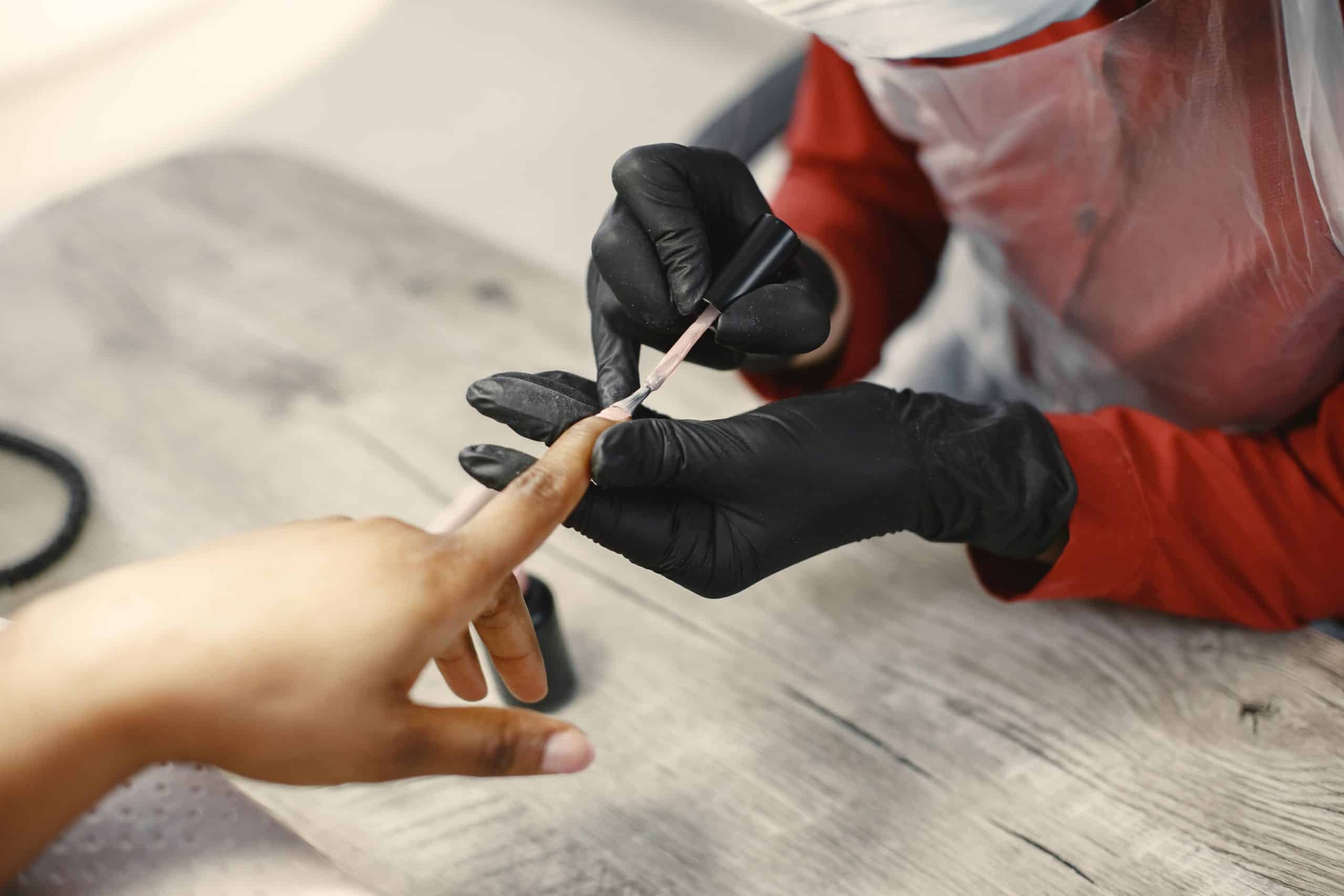
- Letting base coat or top coat touch the surrounding skin, which traps moisture and invites lifting at the sidewall
Refreshing shine between fills
A set that’s still structurally sound but looking a little dull or scratched two weeks in doesn’t need a full redo. Buffing the surface lightly to knock down scratches, wiping away dust, and applying a fresh layer of top coat alone restores shine without touching the base or color underneath. This works because top coat is the outermost, sacrificial layer by design; it’s meant to take the daily wear so the layers underneath don’t have to. It’s not a substitute for a fill once the base has visibly grown out or started separating at the cuticle, just a way to buy a few extra days of shine on a set that’s otherwise holding fine.
Frequently asked questions
Can I skip base coat if I’m only doing a quick set of gel nails?
No. Base coat is what the color or builder gel actually bonds to, not an optional extra step. Skipping it is one of the most common reasons quick, DIY gel nails lift within a few days instead of lasting the usual two to three weeks.
Do I need a separate base coat and top coat, or can one product do both?
Some brands sell a “duo” formula marketed for both roles, but base and top coat are chemically built for different jobs, adhesion versus protection and shine, so a dedicated product for each usually outperforms a single all-in-one bottle.
Why is my top coat tacky after the full cure time?
If it’s a thin, sticky film that wipes off cleanly with alcohol and leaves a hard surface underneath, that’s the normal inhibition layer on a wipe-formula top coat. If the layer itself dents or stays soft after wiping, it’s genuinely under-cured, usually from too thick a coat or a lamp that doesn’t match the product.
Is rubber base coat better than regular base coat?
Not universally. Rubber base suits thin, flexible, or chip-prone nails because it stays slightly flexible after curing. Regular base coat works fine on nails that are naturally strong and don’t flex much. Neither replaces proper prep with a dehydrator first.
Can I use gel top coat over regular nail polish?
Not reliably. Gel top coat cures under a UV or LED lamp through a chemical reaction that regular polish isn’t formulated to trigger, so it often stays wet or tacky over non-gel polish instead of curing properly.
How often should I reapply top coat between manicures?
A fresh layer of top coat every week to ten days keeps shine up and adds a bit of scratch protection, without needing to redo the base or color underneath, as long as the set is still structurally sound.
Does base coat prevent nail staining from dark polish?
Yes, that’s one of its two main jobs alongside adhesion. A proper base coat forms a barrier between pigment and the nail plate, which is why nails that go straight from bare to dark polish without one are more likely to come out stained.