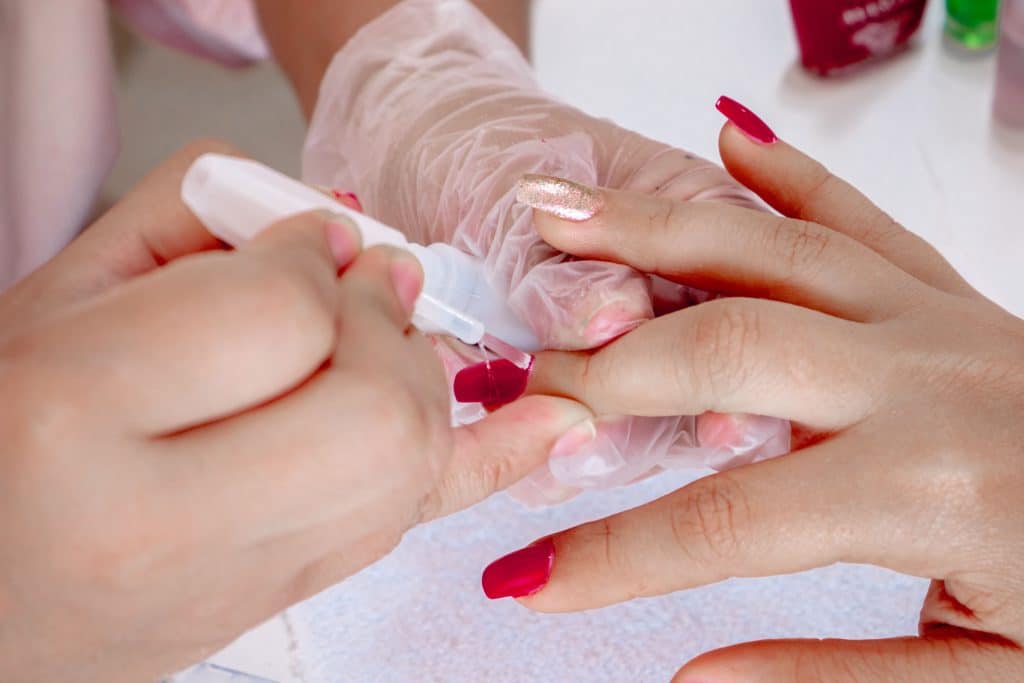
A friend sent me a video last week of someone applying what looked like a sticker to their nail, running a mini lamp over it for a few seconds, and ending up with a finished gel manicure in under ten minutes. She wanted to know if it was real or a filtered ad. It’s real, and it’s one of the fastest-growing product categories in this niche right now: semi-cured gel nail strips, up 174 percent in search interest over the past year by some measures, which tracks with how fast this category has shown up in drugstores and on social media.
What a semi-cured gel strip actually is
The strip itself is gel polish that’s been partially cured at the factory, hence "semi-cured." It arrives dry to the touch and flexible, not liquid, which is the entire point: there’s no brush, no bottle, no risk of the polish pooling at the cuticle or dragging across skin the way wet gel polish can for someone without steady hands. You peel a strip, size-match it to your nail, press it on, trim the excess with a file, and cure it under a UV or LED lamp for a short burst, usually 30 to 60 seconds. The lamp finishes the cure that started at the factory, which is where the name comes from.
This is different from regular nail polish strips or dry vinyl wraps, which never touch a lamp and don’t have the same wear or shine because they’re not gel-based at all. It’s also different from press-on nails, covered in press-on nails vs gel, since a strip goes directly onto your existing natural nail rather than attaching an artificial tip.
How semi-cured strips compare to regular gel polish
Regular gel polish is applied wet, layer by layer, with each layer cured separately, and it can be shaped to account for uneven or narrow nail beds since the tech is painting freehand. A semi-cured strip is pre-shaped in a fixed size range, so fit depends on how close your nail width matches one of the sizes in the box. Most brands include a dozen or more sizes per set to cover this, but very small pinky nails or unusually wide nails sometimes don’t get a clean match, leaving a visible gap at the sidewall or excess that needs careful trimming.
Wear time is where the two diverge the most. Salon-applied gel polish, properly prepped and cured, holds for two to three weeks. Semi-cured strips, applied at home without professional-grade dehydrator, primer, and lamp wattage, tend to hold for one to two weeks before lifting starts at the edges. That’s not a knock on the product category. It’s the same gap you’d expect between any professional service and a DIY version of it, similar to the difference between salon gel and an at-home gel polish kit.
Application steps
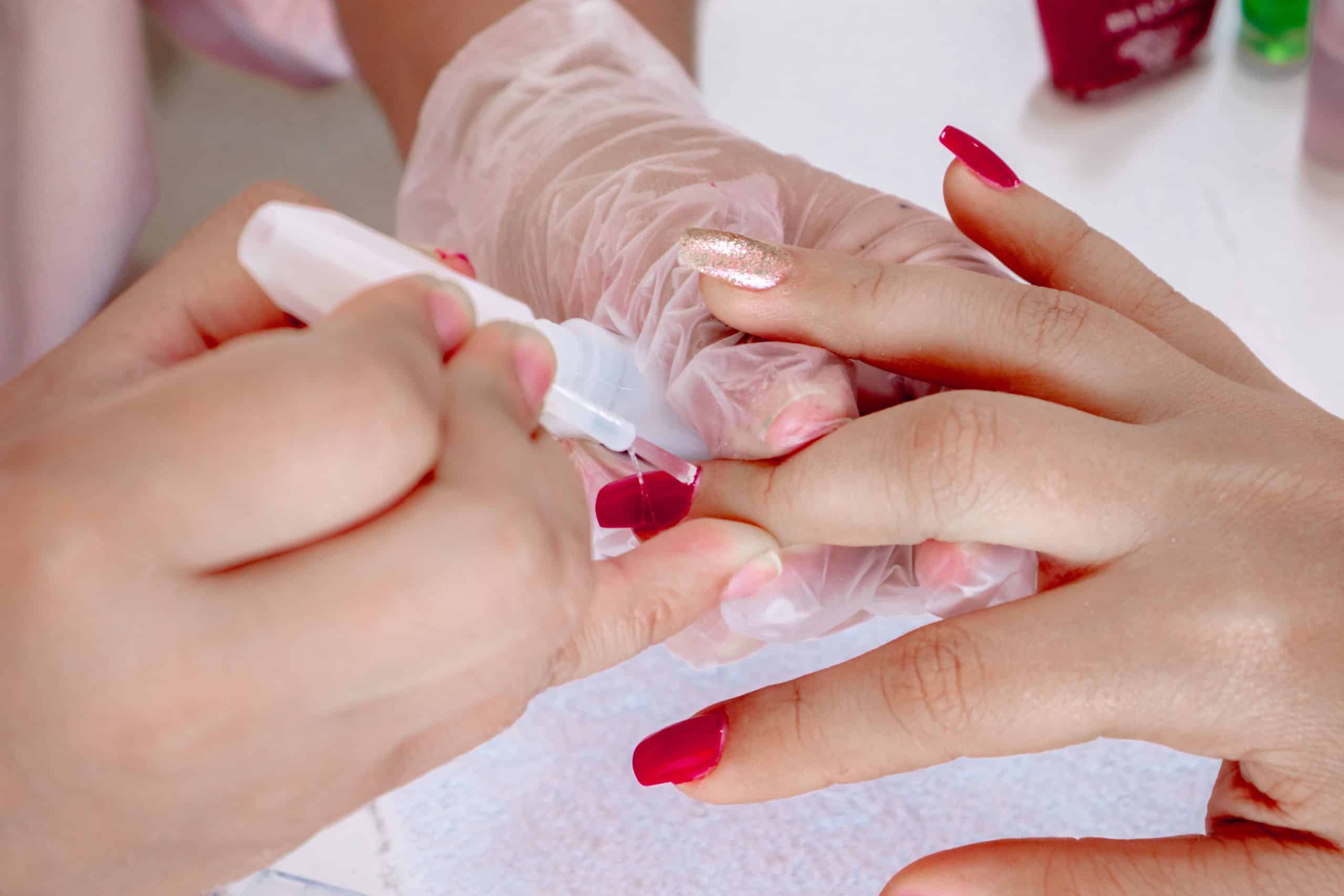
Nail prep still matters here the same way it does for any gel system. Push back cuticles, lightly buff the shine off the nail plate, and wipe with alcohol or a prep pad if the kit includes one, skipping this step is the single biggest reason people report early lifting with strips. Select the closest size match per nail, peel the strip off its backing, and apply from the cuticle line outward, smoothing from the center toward the edges to push out air bubbles. File the excess length along the free edge, cure under the lamp, then repeat for the remaining nails.
Some kits include a top coat step post-cure for extra shine and durability; skipping it isn’t fatal but does shorten wear time slightly.

Removal
This is the category’s biggest advantage over regular gel polish for a lot of people: strips soak off the same way gel polish does, wrapped in acetone for roughly 10 minutes, but because the layer is thinner than a hand-painted gel manicure, removal tends to go faster and with less risk of over-soaking the surrounding skin.
Where semi-cured strips fall short
Complex nail shapes. Strips are built for a standard oval or squoval nail. Anyone with a pronounced curve, ridge, or unusually shaped nail bed will find the strip doesn’t sit flush everywhere, leading to earlier lifting at the high points.
Design limits. You get what’s in the box. Custom nail art, ombré, or French tips require either buying a specific pre-designed strip or accepting that this format isn’t built for freehand creativity the way a brush-applied gel is.
Sizing gaps. Even generous size ranges miss some nail shapes, particularly very narrow or very wide beds, and a strip that’s slightly too small leaves a gap at the sidewall where moisture and product can get underneath and lift the whole strip early.
None of this makes strips a bad product. It makes them a specific tool for a specific job: a fast, mess-free gel manicure for someone who wants two weeks of wear without booking a salon appointment or owning a full gel polish kit.
Frequently asked questions
Do semi-cured gel strips need a UV lamp?
Yes. The strip arrives partially cured and needs lamp time to finish hardening. Skipping the lamp leaves a tacky, unfinished surface that won’t hold up.
How long do semi-cured gel strips last?
One to two weeks is typical for a home application, shorter than salon gel polish because prep and cure conditions aren’t professional-grade.
Are gel nail strips bad for your nails?
No more than regular gel polish, as long as they’re removed by soaking in acetone rather than peeled off, which can take layers of the natural nail with it.
Can you reuse a UV lamp from a regular gel polish kit for semi-cured strips?
Generally yes, as long as the wattage and light type (UV or LED) match what the strip brand recommends. Check the packaging before assuming compatibility.
What’s the difference between semi-cured strips and press-on nails?
Strips are a thin gel color layer applied directly to your natural nail. Press-ons are pre-shaped artificial nails glued or taped over your natural nail, adding length the way an extension system would.