“Builder gel” and “hard gel” show up on the same brand pages, sometimes on the same bottle, and clients ask about both as if they’re obviously different things. They’re not always different, which is exactly why this question keeps coming up in the chair. This is the builder gel vs hard gel comparison I give clients when they ask me to just settle it.
Short version up front, then the parts that actually change how a service goes.
The short answer
Both are thick, UV/LED-cured gels used to add structure and length to nails, and on plenty of brand shelves “hard gel” is just another name for the same product line as “builder gel.” Where the two terms genuinely split is removal. A true hard gel is not soak-off. It has to be filed off with an e-file or hand file. A soft builder gel dissolves in acetone like gel polish, just slower because it’s thicker. If a bottle doesn’t say soak-off anywhere on it, assume it’s a hard gel and plan the removal accordingly.
Builder gel vs hard gel at a glance
| Aspect | Builder gel (soak-off) | Hard gel |
|---|---|---|
| Removal | Soaks off in acetone, 10 to 15 minutes | Filed off only; does not respond to acetone |
| Rigidity | More flex, gives under pressure | Stiffer, more rigid once cured |
| Best for | Overlays, short-to-medium extensions | Long or heavily sculpted extensions |
| Where you’ll find it | Dominates retail and salon menus | Specialty item, mostly supplier-stocked |
| Chair time for removal | Faster, less billed time | Longer, e-file removal takes more time |
| Best suited to | Beginners and everyday wear | Techs comfortable filing, competition-style sets |
What builder gel usually means
We cover this in more depth in our guide to what builder gel is, but the short version: it’s a self-leveling, photoinitiated gel used to strengthen natural nails or sculpt an extension over a form or tip. Most products sold as “builder gel” today are formulated to be soak-off, which is a big part of why the category grew so fast. Techs get gel-level strength without the file-heavy removal that used to scare people off hard gel. One popular soak-off format sold under its own name, BIAB (Builder in a Bottle), compares directly to traditional builder gel in our BIAB vs builder gel guide.
What hard gel usually means
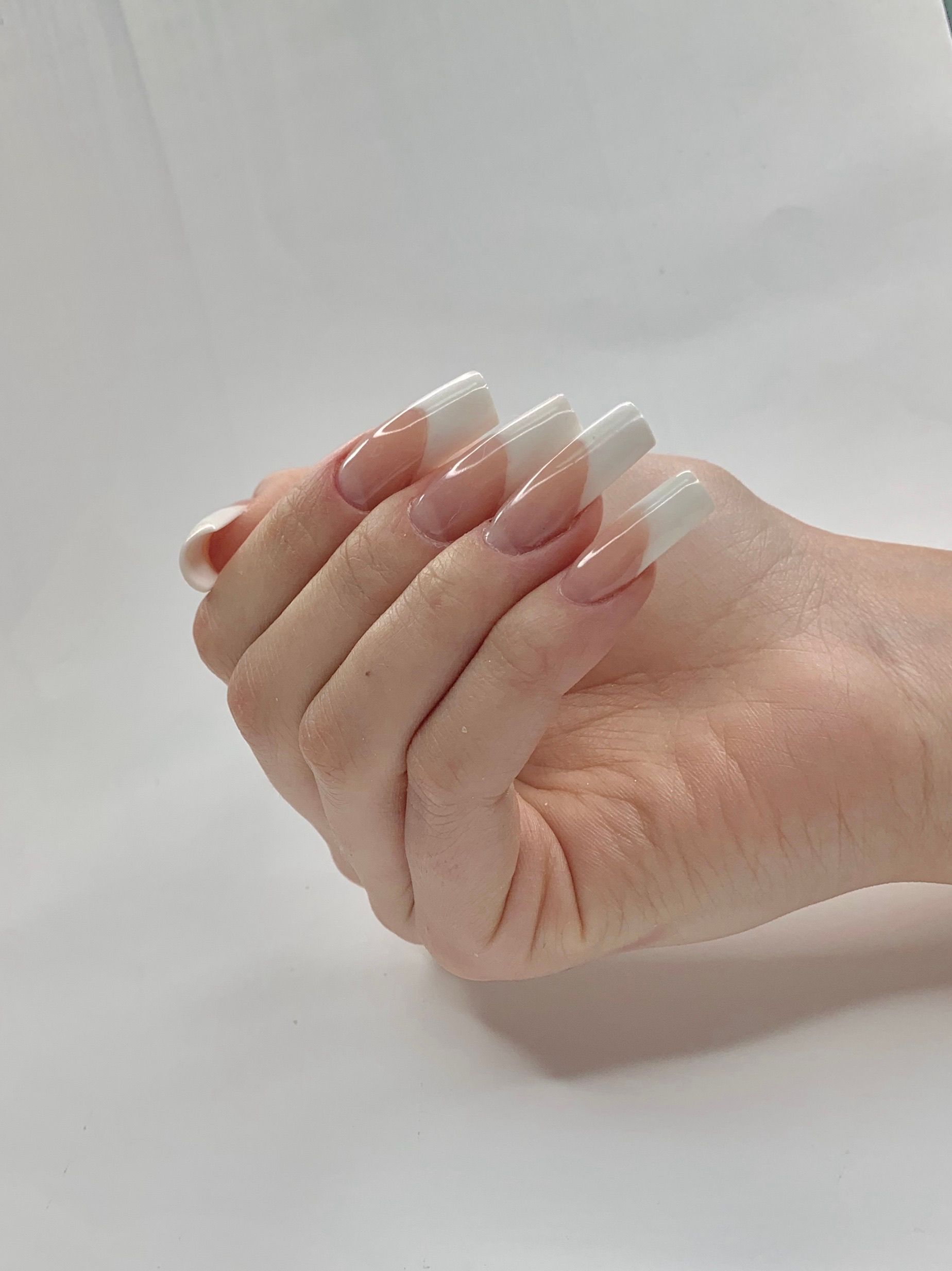
“Hard gel” is older terminology from before soak-off builder gels existed. Chemically it’s the same family: a UV/LED-cured resin that hardens permanently once it hits light. The difference is in the resin itself. Hard gel formulas cross-link tighter during cure, which is what gives them more rigidity and, in a lot of cases, a bit more raw strength for very long extensions. That same tight cross-linking is why acetone can’t break it back down. You file it off, full stop.
Some brands still sell true hard gel for exactly this reason: techs who do long, dramatic extensions and want the extra rigidity, and don’t mind the longer removal appointment.
The difference that actually matters: soak-off vs file-off
If you only remember one thing from this article, make it this: check the label for “soak-off” before you buy or before you ask for a service. That single word tells you more than the words “builder gel” or “hard gel” ever will.
Why this matters for removal
Soak-off product loosens in acetone in about 10 to 15 minutes with some light filing to break the top seal first. It’s the same category of removal covered in our gel nail removal guide, just with more filing up front because the product is thicker than regular gel polish.
File-off hard gel doesn’t respond to acetone at all. It has to be filed down to a thin layer with an e-file, then buffed off the natural nail by hand. Done carelessly, that’s where most of the “gel ruined my nails” complaints actually come from. The gel isn’t the problem there; someone took too much natural nail off along with it. If your tech reaches for acetone on a true hard gel set, something’s off, it simply won’t work.
Strength and durability compared
For a standard length extension, modern soak-off builder gels hold up fine for three to four weeks, similar to what we noted for regular sets in our beginner’s guide. Hard gel usually wins on stiffness for anything long or dramatic, ballerina shapes, long stilettos, anything with a lot of unsupported tip. The extra rigidity resists bending better under real-world stress like typing or opening a car door.
For short to medium lengths, most clients can’t tell the difference in wear between the two, and I’d rather give someone the soak-off option unless they specifically need the extra stiffness.
Which one for extensions, which for overlays
Overlays on natural nails: soak-off builder gel almost every time. There’s no structural reason to reach for a non-soakable product when you’re not adding much length, and easier removal matters more when there’s no extension to justify the extra rigidity.
Long or heavily sculpted extensions: this is where hard gel earns its keep. If a client wants length well past the fingertip, the added stiffness genuinely reduces breakage, and most techs who specialize in competition-style or very long sets keep a hard gel in rotation for that reason alone.
Somewhere in between the two sits polygel, which handles more like a putty you shape by hand. If neither builder gel nor hard gel sounds like the right fit, our polygel nails guide covers that middle option in detail.
Application and curing
Both products cure the same way, under UV or LED light, in thin layers, with shape and refinement happening between coats. The application steps are close enough that our how to apply builder gel walkthrough applies to hard gel too, aside from the removal step at the end.
Cure times differ by brand more than by category, so don’t assume hard gel needs longer under the lamp just because it’s stiffer once cured. Check the product instructions, and if you’re shopping for a lamp that handles both types well, we go through wattage and coverage in our UV lamp buying guide.
Cost and what you’ll find on shelves
Soak-off builder gel dominates retail and salon menus right now, which tracks with how fast the category has grown. True hard gel is still around but it’s more of a specialty item, usually stocked by suppliers who cater to nail techs doing competition work or very long extensions rather than everyday retail. Pricing runs about the same per bottle either way. The real cost difference shows up in the chair, since a file-off hard gel removal takes longer and that time gets billed.
So which should you choose?
For most people asking about builder gel vs hard gel, the answer is builder gel, specifically a soak-off formula. It covers strengthening, short-to-medium extensions, and everyday wear without locking you into a removal appointment that only works one way. Reach for hard gel when the length or shape genuinely demands extra rigidity, and go in knowing removal means filing, not soaking.
If anything about your natural nails feels unusually thin, painful, or discolored before or after either product, that’s worth a dermatologist visit rather than a guess from a nail forum.
FAQ
Is hard gel stronger than builder gel?
For very long or heavily sculpted extensions, true hard gel usually has an edge in rigidity. For everyday lengths, soak-off builder gel holds up about the same and most clients won’t notice a difference.
Can hard gel be soaked off in acetone?
No. True hard gel doesn’t respond to acetone at all. It has to be filed off. If a product soaks off, it’s a soft or builder gel, not a true hard gel, regardless of what the label calls it.
Why do some brands call builder gel “hard gel”?
Terminology varies by brand and hasn’t standardized across the industry. Some use “hard gel” as a marketing term for what’s really a soak-off builder gel. Always check for the word “soak-off” on the label rather than relying on the product name.
Does hard gel damage natural nails more than builder gel?
Not inherently. Damage from either product almost always comes from rushed or aggressive filing during removal, not from the gel itself. Hard gel removal takes more filing, which raises the risk if it’s done carelessly.
Which one should a beginner use?
Soak-off builder gel is the easier starting point for most beginners and clients, since removal doesn’t require e-file skills. Hard gel is better suited to techs who already have filing experience and clients who specifically want very long extensions.
Can you mix builder gel and hard gel in the same set?
Some techs use a hard gel for structural strength in the stress area and a soak-off builder gel elsewhere, but this makes removal inconsistent across the nail. Most product lines aren’t designed to be combined this way, so check manufacturer guidance first.
Is polygel the same as hard gel?
No. Polygel is its own hybrid category, thicker and hand-shaped rather than self-leveling, and most polygel formulas are soak-off. It sits closer to builder gel than to true hard gel in terms of removal.