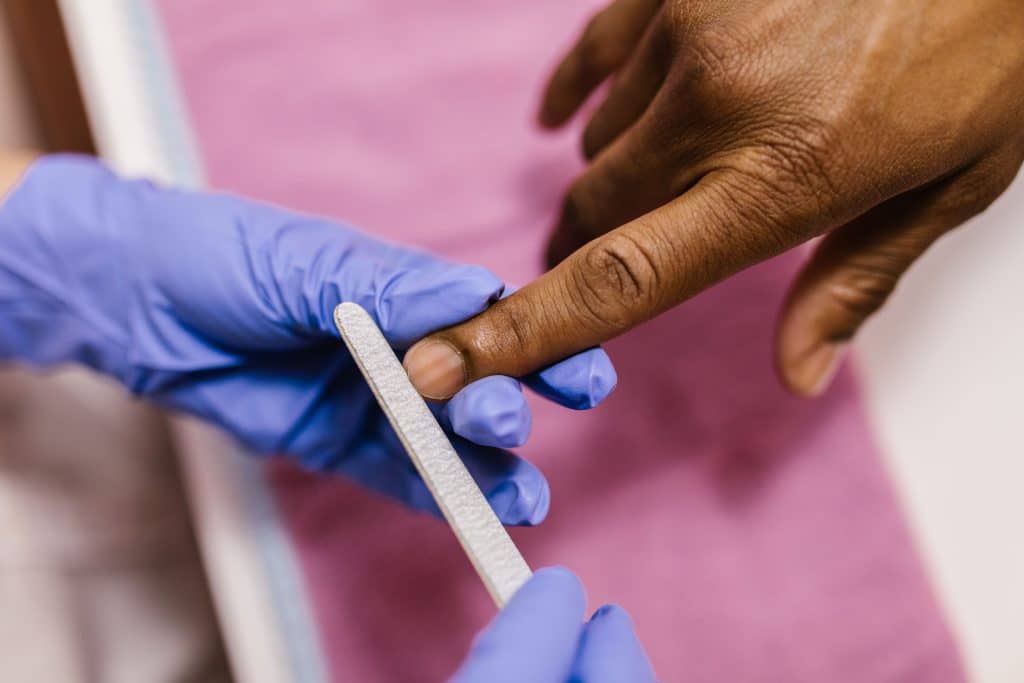
One week is an odd spot for a lift to show up. Three days in, most people assume it is the tech’s fault. Two weeks in, most people assume it is just regrowth. Somewhere in between, gel nails lifting after a week lands in a gray zone where both explanations are plausible, and guessing wrong means treating the wrong problem.
If you are looking at a small gap at the edge of one nail exactly seven to ten days after your appointment, this is the timeframe-specific version of the question. The full list of causes and how to prevent lifting from the start lives in our guide on why gel nails lift. This one is about figuring out, right now, what is actually going on with the nail in front of you.
Why one week sits in the middle
A lift at three days is close to a sure thing: the bond never fully formed, usually from skipped prep, leftover oil on the plate, or an under-cured base coat. There has not been enough time for anything else to be the cause. A gap at two or three weeks, especially right at the cuticle, is very often just the natural nail growing out from under the gel, not a failure of the set at all.
One week does not sort as cleanly into either bucket. Cuticle tissue that was pushed back at your appointment starts creeping forward again within a few days for a lot of people, which can look like a fresh lift when it is really just new growth showing at the base. At the same time, a full week of ordinary hand use, dishes, hand sanitizer, gloves on and off, is enough to start wearing at a marginal edge seal that would have held up fine for another week if it had been sealed a little better to begin with. Both things can produce the exact same visual: a small gap near the cuticle line, seven to ten days in.

The two-minute check
Where is it
A gap right at the cuticle, running in a thin, even line along the base of the nail, leans toward regrowth. A gap at the sidewall or free edge, especially if it is only on one side of the nail, leans toward a seal or prep issue instead.
How big is it
Press gently on the area. If it barely moves and you cannot see light or debris underneath, it is minor. If the gel flexes or lifts away when you press it, or you can slide anything under the edge, that is a genuine lift rather than cosmetic regrowth.
One nail or several
Regrowth at one week tends to show up on most or all of the nails at roughly the same rate, since they were all done at the same appointment. If only one nail shows a gap and the rest look tight, that points to something specific to that nail: a spot where prep was rushed, or where the product sat a touch too close to the skin.
The three most likely causes at exactly one week
A cuticle margin that was slightly too tight
If the base coat sat a little too close to or directly over the cuticle, it takes about this long for the effect to become visible. Skin at the cuticle line sheds and moves constantly, and gel that was cured onto skin instead of nail gets carried along with it. This kind of lift usually starts as a hairline gap right at the base and slowly gets more visible over the following days rather than appearing all at once.
A week of normal wear on the edge seal
Every wash, every glove, every hot shower puts a small amount of stress on the seal at the sidewalls and free edge. A well-capped set shrugs this off for weeks. A set where the free edge was not fully capped, or where one layer went on a little thin, can hold for the first few days and then start separating once a week of ordinary use has had a chance to work at the weak spot.
Early regrowth mistaken for a lift
This is the least serious of the three, and often the most common. The gel itself has not failed at all. New nail plate has simply grown out past the edge of where the gel was originally applied, and the visible line at the base is untouched natural nail rather than a gap in the product. It reads as lifting because it looks like a gap, but nothing underneath is actually loose.
What to do about it right now
If the check above points to a small, genuine lift, patching it is usually the right call rather than removing the whole set. Our step-by-step guide on how to fix lifted gel nails at home covers exactly how to buff, clean, and reseal a lift that size.
If it is bigger than a pinhead, on more than one nail, or you can feel the gel move when you press it, patching is more likely to trap moisture underneath than fix anything. At that point, soaking off the affected nail and starting fresh is the safer option; the full process is in our guide to removing gel nails at home safely.
If the check points to regrowth rather than a real lift, there is nothing to fix. It is simply a sign that the set is due for a fill in the next week or two, the same as it would be without any visible gap at all.
Adjusting for the next set
Since a tight cuticle margin and a worn edge seal are the two causes most likely to show up specifically around the one-week mark, both are worth addressing at your next appointment rather than waiting to see if it happens again. Ask for a slightly wider margin between the product and the cuticle, even a hairline makes a difference, and confirm the free edge is capped on every layer, not just the top coat.
Holding off on cuticle oil for the first 24 hours after application also helps, since oil applied too early can work its way back toward the cured edge before it has had time to fully set. Our guide on why cuticle oil matters covers the right timing for using it without undermining a fresh set. Gloves for the first couple of days of heavy dishwashing are a small habit that protects the same edge seal that a week of bare-handed use tends to wear down.
When it is not about technique
Occasionally a lift at this stage comes with something beyond the manicure itself: redness, swelling, a smell, or discoloration around the nail fold. None of that is a prep problem, and none of it should be patched over. That combination calls for a dermatologist rather than a buffer, since it can point to irritation or infection that a home fix will not resolve and may make worse if it gets sealed under fresh gel.
Frequently asked questions
Is it normal for gel nails to lift after exactly one week?
Gel nails lifting after a week is common enough that a small visible gap at this point is often just regrowth rather than product failure. A genuine lift, where the gel itself has separated and moves when pressed, is not something you should expect from a well-applied set and usually points to a prep or seal issue.
How do I tell if it is a lift or just regrowth at one week?
Press gently on the area. Regrowth looks like a thin, even line of natural nail at the base and does not move. A real lift shows as a gap with product that flexes or shifts when you press on it, often just on one side of the nail rather than evenly across all of them.
Can I wait until my next appointment if only one nail is lifting?
If the lift is small and confined to one nail, and it is not spreading day to day, waiting a few days is usually fine. If it is growing, feels loose, or shows any discoloration, it is worth addressing sooner rather than letting it sit until your next scheduled visit.
Does cuticle oil cause lifting if I use it too soon after application?
Cuticle oil applied while the gel is still settling can work its way toward the edge before the seal has fully hardened, which makes an already marginal seal more likely to fail. Waiting about a day before starting your usual cuticle oil routine avoids the issue without giving up on aftercare altogether.
Will switching brands fix lifting that keeps happening around the one-week mark?
Rarely. Lifting at this specific timeframe is almost always about margin, capping, or wear on the seal rather than the product itself. A different brand applied with the same technique will usually produce the same result.
Should I put nail glue or extra top coat over it to get through the week?
No. Neither one bonds gel back to the nail plate the way a proper base coat does, and both can trap moisture or debris under the lift instead of fixing it. A thin layer of gel base coat, buffed and cured properly, is the only reliable patch.
When does lifting at one week mean I should see a dermatologist instead of a nail tech?
If there is redness, swelling, odor, or discoloration around or under the lifted area, see a dermatologist before doing anything else. Those signs point to irritation or possible infection, which a patch or a fresh set will not resolve on its own.